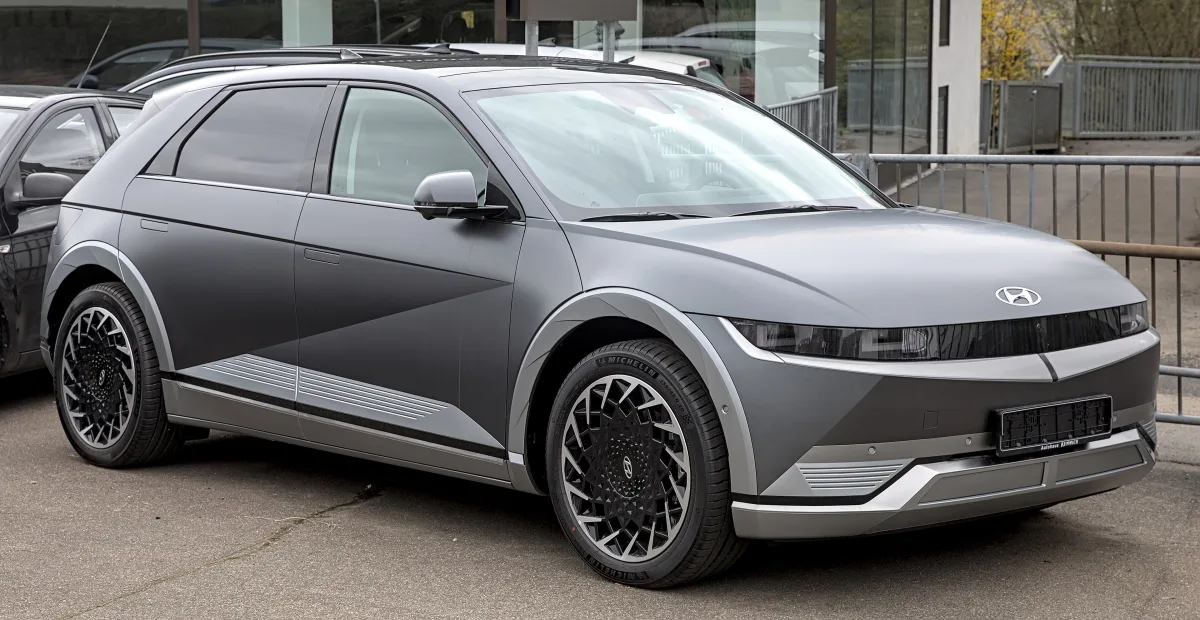
Hyundai Ioniq 5: batteries, charging, versions and trims
Hyundai Ioniq 5 is one of the most popular electric crossovers in Europe, on sale since 2021. We look at how early and updated models differ, which batteries and versions are available, how far they really go in winter, and what to check when buying a used Ioniq 5.
ADVERTISEMENT
Ioniq 5 in brief
The Ioniq 5 is built on the dedicated E-GMP platform for electric vehicles, which also underpins the Kia EV6 and Hyundai Ioniq 6. Its biggest advantage is the 800V electric system, allowing rapid charging at suitable stations.
The car stands out with its retro-style design and long wheelbase, so the interior is very spacious, the floors are flat, and in many versions, the rear seat and centre console can be slid forward. The Ioniq 5 also features V2L functionality, allowing you to power external electric devices from the car’s battery.
Early and updated Ioniq 5: what’s the difference
The Ioniq 5 comes in one body style. Early models (2021–2022) had 58 kWh or 72.6 kWh batteries. From around 2023, the larger battery was replaced with a 77.4 kWh unit, so these cars go further. Most used examples are from these years.
2024 Ioniq 5 updated: batteries increased to 63 kWh and 84 kWh, buffers changed, interior and infotainment improved, a rear window wiper added, and the range expanded with the sporty N Line trim. The same year saw the arrival of the sporty Ioniq 5 N, aimed at driving enthusiasts.
When choosing between early and updated models, battery capacity and condition are key: a larger battery not only allows you to travel further but also leaves a bigger reserve in winter.
Versions, batteries and charging
The Ioniq 5 comes with either a single rear motor (rear-wheel drive) or two motors with all-wheel drive. Rear-wheel drive versions offer around 170–230 hp, all-wheel drive around 305–325 hp, and the Ioniq 5 N significantly more than 600 hp. For most buyers, rear-wheel drive is sufficient and more energy-efficient.
According to the manufacturer's (WLTP) data, rear-wheel drive versions with larger batteries can cover around 450–570 km, depending on the battery and the year. Real-world range on the motorway is usually lower, and in winter, you often need to count on about 20–35% less. The heat pump, which was an optional extra in many cars, helps save energy in winter.
The Ioniq 5 is usually charged at home or at work with alternating current (AC) up to 11 kW, so the battery is fully charged overnight. At fast-charging (DC) stations via the CCS2 connector, the manufacturer's data suggests you can charge from 10 to 80% in around 18 minutes, but only at a powerful station and with a warmed-up battery. Charging is slower in cold weather and at some older stations.
What to check when buying a used Ioniq 5
The most important thing is the battery's condition. Ask for an official Hyundai dealer or a specialist service to provide a State of Health (SOH) battery check report and compare the range shown with a fully charged battery against the manufacturer's data. Frequent fast charging or heavy use can affect the battery's health.
A well-known issue with E-GMP platform cars is failures in the integrated charging control unit (ICCU), which can cause the 12V battery to stop charging or the charging process to malfunction. Check via the VIN whether all recall work and software updates have been performed, and ask if the unit has been replaced.
Test charging with both alternating and direct current, inspect the charging port, and ensure there are charging cables. The Ioniq 5 is heavy and powerful, so tyres wear out faster — assess their condition and check if there is a set of winter tyres.
ADVERTISEMENT
Trim levels
Names and equipment vary by country and year; we list the trim levels commonly found in Germany and other European countries.
Dynamiq
From 2021 onwards
The base trim, which already comes with plenty of modern features.
Two large screens and LED headlights
Often includes heated seats and steering wheel
Often includes a smaller battery
Techniq
From 2021 onwards
The most popular choice — more comfort and driver assistance systems.
Often includes a larger battery
Often includes a heat pump
Often includes electrically adjustable seats and more driver assistance systems
Uniq
From 2021 onwards
The most fully equipped version.
Often — 20-inch alloy wheels and a glass roof
Often — a projection screen and BOSE sound system
Often — reclining 'relaxation' front seats
N Line
Updated version (from 2024)
Sporty-looking version with standard engines.
Sportier bumpers and wheels
Sport seats and N Line interior details
Often a larger battery
Ioniq 5 N
From 2024
A sporty electric car for driving enthusiasts.
Two engines, over 600 hp
84 kWh battery, sport suspension and brakes
21-inch alloy wheels
Trim comparison
Dynamiq
Techniq
Uniq
N Line
Who it's for
Everyday driving
Most buyers
Comfort and long journeys
Sporty looks
Wheels (most often)
19 col.
19 col.
20 col.
20 col.
Interior
Standard
More comfort features
Luxury trim
Sport seats
Battery (most often)
Smaller or larger
Larger
Larger
Most often 84 kWh
Price in the used market (relatively)
€
€€
€€€
€€€
For most buyers, the best choice is the Techniq with a larger battery, rear-wheel drive, and a heat pump. The Uniq is worth considering for comfort, while refreshed models with an 84 kWh battery are ideal if your primary driving distance is crucial.
Pros
Very fast charging at suitable stations
Spacious interior with flat floors
V2L function to power external devices
A wide range of versions — from economical to sporty
Cons
Known issues with the ICCU block
Early models have smaller batteries that don't cover much distance, especially in winter
The heat pump is not fitted in all vehicles
Frequently asked questions
How far does the Ioniq 5 really go in winter?
It depends on the battery, temperature, and speed. In winter, you often need to account for about 20–35% less range than in summer, and even less when driving short distances or on the motorway. The heat pump and cabin heating while the car is plugged in help save energy.
Which Ioniq 5 battery to choose?
If you often drive outside the city, opt for a larger battery — 72.6, 77.4 or 84 kWh. A smaller battery is best for those who mainly drive in the city and can regularly charge at home or work.
What is an ICCU fault and should you be worried?
ICCU is the block that controls battery charging and 12 V battery power supply. Faults are well-known in E-GMP cars, so the manufacturer has carried out recall campaigns and updated the software. Before buying, check if these repairs have been done.
Is it worth choosing all-wheel drive?
All-wheel drive offers more power and better grip on slippery roads, but it consumes more energy. For most buyers in Lithuania, rear-wheel drive with good winter tyres is sufficient.
Updated 2026-10-09 · Trim levels and equipment vary by market and model year — check the equipment of the specific car. · Translated automatically
Comments
No comments about the Hyundai Ioniq 5 yet. Share your experience.
We use necessary cookies to run the website. With your consent, we will also use analytics and advertising measurement cookies — to understand how the website is used and to measure our advertising results. Learn more
 English
 Lietuvių
 Latviešu
 Eesti
 Polski
 Русский
 Українська
 Deutsch
 Nederlands
 Čeština
 Slovenčina
 Svenska
 Norsk
 Dansk
 Suomi
 4