 English
 Lietuvių
 Latviešu
 Eesti
 Polski
 Русский
 Українська
 Deutsch
 Nederlands
 Čeština
 Slovenčina
 Svenska
 Norsk
 Dansk
 Suomi


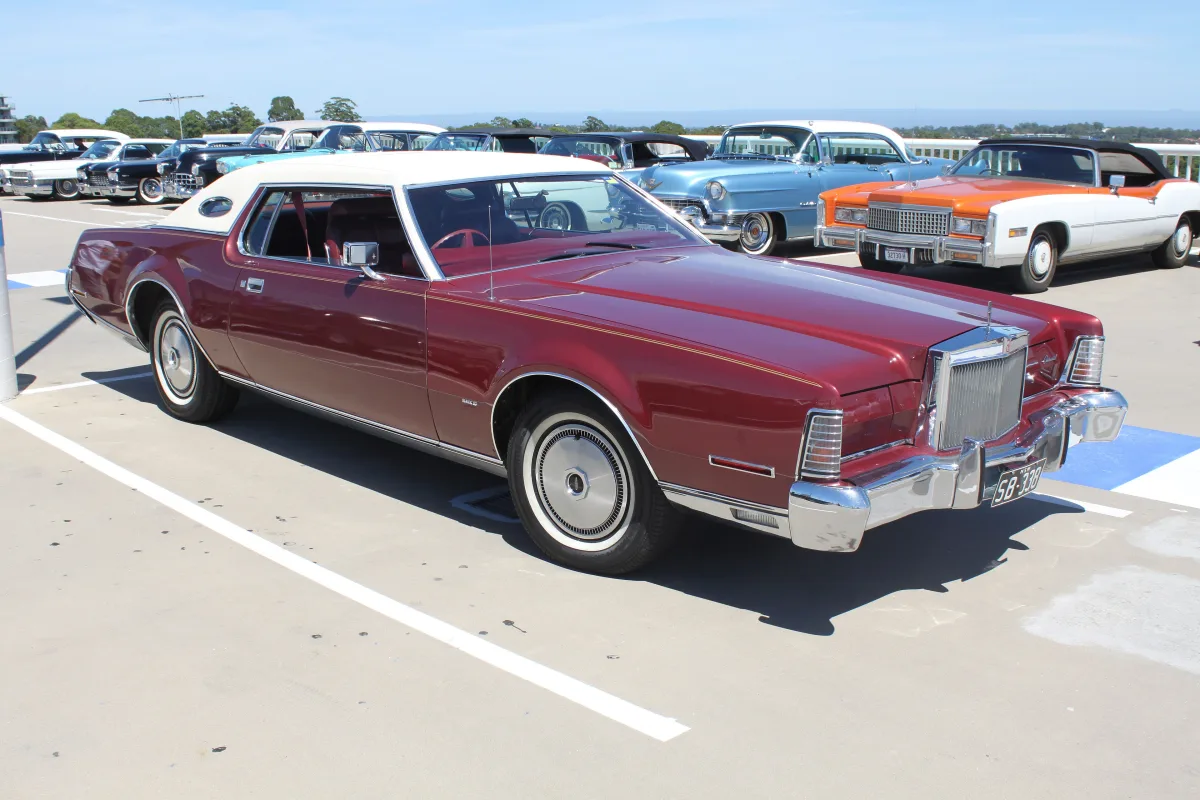
Lincoln Continental Mark series: from Mark III to Mark VII
The Lincoln Continental Mark series — luxurious two-door coupés, produced since the 1950s, but best known for the 1969–1992 generations from Mark III to Mark VII. We look at each generation, their engines, and unique features, as well as what you need to know when buying a classic Mark.






Mark series in brief
The Mark series history began with the Continental Mark II (1956–1957 m.) — a hand-built luxury coupé, one of the most expensive American cars of the time. Later, the name was revived as Mark III (1969) and became the Lincoln flagship coupé until the 1990s.
These cars are large, luxurious, rear-wheel-drive coupés with a long bonnet, spacious boot, and distinctive details unique to each generation. They are rare in Lithuania and suit classic car enthusiasts who appreciate American luxury.
How the generations differ
Mark III (1969–1971) — built with a large 460 cu in (approx. 7.5 L) V8, hidden headlights, and a prominent front end. Mark IV (1972–1976) — longer, larger, with an oval 'opera' window in the rear pillar and the first Designer Series editions. Mark V (1977–1979) — with a 400 cu in (approx. 6.6 L) V8, and the 460 cu in variant was optional.
Mark VI (1980–1983) was significantly smaller and more economical, with a 4.9 L V8 and electronic fuel injection, and for the first time, it also had a four-door sedan version. Mark VII (1984–1992) — more aerodynamic, with a 5.0 L V8, air suspension, four-wheel disc brakes, and a sportier LSC version.
Engine options
Early Mark (III–V) models used large-displacement V8 engines with corresponding fuel consumption. Later, engine sizes were reduced — Mark VI and VII had 4.9–5.0-litre V8s, and Mark VII briefly offered a BMW-derived turbodiesel.
Transmissions are automatic (from 3 to 4 speeds). All Marks are rear-wheel drive, with a focus on comfort.
What to check when buying a used Mark
Pay close attention to corrosion: sills, wings, boot floor, and roof sections, especially those with vinyl covers. Also, check the operation of electronic and vacuum systems — many functions in older Marks are electric or vacuum-operated.
Mark VII has air suspension, which can wear out and is expensive to repair. In any case, ensure the engine and transmission have no leaks, and the interior isn't heavily worn.


Generations and versions
In the Mark series, generations are more important than classic trim levels; we present the main generations.
Mark III
1969–1971The first modern generation with hidden headlights.
- 460 cu in V8
- Hidden headlights
- Often — luxurious trim
Mark IV
1972–1976A larger and longer coupe with an oval window.
- 460 cu in V8
- The "Opera" badge
- Special edition models
Mark V
1977–1979 model yearsA lighter, yet still large coupe.
- 400 cu in V8, optional 460
- Vertical rear lights
- Often — special editions
Mark VI
1980–1983 model yearsSmaller and more economical, with a sedan version.
- 4.9-litre V8 with fuel injection
- Often — digital instrument cluster
- Two and four-door options
Mark VII
1984–1992 model yearsAn aerodynamic and sportier coupe.
- 5.0-litre V8
- Air suspension
- LSC sport version
Generation comparison
| Mark IV | Mark V | Mark VI | Mark VII | |
|---|---|---|---|---|
| Who it's for | For classic car enthusiasts | For classic car enthusiasts | For a more practical classic | For a more modern classic |
| Common wheels | With covers | With covers | With covers | Light alloy |
| Interior | Luxurious | Luxurious | Luxurious, digital | Luxurious, more modern |
| Engine | 460 cu in V8 | 400 col³ V8 | 4.9-litre V8 | 5.0-litre V8 |
| Price in the used market (relatively) | €€ | €€ | € | €€ |
If you're after a more practical and economical classic, opt for the Mark VI or VII. The Mark III–V are better suited to those who value classic feel.
Pros
- Classic American luxury
- Especially smooth and comfortable ride
- Simple, well-known technology
- Rare and distinctive automobile
Cons
- High fuel consumption
- Corrosion and age-related issues
- Finding parts can be challenging
Frequently asked questions
What sets the Mark VII apart from the Mark VIII?
The Mark VII (1984–1992) is an aerodynamic coupe with a 5.0-litre V8, while the Mark VIII (1993–1998) is a newer model with a 4.6-litre DOHC V8. The Mark VIII has its own dedicated article.
Which Mark is the most economical?
The Mark VI and VII with smaller V8 engines, although they're not economical by today's standards.
Can a Mark be used daily?
Technically yes, but due to their age, parts availability and fuel consumption, most owners use them as weekend classics.
Updated 2026-10-21 · Trim levels and equipment vary by market and model year — check the equipment of the specific car. · Translated automatically


