 English
 Lietuvių
 Latviešu
 Eesti
 Polski
 Русский
 Українська
 Deutsch
 Nederlands
 Čeština
 Slovenčina
 Svenska
 Norsk
 Dansk
 Suomi


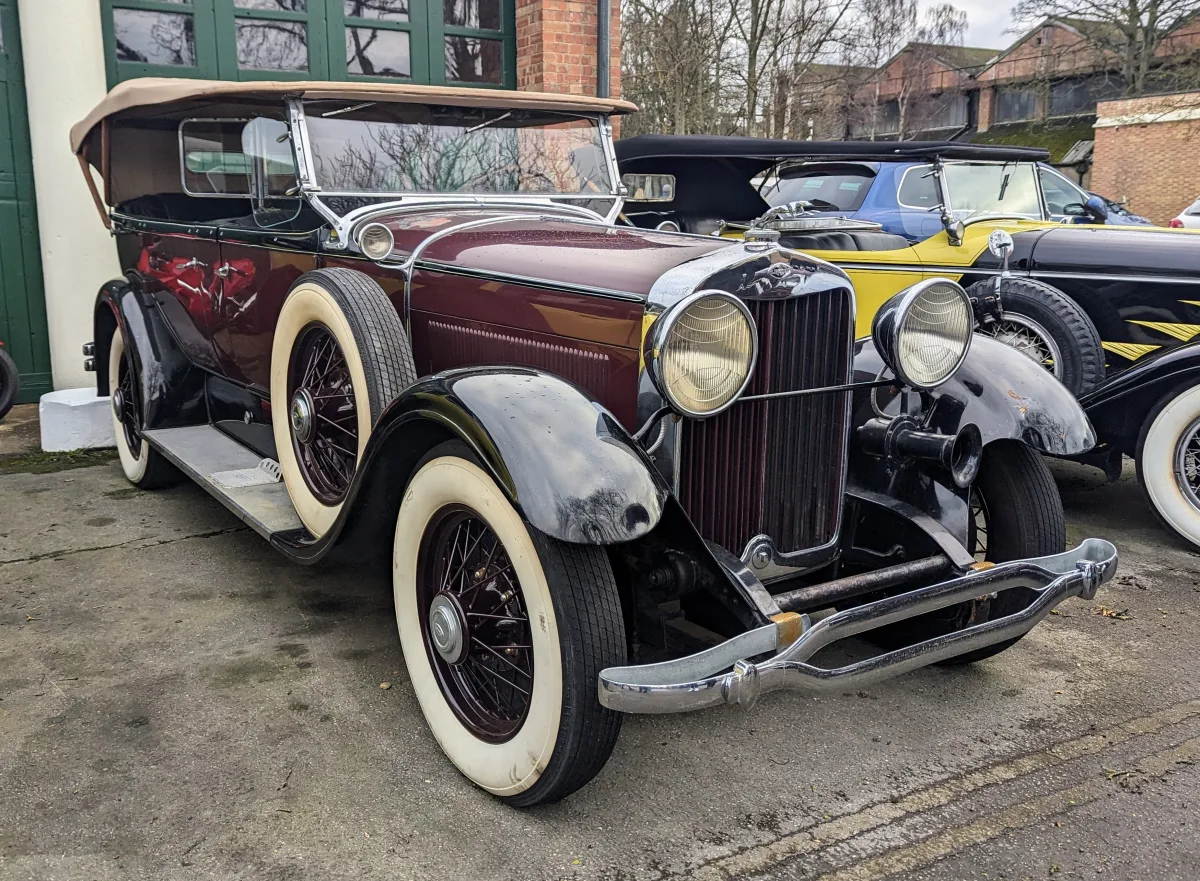
Lincoln L-Series: 1921–1930 the first „Lincoln“ car and its generation
Lincoln L-Series — the first car produced by „Lincoln Motor Company“, debuting in 1921 as a top-tier American luxury model. We look back at its history, technology, body styles, and what you need to know if you're considering buying such a vintage automobile.






L-Series briefly
Lincoln Motor Company was founded by Cadillac founder Henry Leland. Initially, the company produced aircraft engines, and after World War I, it turned to automobiles. The L-Series, also known as the Model L, was first sold as a 1921 model and was designed for the upper echelon, competing with „Packard“, „Cadillac“, and „Rolls-Royce“ models.
In 1922, the company faced financial difficulties and was acquired by Henry Ford, with Edsel Ford taking over production. The L-Series continued production until 1930, when it was replaced by the Model K. Today, it's a vintage car that will appeal to collectors and those who appreciate the history of early American luxury.
What sets the production periods apart
1921–1922 cars were from the Leland era: traditional, somewhat old-fashioned design by today's standards, with a wide range of body styles from the factory and coachbuilders. During Edsel Ford's tenure (from 1922), hydraulic shock absorbers were added, the wheelbase was lengthened (from 130 to 136 inches), and some body styles were changed.
Cars from 1924 to 1926 received a nickel-plated radiator grille, while later models came with standard bumpers. In 1927, smaller wheels and mechanical brakes on all four wheels were introduced, followed by a larger engine (without increased power) in 1928, and safety glass and two windshield wipers in 1929. 1930 marked the final year of the L-Series.
Lincoln didn't change its models annually, so the years are often identified by minor details.
Engine and Technology
All L-Series cars feature a 60° V8 engine with side valves and approximately 5.9 litres (357.8 cubic inches) of displacement. The engine was notable for its unusual pushrod layout ('fork and blade'), where two pushrods share a single rocker arm, resulting in a shorter crankshaft and a more compact engine.
The cars are rear-wheel drive with a manual transmission. Initially, the standard brakes only acted on the rear wheels, but the 1924 'Police Flyer' version already had four-wheel brakes — two years ahead of private cars.
What to check when buying a Lincoln L-Series
The most important thing is authenticity and documentation. Many L-Series cars have bodies built by coachbuilders (Brunn, Judkins, Fleetwood, LeBaron, Dietrich, and others), so check if the body matches the chassis number and production year.
Inspect the wooden body frame (if present), metal panels, and chassis for rust or cracks. The engine should run smoothly without fluid leaks, and the brakes should meet the year's specifications.
Look for parts through specialist Lincoln clubs, as there aren't many of these cars around. Consult with a classic car expert before buying.


Trims
Names and equipment vary by market and year; we list the versions most commonly found in Europe.
Touring
1921–1930Open four or five-seater body.
- Retractable tent
- Open body with several seating positions
- Later years featured a nickel-plated radiator shell
Sedanas ir limuzinas
1921–1930Closed body versions for the family and for representing
- Closed body for the family or for representing
- Luxurious interior trim
- Some bodies with a glass partition between the driver and passengers
Roadsteris
1921–1930Two-seater open sports car.
- The smallest L-Series version
- Two-seater open body
- Older than a sedan or tourer
Kėbulų meistrų versijos
1921–1930Bodies to order (Brunn, Judkins, Fleetwood, LeBaron and others)
- Unique design and trim
- Higher collectible value
- Check the paperwork
Comparing generations
| 1921–1922 | 1923–1926 | 1927–1930 | |
|---|---|---|---|
| Who it's for | For those who love early Leland style | For those who love the robust Ford era version | For those who prefer more advanced brakes and safety |
| Brakes | Manual | Manual (four-wheel drive in police version) | Manual four-wheel drive |
| Standard equipment | A wide range of body styles | Nickel-plated radiator, buffers | Safety glass, two sun visors (from 1929) |
| Price in the used market (relatively) | €€€ | €€€ | €€€ |
If you want an authentic, first-year Leland era car — opt for the 1921–1922 models. If practicality and comfort are more important — go for later models with four-wheel brakes.
Pros
- A historically significant luxury car
- Original V8 design
- A broad choice of bodies and styles
- Collectible value and rarity
Cons
- Very limited supply and high prices
- Some parts are hard to find
- Vintage technology requires specialists and meticulous maintenance
Frequently asked questions
How many years was the Lincoln L-Series produced?
The L-Series was produced from 1921 to 1930. In 1930, it was replaced by the Model K.
Who created the Lincoln L-Series?
The car was created by Henry Leland, who founded Lincoln Motor Company, and from 1922, the company was run by Ford.
Is the L-Series suitable for daily driving?
This is a vintage car meant for collecting, shows, and rally events. It's not suited for everyday use due to its age and limited safety features.
Updated 2026-10-21 · Trim levels and equipment vary by market and model year — check the equipment of the specific car. · Translated automatically


