 English
 Lietuvių
 Latviešu
 Eesti
 Polski
 Русский
 Українська
 Deutsch
 Nederlands
 Čeština
 Slovenčina
 Svenska
 Norsk
 Dansk
 Suomi


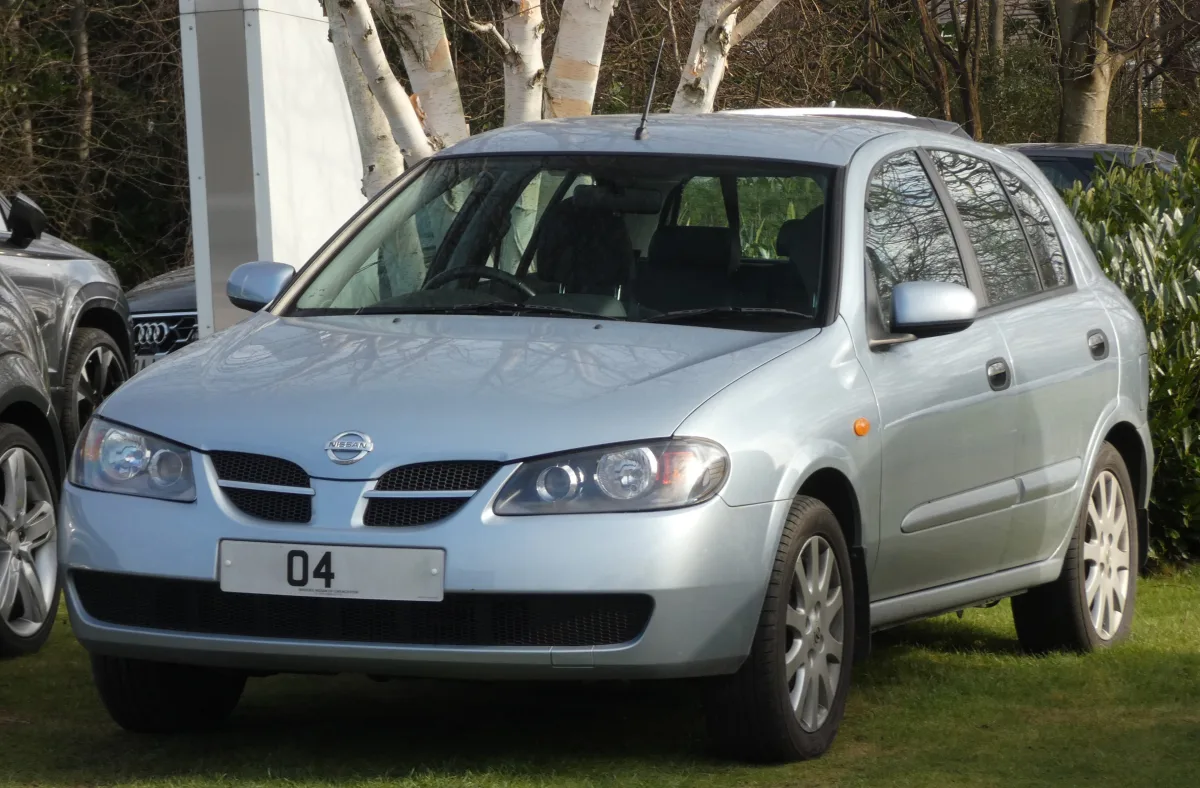
Nissan Almera: N15 and N16 generations, engines and trims
Nissan Almera — a straightforward compact car, sold in Europe from 1995 to 2006. Today, it's one of the cheapest ways to get a spacious and uncomplicated car, with the N16 generation most commonly found in Lithuania. We'll look at how the generations differ, which engines are most popular, and what to check before buying.






Almera in brief
The Almera replaced the Nissan Sunny in Europe and was produced in two generations — N15 (1995–2000) and N16 (2000–2006). Both generations destined for Europe were mainly built in Sunderland (Great Britain); 3- and 5-door hatchbacks and a sedan were offered. A separate model was the compact Almera Tino.
The Almera is valued for its simple construction, affordable spare parts, and the fact that many mechanics are familiar with it. However, it's an old car: the safety features and interior materials don't match newer models, and most have high mileage.
In other markets (e.g., Eastern Europe or Asia), later models were sold under the Almera name, so when looking for spare parts, make sure you know which version you have.
N15 vs N16 — what's the difference
The N15 (1995–2000) is more angular, simple, and light. Its sportiest version is the GTi with a 2.0 l engine. Today, most N15s are heavily affected by rust, so they're only worth considering as a very cheap car for short-term use.
N16 (2000–2006) — smoother lines, more spacious and safer, with a more modern interior. The 2003 facelift brought a new front end, improved interior, and an economical 1.5 dCi diesel.
For most buyers, the best choice is the facelifted N16 (2003–2006): it's the newest, and the market offers the most options.
Engines and transmissions
N16 models most commonly feature QG series petrol engines: 1.5 l (around 90–98 hp) and 1.8 l (around 114–116 hp). Diesels include the 2.2 l (around 110–136 hp, depending on the version), and after the 2003 facelift, the 1.5 dCi (around 82 hp), which Nissan adopted from Renault.
N15 models most commonly feature 1.4 l and 1.6 l petrol engines, with the GTi version boasting a 2.0 l engine and a 2.0 l diesel.
The most common transmission is a 5-speed manual. An automatic is only offered with certain petrol engines, most often the 1.8 l, and is considerably rarer.
What to check when buying a used Almera
The most important thing is the body condition. Thoroughly inspect the sills, rear wheel arches, door bottoms, and underbody: rust is the most common reason for owners to part with this era's cars.
QG series petrol engines, especially those with high mileage, tend to have increased oil consumption, so ask how often the oil needs topping up and check the exhaust fumes. For diesel cars, inspect the fuel injection system, turbocharger, and ensure the engine starts easily when cold.
Check the suspension parts, brakes, air conditioning, and electric windows. Since this is a budget car, it often doesn't receive much investment — before buying, assess how much it will cost to fix any issues you find.


Trim levels
Names and equipment vary by market and year (e.g., S, SE, SVE are used in the UK); we list the N16 trim levels commonly found in continental Europe.
Visia
N16The base trim — simple and the most affordable.
- Often comes with steel wheels
- Often includes air conditioning
- Basic sound system
Comfort
N16The mid-range trim for early N16 models.
- Often includes air conditioning and electric windows
- Often includes electrically adjustable mirrors
- More comfort features than the Visia
Acenta
N16 (post-2003)The most popular choice — a good balance of price and features.
- Often comes with alloy wheels
- Often comes with air conditioning and fog lights
- More comfortable interior trim
Tekna
N16 (post-2003)Top-of-the-range trim with the most equipment
- Light-alloy wheels
- Often comes with automatic climate control
- Often comes with parking sensors and a better sound system
Comparison of N16 generation trims
| Visia | Acenta | Tekna | |
|---|---|---|---|
| Who it's for | For the tightest budgets | For daily driving | For those wanting more comfort |
| Wheels (most often) | 14–15 inch, steel | 15 inch, often light-alloy | 15–16 inch, light-alloy |
| Climate control | Air conditioning isn't always | Air conditioning | Often automatic climate control |
| Price in the used market (relatively) | € | € | €€ |
This generation's Almera trim is less important than its technical condition and rust. If you have a choice, it's worth looking for an Acenta or Tekna with air conditioning.
Pros
- Simple, uncomplicated construction
- Cheap and easily available spare parts
- Spacious interior for its class
- One of the cheapest used compact cars
Cons
- Most cars are already old with high mileage
- Rust, especially on the N15
- Oil consumption in petrol engines on high-mileage cars
Frequently asked questions
Is it worth buying a Nissan Almera today?
Yes, if you're after an affordable and straightforward car, and the specific example you're looking at doesn't have serious rust issues. Don't expect the latest safety and comfort features, so the Almera is often chosen as a budget-friendly daily driver.
Which Almera engine is the best?
For most buyers, the 1.5 l or 1.8 l petrol engines are the most suitable — they're simple and cheap to maintain, provided there's no excessive oil consumption. For high-mileage drivers, the 1.5 dCi or 2.2 l diesel is a better fit, although their injection systems are more expensive to repair.
What's the difference between the Almera and the Almera Tino?
The Almera Tino is a distinct compact MPV model: taller, with more interior space and a more flexible seating arrangement. The mechanics are partly similar, but the body and interior details differ.
Updated 2026-10-09 · Trim levels and equipment vary by market and model year — check the equipment of the specific car. · Translated automatically


