 English
 Lietuvių
 Latviešu
 Eesti
 Polski
 Русский
 Українська
 Deutsch
 Nederlands
 Čeština
 Slovenčina
 Svenska
 Norsk
 Dansk
 Suomi


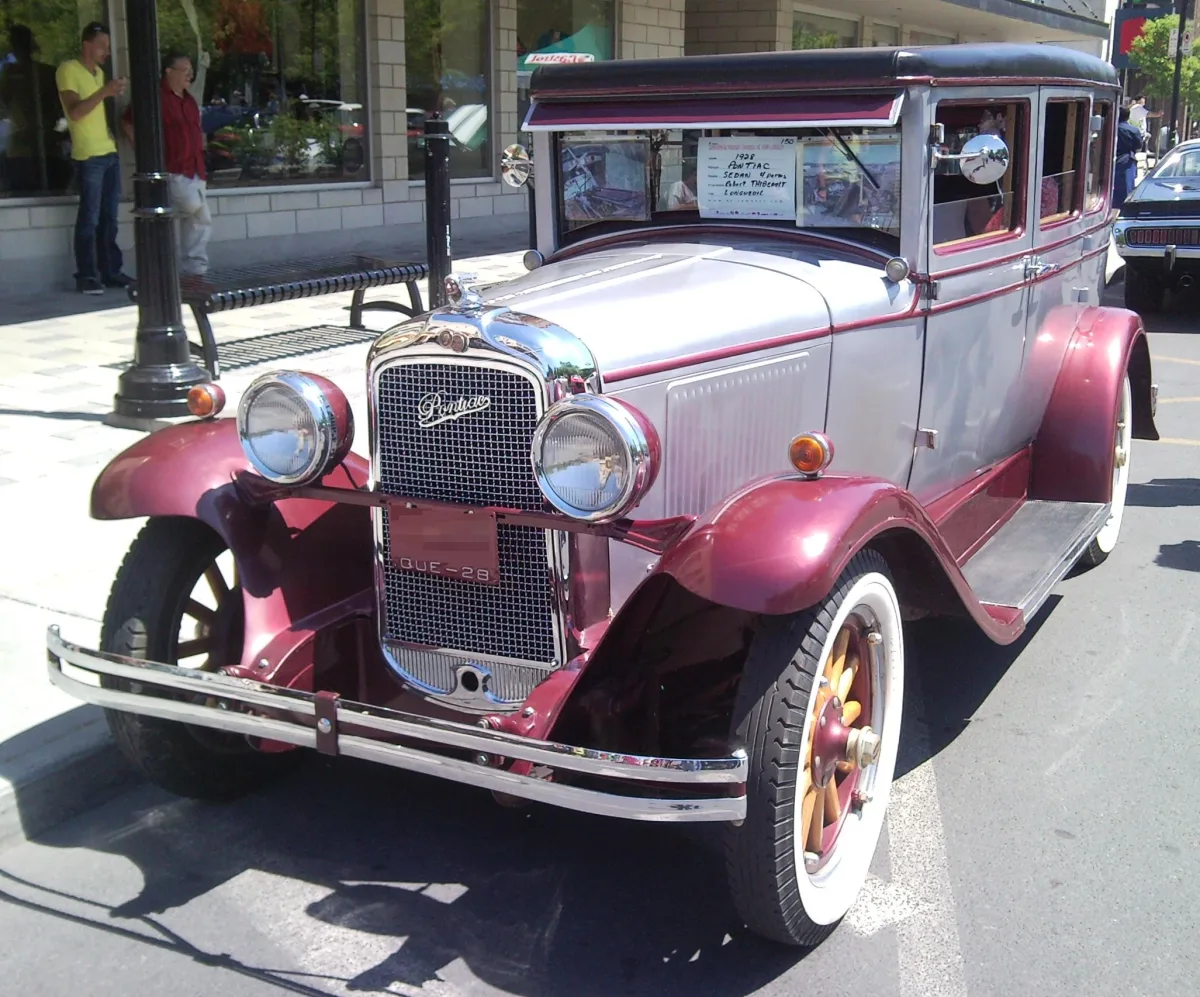
Pontiac New Series (6-28): 1928 American classic car
Pontiac “New Series” — the 1928 model year name for the Pontiac 6 (series 6-28). We look at what made it special, how it differed from previous years, and what collectors need to know.






New Series briefly
The 1928 Pontiac 6 was named the “New Series 6-28”. This was a major update for the model year, which at the time was one of GM’s top sellers. Pontiac was then the more affordable Oakland variant, aiming to fill the price gap between Chevrolet and GM’s pricier brands.
The car was offered in several body styles and remained relatively affordable. This made it accessible to many American families and was one of the reasons Pontiac quickly became a key GM brand.
How it differs from previous years
Compared to the 1927 model, the 1928 car featured higher front fenders, which covered more of the front wheel and had a running board. All previous “Deluxe” versions were renamed to “Sport”.
The radiator cap ornament, depicting an Indian chief, no longer had a feathered headband. These minor updates reflected the annual change policy of the time.
Engine and technology
The Pontiac 6 was powered by an inline six-cylinder gasoline engine with side valves, designed by Henry M. Crane. The first 1926 model’s engine displacement was roughly 3 litres, and the 1928 car had the same type of engine.
Manual gearbox, brakes — simple mechanical. All the tech was basic and easy to maintain by the standards of the time, but today it requires specialists familiar with pre-war cars.
What to check when buying such a car
The most important thing is the condition of the body frame and wooden elements: back then, bodies often had a wooden chassis that can rot over time. Check the survival of original parts as well.
Parts need to be sourced through US Pontiac classic car clubs and specialist suppliers. Also, look into how the car is registered as a historic vehicle, as this can simplify insurance and daily conditions.


Trim levels
The Pontiac New Series was produced for just one year, so below we describe the body styles by purpose.
Sedanas
1928Enclosed passenger body for the family.
- Often a two- or four-door sedan
- Enclosed saloon
- Basic mechanical tech
Kupė
1928A two-seater or more compact body.
- Often — an extra seat at the back (rumble seat)
- Often — chromed details
- The same engine tech
„Sport“ versijos
1928Luxury versions, previously known as 'Deluxe'.
- Often — two-tone paint jobs
- Often — more lavish interiors
- The same technology
Comparing Pontiac New Series body styles
| Sedanas | Kupė | „Sport“ | |
|---|---|---|---|
| Who it's for | For families and collectors | For collectors | For aesthetics enthusiasts |
| Engine | Six-cylinder | Six-cylinder | Six-cylinder |
| Usage | Events and shows | Events and shows | Events and shows |
| Price in the used market (relatively) | €€€ | €€€ | €€€ |
This is a collector's car, not a daily driver. Choose based on condition, body type, and originality.
Pros
- Pre-war American classic available
- Six-cylinder engine
- A variety of body styles
- Active club community in the USA
Cons
- Very rare in Lithuania
- Parts need to be ordered from the USA
- Requires constant maintenance
Frequently asked questions
Can the Pontiac New Series be used daily?
This is not recommended: the car has basic brakes and limited safety. It's better suited to events and weekend drives.
How does the New Series differ from the earlier Pontiac?
The 1928 model got taller front wings and the "Deluxe" versions were renamed to "Sport", with the ornament losing its feathered headband.
Where to find parts?
Often through USA classic Pontiac clubs and specialist parts shops. Before buying, check which parts are needed for your specific car.
Updated 2026-10-21 · Trim levels and equipment vary by market and model year — check the equipment of the specific car. · Translated automatically


