 English
 Lietuvių
 Latviešu
 Eesti
 Polski
 Русский
 Українська
 Deutsch
 Nederlands
 Čeština
 Slovenčina
 Svenska
 Norsk
 Dansk
 Suomi


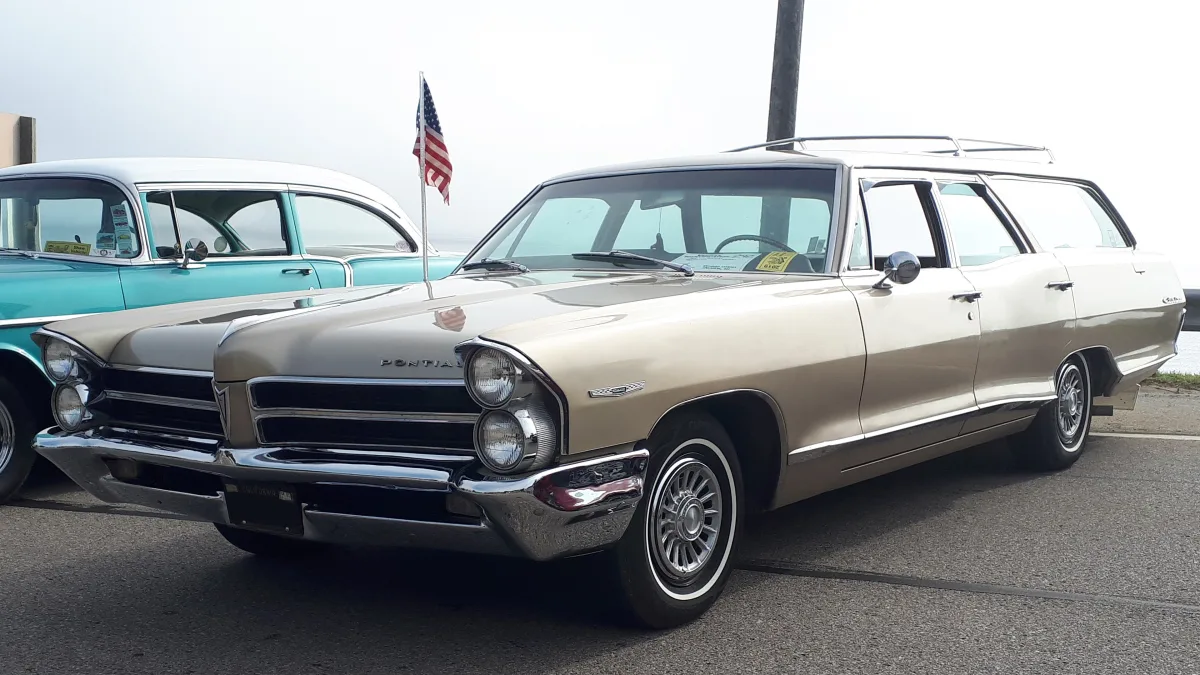
Pontiac Safari: American station wagons, engines, and what to know before buying
Pontiac Safari — the Pontiac station wagon nameplate used for over three decades, from 1955 until the end of the 1980s. We look at how different eras of Safari differ, which engines were used, and what to check before buying.






Safari in brief
The Safari name first appeared in 1955 as a two-door station wagon version, later becoming the main name for Pontiac's large station wagons. These cars were built for families needing space and comfort.
Safari typically offers plenty of room for passengers and cargo, and sometimes includes a rear-facing third row of seats.
Which one to choose
The 1960s Safari has a classic, bold American look with chrome and long fenders. They are often considered the most stylish, and parts availability in the US is good.
The 1970s and 1980s Safari became more angular, often with woodgrain-style trim on the sides. They are slightly less distinctive but more practical and often found in good condition.
Engines and transmissions
Safari was equipped with Pontiac V8 engines — ranging from around 6.4 to 7.5 litres, and in the 1980s, smaller V8s. Transmissions were mostly automatics, with some early versions featuring manuals.
These engines are known for their torque and durability, but they consume significantly more fuel than modern cars.
What to check when buying a Pontiac Safari
First up — corrosion: check the sills, floors, boot floor, and rear arches. The estate body is larger, so repairs can be expensive.
Inspect the engine, automatic gearbox, brakes, suspension, and electrical system. If the car has wood-effect trim, check its condition — replacing it can be costly.


Trim levels
Safari trim levels varied depending on the year of manufacture and the base model (Catalina, Bonneville, Parisienne).
Safari (1960-ieji)
1960-iejiA classic American estate with plenty of chrome.
- Large wings and chrome details
- Often — a rear-facing third row of seats
- Often — power steering
Safari (1970–1980-ieji)
1970s–1980sA large estate with wood-effect trim.
- Wood-effect trim on the sides
- Often — air conditioning and electric windows
- Spacious interior and boot
Comparing Safari generations
| 1960-ieji | 1970-ieji | 1980-ieji | |
|---|---|---|---|
| Who is it for? | For collectors and showpieces | For families and road trips | For daily driving |
| Body | Universal, flashy chrome | Universal with wood trim | Universal, angular |
| Engine | V8, around 6.4–6.9 litres | V8, around 6.6–7.5 litres | Smaller V8 |
| Price in the used market (relatively) | €€€ | €€ | €€ |
1960s Safari models are for collectors, while 1970–1980s estates are for those after a practical and more affordable classic
Pros
- Very spacious interior and boot
- Classic American styling
- Powerful V8 engines
- Good parts availability in the USA
Cons
- High fuel consumption
- Risk of corrosion and high repair costs
- Large dimensions make parking difficult
Frequently asked questions
How does the Safari differ from a standard Pontiac sedan?
The Safari is an estate body with a larger boot and often an additional row of seats, while the mechanics are similar to the base model.
Can the Safari be used daily?
Yes, if the car is in good condition, but high fuel consumption and size make daily use challenging.
Is it easy to find parts?
Availability is high in the USA, but they need to be ordered from abroad for Lithuania. Some body parts and interior elements can be expensive.
Updated 2026-10-21 · Trim levels and equipment vary by market and model year — check the equipment of the specific car. · Translated automatically


