 English
 Lietuvių
 Latviešu
 Eesti
 Polski
 Русский
 Українська
 Deutsch
 Nederlands
 Čeština
 Slovenčina
 Svenska
 Norsk
 Dansk
 Suomi


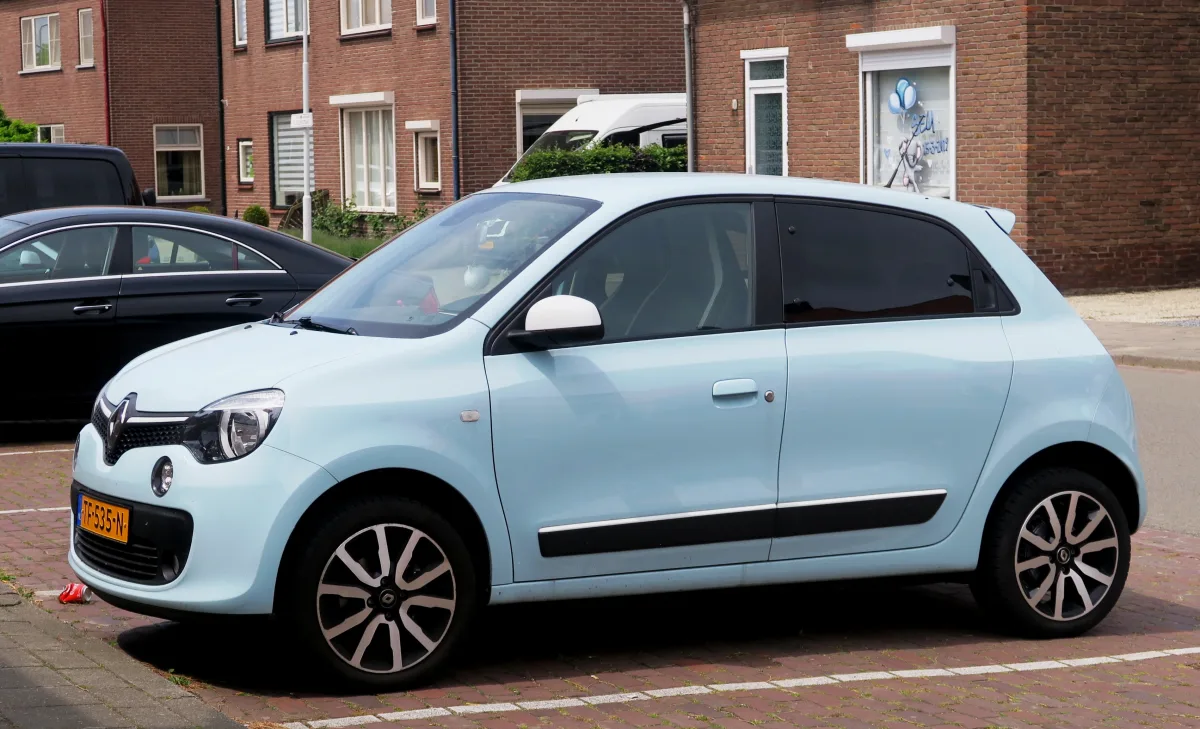
Renault Twingo: II and III generations, engines and trims
The Renault Twingo is a compact city car that was introduced in 1992 and is appreciated for its compact size, low running costs, and playful design. We look at how the II and III generations differ, which engines are most common, and what to check when buying a used Twingo.






Twingo in brief
The first-generation Twingo (1992–2007) stood out with its single-volume body and sliding rear seat. Few of these cars remain in Lithuania today, so the used market mostly sees choices from the II and III generations.
All generations are three or five-door hatchbacks designed primarily for city driving. The Twingo is small, easy to park, and usually inexpensive to maintain, but it's less suitable for long journeys with a full load than larger B-class cars.
II and III generations — what's the difference
The II generation (2007–2014) is a conventional car with an engine mounted at the front and front-wheel drive, technically similar to the Clio. It was produced only with three doors and was refreshed in 2011–2012 with a revised front end and interior details. These cars are affordable and straightforward, but most have covered quite a few miles.
The third generation (introduced in 2014) was developed alongside the smart forfour: the engine is mounted at the rear, under the boot floor, and the driven wheels are at the back. This makes the Twingo incredibly tight-turning and offers more interior space, although the boot is small. It comes only with five doors, was refreshed in 2019, and since 2020, an electric Twingo E-Tech (formerly Z.E.) version has been available.
If you need a simple and affordable city car, the second generation will do. If five doors, newer features, and better condition are important, opt for the third generation, ideally after the 2019 refresh.
Engines and gearboxes
The second generation most commonly features 1.2-litre petrol engines (around 60 and 75 hp), less often a 1.2 TCe with a turbocharger (around 100 hp), and a 1.5 dCi diesel. The sportiest is the Twingo Renaultsport with a 1.6-litre engine (around 133 hp).
The third generation is primarily powered by a 1.0 SCe naturally aspirated three-cylinder engine (around 65–75 hp) and a 0.9 TCe with a turbocharger (around 90 hp), with the GT version offering around 110 hp. The electric version has a small battery, making it best suited for city driving and nearby areas.
A manual gearbox is most common. The second generation offered the robotised Quickshift, while the third generation with a TCe engine comes with the dual-clutch automatic EDC gearbox.
What to check when buying a used Twingo
Second-gen 1.2 engines have a timing belt — ask when it was last changed, as a worn-out belt often means expensive engine repairs. The robotized Quickshift gearbox should shift smoothly without long pauses and jerks; if it doesn't, the transmission might need servicing.
In the third-gen model, test the EDC gearbox by moving off and driving slowly — juddering is a warning sign. Since the engine is at the back, check under the boot floor for any traces of oil or coolant leaks.
For electric versions, ask to see the battery condition report and test the charging. For all cars — check the ride using service records, and the body for city bumps: dents, painted bumpers, and uneven gaps.


Trim levels
Names and equipment vary by market and year; we list the most common trims found in Europe.
Authentique
Second genThe base second-gen trim comes with essential equipment.
- Steel wheels
- A more basic interior
- Often — no air conditioning
Dynamique
Second and third genA popular, well-equipped trim.
- Light-alloy wheels
- Often — air conditioning and electric windows
- Coloured interior or body details
Life
Third generationBase trim for the third generation city driving.
- Steel wheels
- Simpler sound system
- Air conditioning not always included
Zen
Third generationMid-range trim with more comfort features.
- Often includes air conditioning and speed limiter
- Often includes a smartphone holder
- More interior trim details
Intens
Third generationHigher trim with the most equipment.
- Light-alloy wheels
- Often includes a multimedia screen and rear-view camera
- Often includes automatic climate control
GT
Third generationSportiest third-generation version with the most powerful engine.
- 0.9 TCe, around 110 hp
- Sportier ride and larger alloy wheels
- Distinctive body and interior details
Comparison of third-generation trims
| Life | Zen | Intens | GT | |
|---|---|---|---|---|
| Who it's for | Ideal for city driving | Everyday use | More comfort | For a pleasant drive |
| Common wheel sizes | 15 in., steel | 15 in. | 15–16 in., light alloy | 17 in. |
| Interior | Basic | More comfort features | Best equipped | Sporty details |
| Engine | 1.0 SCe | 1.0 SCe, 0.9 TCe | 1.0 SCe, 0.9 TCe | 0.9 TCe, around 110 hp |
| Price in the used market (relatively) | Budget-friendly | Budget-friendly | Mid-range | Premium |
For most buyers, Zen or Intens are the best bets: they offer more comfort features, and the price is still reasonable. The GT is worth considering only if you want a livelier, sportier city car.
Pros
- Very tight turning circle and easy to park
- Low running costs
- Fun looks and plenty of colour options
- Third generation — five doors and a spacious interior for its size
Cons
- Small boot, especially in the third generation
- Quite noisy on the motorway
- Automated Quickshift gearbox and second-generation model
Frequently asked questions
Which Twingo generation is best when buying used?
For most buyers, the best is the third generation, especially after the 2019 refresh: it's newer, with five doors and more modern equipment. The second generation is fine if you need a cheaper car for the city and, most importantly, it's in good technical condition.
Does the Twingo III really have a rear-mounted engine?
Yes. The third-generation Twingo's engine is mounted at the rear, under the boot floor, and the drive wheels are at the back. Therefore, the car turns very tightly, but the boot is slightly higher and smaller than a typical hatchback.
Is the Twingo suitable for long journeys?
The Twingo is designed for the city. Longer journeys are possible, but it's noisier on the motorway and there's not much space in the boot. If you often drive long distances, a larger B-class car would be more comfortable.
Is it worth buying an electric Twingo?
It is, if you mostly drive in the city and can charge at home or work. The battery is small, so the driving range is limited — before buying, check the battery's condition and assess whether it will meet your daily needs.
Updated 2026-10-09 · Trim levels and equipment vary by market and model year — check the equipment of the specific car. · Translated automatically


