 English
 Lietuvių
 Latviešu
 Eesti
 Polski
 Русский
 Українська
 Deutsch
 Nederlands
 Čeština
 Slovenčina
 Svenska
 Norsk
 Dansk
 Suomi


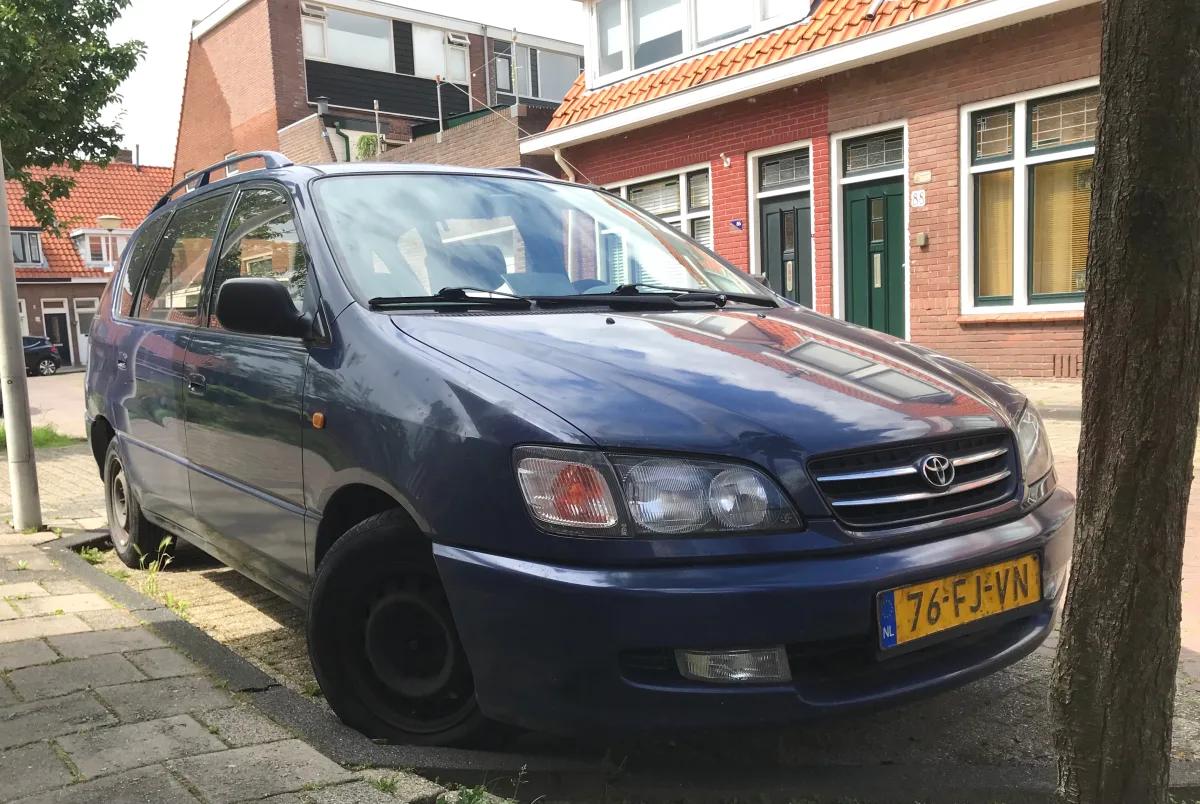
Toyota Picnic: XM10 family MPV, engines and what to know when buying
Toyota Picnic — first-generation (XM10) compact MPV, known as Ipsum in Japan and sold to export markets as the Picnic. We explain what sets it apart, which engines are available, and what to check if you come across one in the used market.






Picnic in brief
Toyota Ipsum / Picnic was produced from May 1995 to 2001; cars reached export markets, including Europe, from 1996. It's a compact MPV with three rows of seats that became one of Toyota's most successful family cars in Japan.
In Denmark, a cargo version was also sold, called the Toyota SportsVan. In Lithuania, the Picnic is rarely seen, usually as a used import from other EU countries.
Why choose the Picnic
The Picnic appeals to those who need a spacious, comfortable family car with a high driving position and a versatile interior. Three rows of seats allow for up to seven passengers (depending on the version), and the seats can be folded flat for more cargo space.
Like many Toyotas of the era, it's praised for its solid build quality, though its looks and interior reflect late-1990s style.
Engines and gearboxes
In Europe, two engines were offered: a 2.0-litre petrol unit with around 128hp in European spec, and a 2.2-litre turbodiesel 3C-TE engine with around 90hp.
The petrol engine is much livelier, while the diesel is more economical but slower. The gearbox can be manual or automatic; check the exact specification in the car's documents.
What to check when buying a Picnic
The cars are already old, so first check the body for rust — arches, sills, and rear door sections. Inspect the sliding doors (if any) and roof rails.
Check the engine operation, oil leaks, automatic gearbox shifts, suspension, and brakes. In the case of a diesel model, find out if the scheduled maintenance has been carried out.


Trim levels
Trim names and equipment vary by market and year; we do not list European market trims here.
Standartinė versija
1996–2001 model yearsA seven-seater family minivan with a petrol or diesel engine.
- Three rows of seats
- Often — electrically operated windows and air conditioning
- Equipment varies by market and year
Engine comparison
| 2,0 l benzinas | 2,2 l turbodyzelis | |
|---|---|---|
| Who it's for | Ideal for city and mixed driving | Great for high-mileage drivers looking to save |
| Approximate Power | around 128 hp | around 90 hp |
| Performance | Peppier | Slower, but more economical |
| Price in the used market (relatively) | € | € |
Most families will find the petrol engine suitable, while diesel is ideal for high-mileage drivers who value lower fuel costs.
Pros
- Spacious, versatile family car
- Three rows of seats and a flexible interior
- Toyota build quality
- Not expensive in the used market
Cons
- These cars are getting on in years and rust can be an issue
- Diesel engines are sluggish, and these cars often have high mileage
- The choice of parts is narrower than that of more popular Toyota models
Frequently asked questions
How does the Picnic differ from the Ipsum?
It's the same car: Ipsum is the Japanese name, while Picnic is the name for export markets
How many people can the Toyota Picnic seat?
With three rows of seats, it can accommodate up to seven people, and the seats can be folded down for more cargo space
Which engine is the better choice?
For most, the 2.0-litre petrol engine is the pick, as it's more lively. The diesel is more economical, but slower and better suited to high-mileage drivers
Updated 2026-10-21 · Trim levels and equipment vary by market and model year — check the equipment of the specific car. · Translated automatically


