 English
 Lietuvių
 Latviešu
 Eesti
 Polski
 Русский
 Українська
 Deutsch
 Nederlands
 Čeština
 Slovenčina
 Svenska
 Norsk
 Dansk
 Suomi


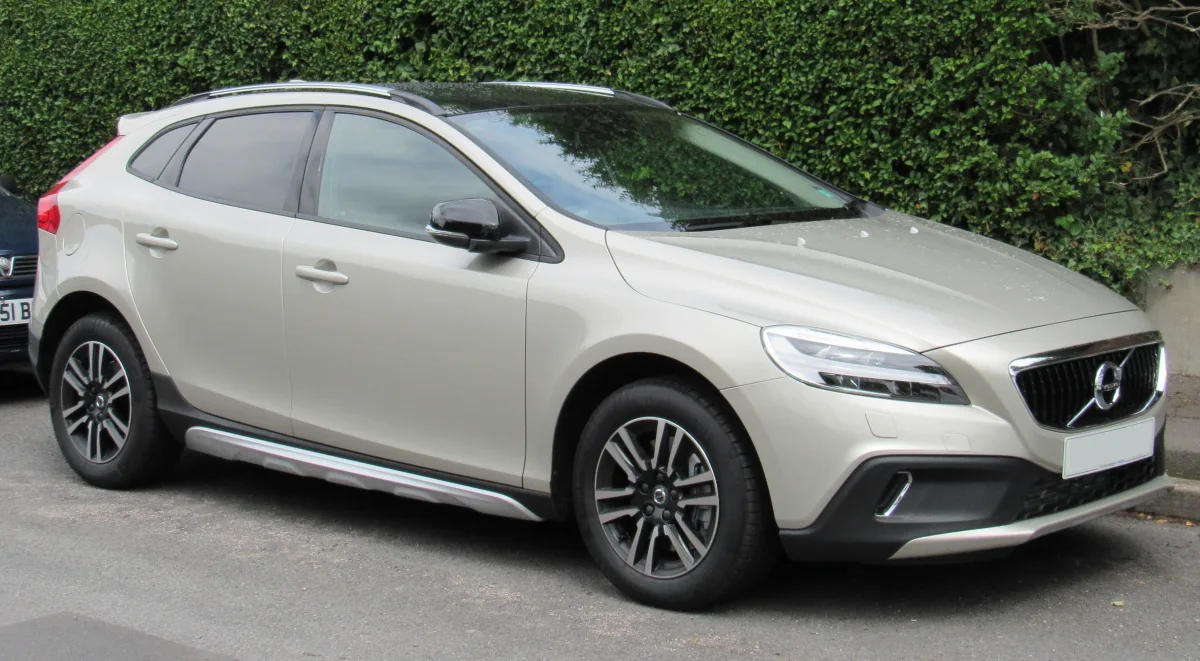
Volvo V40: First and Second Generations, Engines, and Trims
The Volvo V40 is a compact Swedish car. The first generation (1995–2004) was a hatchback, while the second (2012–2019) was a premium hatch. We'll look at both, focusing mainly on the more popular second generation: its engines, trims, and what to check when buying.






The V40 in brief
The first-generation V40 was a small estate car, built in the Netherlands alongside the S40 saloon. The second generation was a different beast: a five-door hatchback that competed with the Audi A3 or BMW 1 Series, plus the higher, more rugged V40 Cross Country version.
The second-generation V40 is praised for its safety—it was the first car with an external pedestrian airbag, and the City Safety collision avoidance system was standard. On the downside, it has less rear seat and boot space than most rivals.
Which generation to choose
The first generation (1995–2004) is now a cheap but old car; its tech was co-developed by Volvo and Mitsubishi. It's worth considering only if you find a particularly well-maintained, low-mileage example.
The second generation (2012–2019) was built on the same platform as the earlier S40, V50, and C30. The 2016 facelift brought 'Thor's Hammer' LED daytime running lights, a new grille design, and more Drive-E engines, so used examples from 2016–2019 are often pricier.
V40 Cross Country (2012–2019) is slightly taller, with black plastic guards and different bumpers, and with the most powerful petrol engine, it could also come with all-wheel drive.
Engines and gearboxes
Early second-generation models often featured diesel engines like the D2 (1.6, around 115 hp), D3, and D4 (2.0, five-cylinder, around 150–177 hp), while petrol options included the 1.6-litre turbocharged T3 and T4, and the five-cylinder T5. From 2014–2015, these were gradually replaced by four-cylinder Drive-E engines.
Gearboxes include six-speed manual and automatic Geartronic, with some versions featuring dual-clutch Powershift. Drive-E engines came with six or eight-speed automatics.
First-generation V40 models featured 1.6, 1.8, and 2.0-litre petrol engines, the turbocharged 1.9 T4, and a 1.9-litre diesel.
What to check when buying a used V40
In the 1.6-litre turbocharged petrol engines (T3, T4), check the cooling system and ask if the manufacturer's recall work has been done. In diesels, check the EGR valve and particulate filter (DPF), especially if the car has done a lot of city driving.
For the five-cylinder D3 and D4 diesels, ask about the timing belt replacement. Powershift or automatic gearboxes should shift smoothly, without hesitation when moving off and at low speeds.
Check that City Safety and other assist systems are working, inspect the body for repainted parts, and assess the ride based on service and MOT records.


Trim levels
Names and equipment vary by market and year; we list the most common trims found in Europe.
Kinetic
Second generation, up to 2016.Base trim for early models.
- City Safety emergency braking system
- Often — 16-inch alloy wheels
- Simpler interior trim
Momentum
Second generationMost popular choice — a good balance of price and features.
- Lightweight alloy wheels
- Often — automatic climate control
- Often — parking sensors
Summum
Second generation, up to 2016.Top trim for early models.
- Often — leather interior
- Often — xenon headlights
- Often — panoramic glass roof
Inscription
Second generation, from 2016The most luxurious trim of the refreshed models.
- Often comes with a leather interior and wood trim
- Often features LED headlights
- Larger alloy wheels
R-Design
Second generationSporty-looking version.
- Sporty bumpers and alloy wheels
- Sport seats
- Often comes with a firmer sport suspension
Cross Country
Second generationHigher trim level with protective details.
- Slightly larger wheel arches
- Black plastic cladding
- Often comes with roof rails
Comparison of second-gen trims
| Momentum | Inscription | R-Design | Cross Country | |
|---|---|---|---|---|
| Who it's for | Everyday driving | Comfort and luxury | Sporty styling | Tougher roads and winter |
| Wheels (usually) | 16–17 inch | 17 inch | 17–18 inch | 17–18 inch |
| Interior | Standard trim | More luxurious, often leather | Sport seats | Depends on the spec |
| Headlights | Standard | Standard | Standard | A bit larger |
| Price in the used market (relatively) | € | €€ | €€ | €€ |
For most buyers, the best choice is a refreshed 2016–2019 Momentum or Inscription with a Drive-E engine. The Cross Country is worth considering if you often drive on rough roads.
Pros
- High safety levels, with the standard City Safety system
- A quality, comfortable interior
- Quiet and smooth driving
- A wide range of engine options
Cons
- A small boot and a high rear seat
- Poor rear visibility
- Higher maintenance costs than mass-market brands
Frequently asked questions
Is the Volvo V40 a practical estate?
Only the first generation (1995–2004). The second-generation V40 (2012–2019) is a five-door hatchback, although the letter V in Volvo's model names usually denotes an estate.
How does the V40 differ from the V40 Cross Country?
The Cross Country is slightly taller, with black plastic guards and different bumpers, and some versions come with all-wheel drive. The interior, engines, and equipment are essentially the same.
Which V40 engine is best?
If you do a lot of out-of-town driving, most buyers will find the D2 or D3 diesel suitable, while the T3 petrol is better for city driving. The five-cylinder D4 and T5 are more powerful but also costlier to run.
Is the V40 suitable for a family?
For a family in the city, yes, but the boot is small and the rear seats are cramped for adults. If you often travel with luggage, the Volvo V60 or V70 estates are more practical.
Updated 2026-10-09 · Trim levels and equipment vary by market and model year — check the equipment of the specific car. · Translated automatically


