 English
 Lietuvių
 Latviešu
 Eesti
 Polski
 Русский
 Українська
 Deutsch
 Nederlands
 Čeština
 Slovenčina
 Svenska
 Norsk
 Dansk
 Suomi


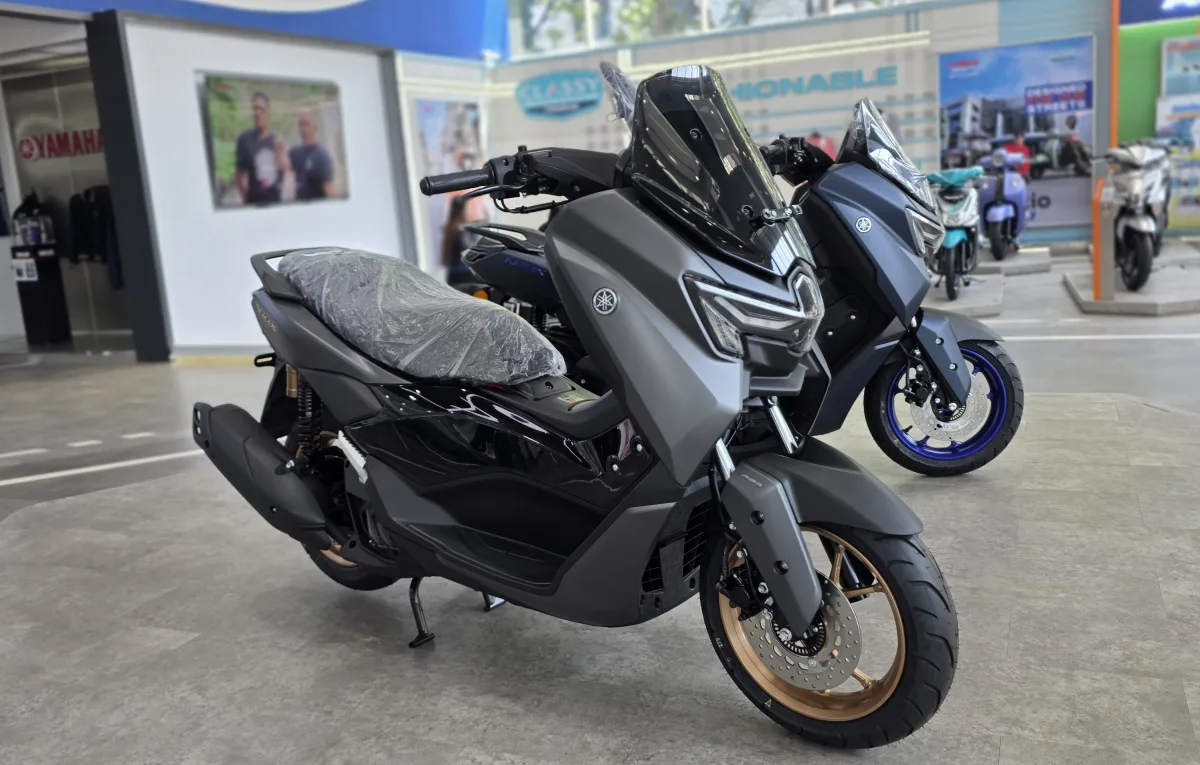
Yamaha NMAX: maxi scooter, generations and what to check when buying used
Yamaha NMAX — produced since 2015, this large-wheeled 'maxi' scooter is particularly popular in the 125 cm³ class. We look at two generations, engine specs, trim differences, and what to check when buying used.






NMAX in brief
NMAX — a city scooter with large wheels, a comfortable seat, and a spacious under-seat storage compartment. The 125 cm³ version is the most widespread in Europe, which can be ridden with an A1 license, and with a B license — only after meeting additional requirements (code 196). In some countries, a larger 155 cm³ version is also available.
The model is praised for its fuel efficiency, easy handling, and comfort for daily city and suburban commuting. Thanks to its larger wheels, the scooter feels more stable on uneven roads compared to smaller-wheeled competitors.
Generations — what's the difference
First generation (2015–2020) — 125 cm³ single-cylinder liquid-cooled engine with automatic twist-and-go transmission, ABS, and basic equipment. This is the most affordable way to get an NMAX, but these models already have significant mileage and age.
Second generation (from 2021) features a new chassis and styling, an improved engine with variable valve timing (VVA), traction control, and more equipment, with the higher trim offering keyless entry (Smart Key). This is a more modern and refined scooter, but it commands a higher price in the used market.
Engines and transmission
The 125 cm³ liquid-cooled four-stroke engine is the most commonly sold in Europe. Power in the 125 class is restricted (around 12–15 hp, depending on the generation), so it's suited to urban environments, but lacks oomph for longer journeys.
The transmission is an automatic without a clutch: no need to change gears, and the rider controls just the accelerator and brakes. The drive belt and pulleys of this system are wear items that need replacing according to the manufacturer's schedule.
What to check when buying a used NMAX
First, check the condition of the automatic transmission: the scooter should move smoothly, without juddering or vibration, and the engine shouldn't whine. Ask when the drive belt, pulleys, and transmission oil were last changed.
Inspect the plastics and bodywork for signs of a drop (scuffed side panels, scuffed fairing ends), check the brakes, suspension, and battery. For a liquid-cooled engine, it's crucial that the coolant level is correct, and always check the scooter's service history.


Trim levels
Trim names vary by market and year; below are general descriptions by generation and equipment.
NMAX 125 (I karta)
2015–2020The base version of the first generation.
- Often comes with ABS
- Under-seat storage
- Simple instrument cluster
NMAX 125 (II karta)
From 2021Updated generation with newer technology.
- Improved engine with VVA system
- Often — traction control
- New design and greater comfort
NMAX 125 Tech MAX
From 2021Higher trim level with more features
- Often — keyless entry (Smart Key)
- Often — smart instrument cluster with phone connectivity
- Often — additional trim and colours
Comparison by generation
| I karta (2015–2020) | II karta (nuo 2021) | Tech MAX | |
|---|---|---|---|
| Who it suits | Ideal for budget-conscious city riders | For daily commuting | For those wanting more features |
| Engine | 125 cm³ | 125 cm³, VVA | 125 cm³, VVA |
| Traction control | None | Often available | Often available |
| Price in the used market (relatively) | Budget-friendly | Mid-range | High-end |
The first generation is a bargain if the scooter is mechanically sound. If you're after more modern features and better safety, go for a second-gen NMAX with a comprehensive service history.
Pros
- Large wheels and stable city driving
- Economical engine
- Spacious under-seat storage
- Wide availability of spare parts and servicing
Cons
- 125 cm³ power limits highway driving
- Used scooters often have 'twisted' histories, so a check is essential
- First-generation equipment is more basic
Frequently asked questions
Can the NMAX be driven with a B category license?
You can ride a 125 cm³ scooter with a B license only if you meet additional requirements (code 196 or similar). If you don't, you'll need an A1 license. Remember, rules vary by country.
Is the NMAX suitable for out-of-town trips?
It's fine for short urban commutes, but the power of a 125 cm³ class limits you on highways. For longer journeys, opt for a bigger engine.
How much does NMAX maintenance cost?
Maintenance is straightforward: regular oil changes, chain and sprocket checks, filters, and brake parts. You'll find the exact schedule in the service manual.
Updated 2026-10-21 · Trim levels and equipment vary by market and model year — check the equipment of the specific car. · Translated automatically


