 English
 Lietuvių
 Latviešu
 Eesti
 Polski
 Русский
 Українська
 Deutsch
 Nederlands
 Čeština
 Slovenčina
 Svenska
 Norsk
 Dansk
 Suomi


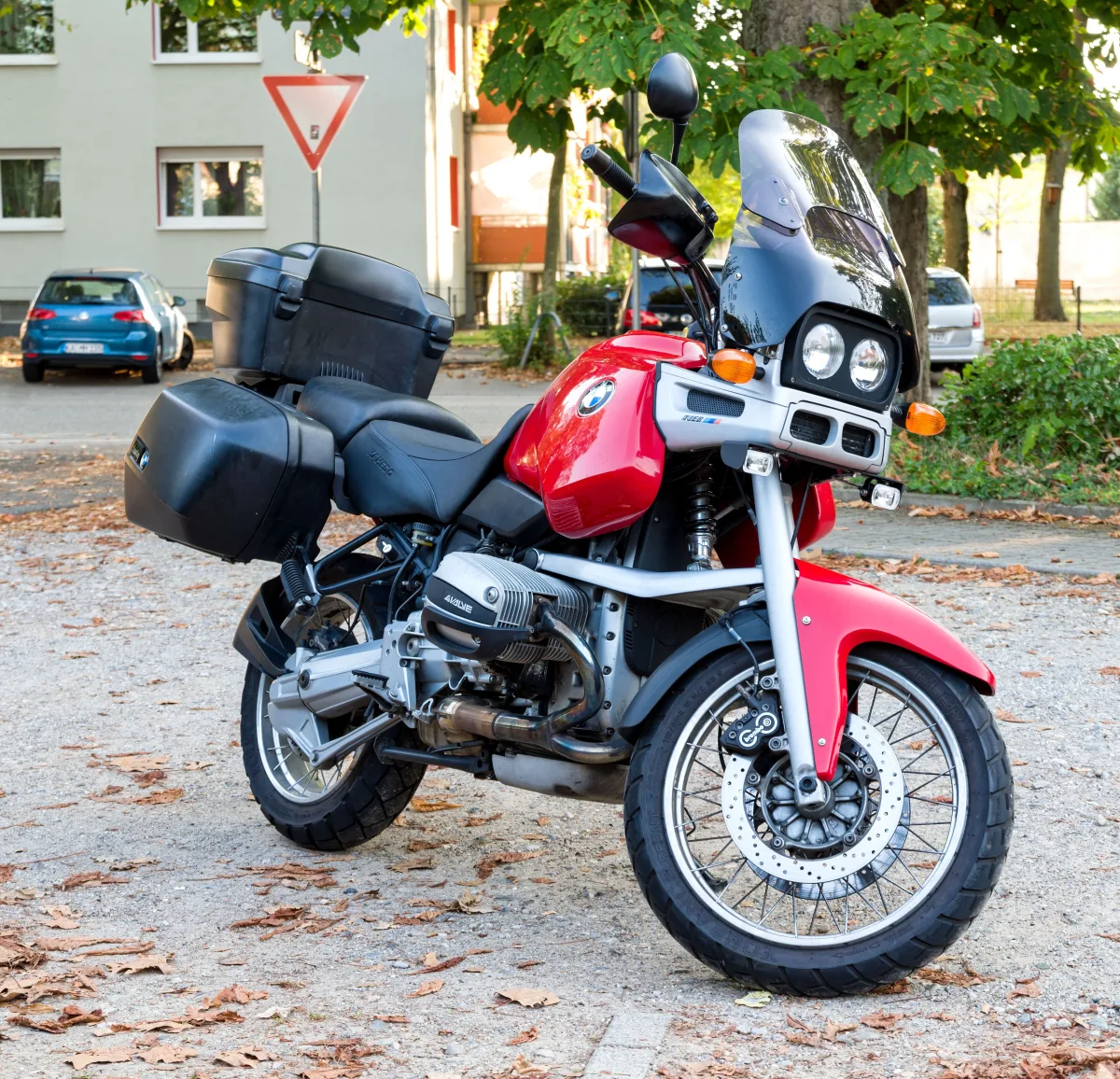
BMW R 1100 GS: boxer engine, generations and what to check when buying used
BMW R 1100 GS — the 1994–1999 adventure tourer with a boxer engine that popularised the GS family. We look at the tech and what to check when buying used.






R 1100 GS in brief
The R 1100 GS debuted in 1994 as the successor to the R 100 GS and received a new engine, a 'Telelever' front suspension and a 'Paralever' rear swingarm. It was one of the first, and later the most popular, large adventure tourers.
Today, it's valued for its robustness, simplicity and touring character. Most bikes are now old, so condition, service history and how it's been used are key.
Generations — what's the difference
The base model is the R 1100 GS with around 1085 cm³ boxer engine and around 80 hp. Alongside it were other R 1100 series variants (e.g., R 1100 R, RT, RS), but the GS stands out with its higher suspension and more versatile character.
Many R 1100 GS bikes have been modified for touring: extra racks, lights, panniers. This can be an advantage, but you need to check if the gear is properly fitted.
Engine and gearbox
The engine is an air- and oil-cooled boxer, around 1085 cm³, with around 80 hp. It's known for its reliability, smooth torque and easy maintenance.
The gearbox is a five-speed manual with a cardan drive to the rear wheel. Some bikes have ABS, which often features a more complex servo mechanism on BMWs of this era.
What to check when buying a used R 1100 GS
Check for oil leaks around the engine and final drive splines, and ensure the driveshaft operates smoothly. Inspect the Telelever and Paralever bushes and joints.
If ABS is fitted, check that the warning light illuminates and extinguishes correctly, as repairing these systems can be expensive.
Many GS owners are adventurers: inspect the frame, seat, pannier mounts, and look for signs of drops and corroded parts. Check for non-original electrical modifications.


Trims and versions
Names and equipment vary by market and year; we list the versions most commonly found in Europe.
R 1100 GS
1994–1999Base version.
- Approximately 1085 cm³ flat-twin
- Telelever and Paralever
- Often – ABS as an option
R 1100 GS (kelionių įranga)
Various yearsWith panniers and additional equipment.
- Often – side panniers
- Often – additional lights
- Check that the equipment doesn't overburden the electrical system
R 1100 GS (su ABS)
Various yearsVersion with ABS system.
- Often — ABS system
- Essential to check the system's operation
- Repairs can be costly
R 1100 GS (importas)
Various yearsMotorcycles, imported from other markets.
- Often — different specifications
- Check documents and history
- May be suited to another market
Version comparison
| Standartinis | Su ABS | Su kelionių įranga | |
|---|---|---|---|
| Who it suits | For versatile driving | For those wanting safer braking | For journeys |
| Year | 1994–1999 | 1994–1999 | Various |
| Engine | Around 1085 cc, around 80 hp | Around 1085 cc, around 80 hp | Around 1085 cc, around 80 hp |
| Price in the used market (relatively) | Budget | Mid-range | Mid-range |
For most buyers, the standard R 1100 GS is a solid choice, or the touring version if it's well-equipped. ABS models are safer, but their systems need checking.
Pros
- A reliable, durable roadster
- Shaft drive
- Suitable for roads and light off-roading
- Lots of knowledge and parts available
Cons
- Heavyweight
- ABS system can be expensive to repair
- Most motorcycles are already old
Frequently asked questions
How does the R 1100 GS differ from the R 1150 GS?
The R 1150 GS has a larger engine, a 6-speed gearbox, and improved technology. The R 1100 GS is simpler and older.
Is the R 1100 GS suitable for long trips?
Yes, it's built for long journeys and is reliable.
Is the R 1100 GS heavy?
Yes, it's quite heavy, but the weight is barely noticeable when riding. Experience is needed at low speeds and when stationary.
Updated 2026-10-21 · Trim levels and equipment vary by market and model year — check the equipment of the specific car. · Translated automatically


