 English
 Lietuvių
 Latviešu
 Eesti
 Polski
 Русский
 Українська
 Deutsch
 Nederlands
 Čeština
 Slovenčina
 Svenska
 Norsk
 Dansk
 Suomi


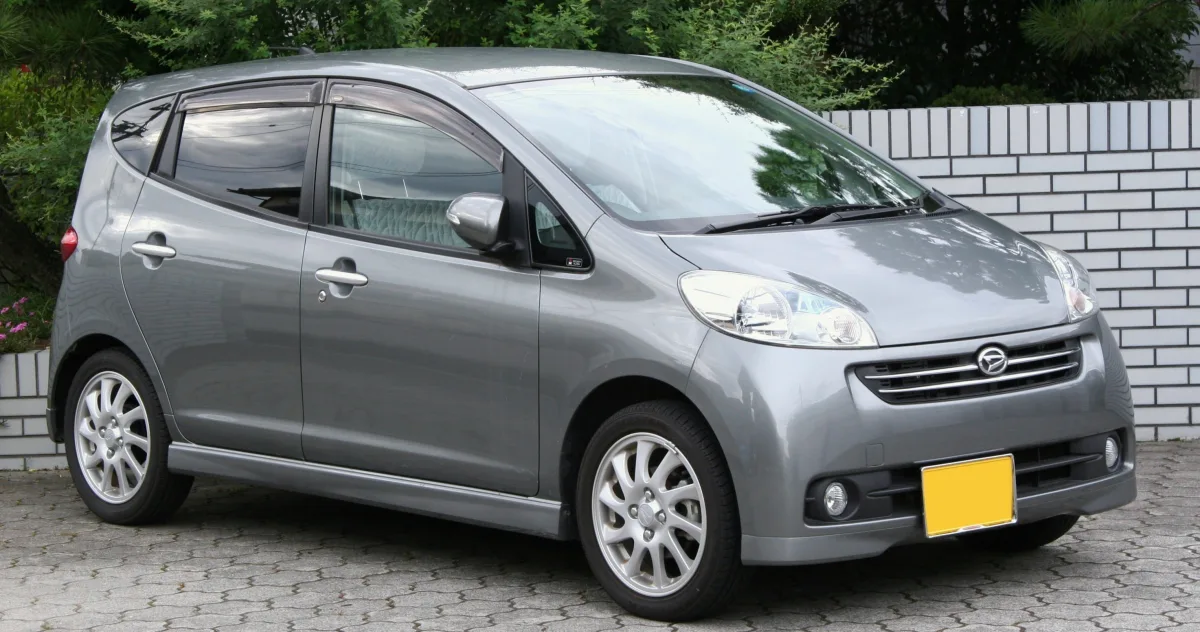
Daihatsu Sonica: 2006–2009 kei class car from Japan
Daihatsu Sonica — the 2006–2009 kei class compact car from Japan, distinguished by its high roofline and spacious interior. We take a look at what makes it special, its engine options, and what you need to know if you're considering importing one.






Sonica in brief
The Sonica is a five-door kei class car — the smallest official class in Japan with strict size and engine restrictions. Because of these, the Sonica is incredibly compact (around 3.4m long), but its interior space is well-utilised.
The model boasts a higher driving position, easy access to the cabin, and effortless city driving. It was never officially sold in Europe, so in Lithuania, you'll only find imported examples.
Why the Sonica is rare
The Sonica was only produced for three years, and kei class cars from Japan are a rarity in Europe. Most are brought over by individual enthusiasts or city drivers.
So, before you buy, make sure the car can be registered in your country, and be prepared for parts and information to be hard to come by.
Engine and transmission
The Sonica has a 660 cm³ three-cylinder engine — the kei class limit. You can find both naturally aspirated and turbocharged versions (RS), with power, like other kei class cars, around 64 hp.
The transmission is either automatic or manual (depending on the version), and the drive is either front-wheel or all-wheel.
What to check when buying a used Sonica
Most important are the import documents and actual mileage: In Japan, cars are often sold with auction reports that help verify the condition.
Check the body for rust, and in turbo versions, the condition of the engine and turbocharger, as well as the operation of the automatic transmission. Finding parts and specialists can be challenging.
Ensure the car can be legally registered in your country and what requirements apply.


Versions
Names and equipment vary by market and year; we describe versions by engine.
Sonica atmosferinis
2006–2009The more basic version without a turbocharger.
- 660 cm³ three-cylinder engine
- Basic tech
- Often — front-wheel drive
Sonica RS (turbo)
2006–2009The sportier version with a turbocharger.
- Around 64 HP
- Livelier acceleration
- Often — additional aerodynamic elements
Version comparison
| Atmosferinis | RS (turbo) | |
|---|---|---|
| Who's it for | For economical city driving | For spirited driving |
| Engine | 660 cm³ three cylinders | 660 cm³ three cylinders with turbocharger |
| Transmission | Front-wheel or all-wheel drive | Front-wheel or all-wheel drive |
| Price in the used market (relatively) | € | € |
For most buyers, the best choice is a well-maintained naturally aspirated version; the RS is for those who prioritise acceleration.
Pros
- Very compact and practical in the city
- Low fuel consumption
- Spacious interior for its size
- Simple and cheap to run technology
Cons
- Rare in Europe, parts harder to find
- Lacks power on the motorway
- Import and registration complexities
Frequently asked questions
What is the 'kei' class?
This is the smallest car class applied in Japan with restrictions on length, width, and engine displacement (up to 660 cm³).
Is the Sonica suitable for long journeys?
Not really: the low-power engine means the car feels best in the city and cruises calmly on the highway.
Does the Sonica have a turbo version?
Yes, the RS version with a turbocharger is offered.
Updated 2026-10-21 · Trim levels and equipment vary by market and model year — check the equipment of the specific car. · Translated automatically


