 English
 Lietuvių
 Latviešu
 Eesti
 Polski
 Русский
 Українська
 Deutsch
 Nederlands
 Čeština
 Slovenčina
 Svenska
 Norsk
 Dansk
 Suomi


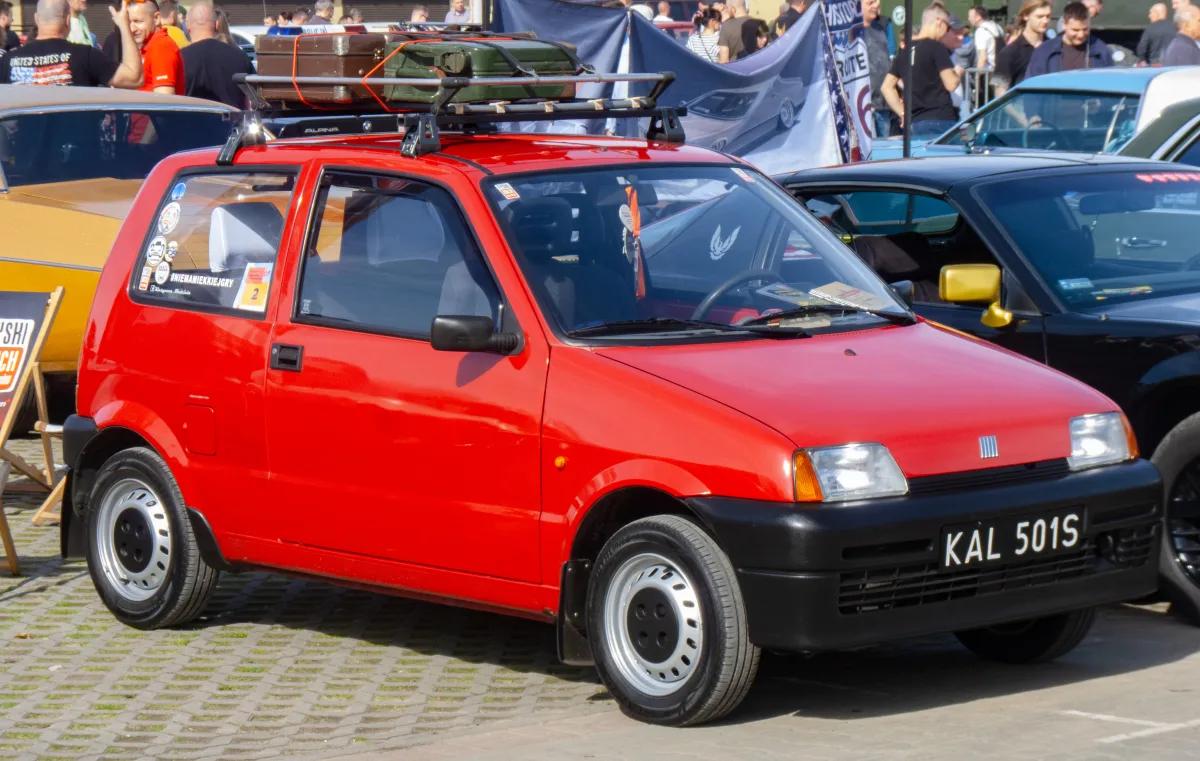
Fiat Cinquecento: generations, engines, and what to know before buying
The Fiat Cinquecento is a city microcar produced from 1991 to 1998, replacing the Fiat 126 and popular across Europe, including Lithuania. In this article, we review the generations, engines, and what's important to check when buying a used Cinquecento.






Cinquecento in brief
The Fiat Cinquecento was introduced in 1991 as the successor to the Fiat 126. Unlike its predecessor, it features a front-mounted, water-cooled engine, front-wheel drive, and a more modern, safer construction. The main production plant was in Poland.
The body is a three-door hatchback with four seats. It's a compact, economical, and maneuverable car, best suited for city driving and short trips.
Generations and trims
The Cinquecento doesn't have distinct generations—it was produced based on a single generation. Differences mainly lie in the engine and trim: the most basic models have the smallest engine, while the sportier version has a larger one.
Besides the main trims, there were also special editions and an electric version, but these are rarely encountered in Lithuania. When buying, pay attention to the specific engine and features of the car.
Engines and transmission
Most commonly found are petrol engines: around 0.7L (around 30HP), around 0.9L (around 40HP), and 1.1L in the Sporting version (around 54HP). All cars are front-wheel drive.
Manual gearbox. The engines are simple, small, but sufficient for city use; due to low power, the car feels restricted on the highway.
What to check when buying a used Cinquecento
The key thing is rust: inspect the sills, floor, wheel arches, and edges of the boot lid. Check the electrical installation, engine start-up, and oil leaks.
Test the clutch, brakes, and suspension. Most parts are easy to find, but it's worth verifying that the right parts are used, not cheap knock-offs.


Trim levels
Names and equipment vary by market and year; we list the most commonly found trims in Europe.
Cinquecento 700
1991–1998The most basic car with the smallest engine.
- Around 0.7-litre engine
- Basic trim
- Economical in the city
Cinquecento 900
1991–1998A more popular version with a larger engine.
- Around 0.9-litre engine
- Better dynamics
- Often comes with more equipment
Cinquecento SX
In recent yearsThe version with more equipment.
- More luxurious interior
- Often — better trim
- More comfortable cabin
Cinquecento Sporting
From 1994Sportier version with 1.1 l engine.
- 1.1 l, around 54 HP
- Sportier looks
- Sporty trim
Comparison of Cinquecento versions
| 700 | 900 | Sporting | |
|---|---|---|---|
| Who it suits | For an affordable city car | For a versatile city car | For a sportier look |
| Engine size (approx.) | 0.7 l | 0.9 l | 1.1 l |
| Power (approx.) | 30 hp | 40 hp | 54 hp |
| Price in the used market (relatively) | € | € | € |
For most buyers, the 900 version is the best choice, offering more power than the 700. The Sporting trim is for those who want a sportier look and more dynamism.
Pros
- A compact, manoeuvrable city car
- Economical and cheap to run
- Simple construction
- Parts are usually readily available
Cons
- Rust — the main issue
- Lacking power and comfort on the motorway
- An older car with limited safety features
Frequently asked questions
How much power does the Fiat Cinquecento have?
It depends on the engine: around 30 hp (700), around 40 hp (900) and around 54 hp (Sporting 1.1).
How does the Cinquecento differ from the Fiat 126?
The Cinquecento has a front, water-cooled engine and front-wheel drive, while the 126 has a rear, air-cooled engine. The Cinquecento is more modern and safer.
Is the Cinquecento suitable for daily use?
Yes, for city driving and short trips. On the motorway and for long journeys, it might fall short on power and comfort.
Updated 2026-10-19 · Trim levels and equipment vary by market and model year — check the equipment of the specific car. · Translated automatically


