 English
 Lietuvių
 Latviešu
 Eesti
 Polski
 Русский
 Українська
 Deutsch
 Nederlands
 Čeština
 Slovenčina
 Svenska
 Norsk
 Dansk
 Suomi


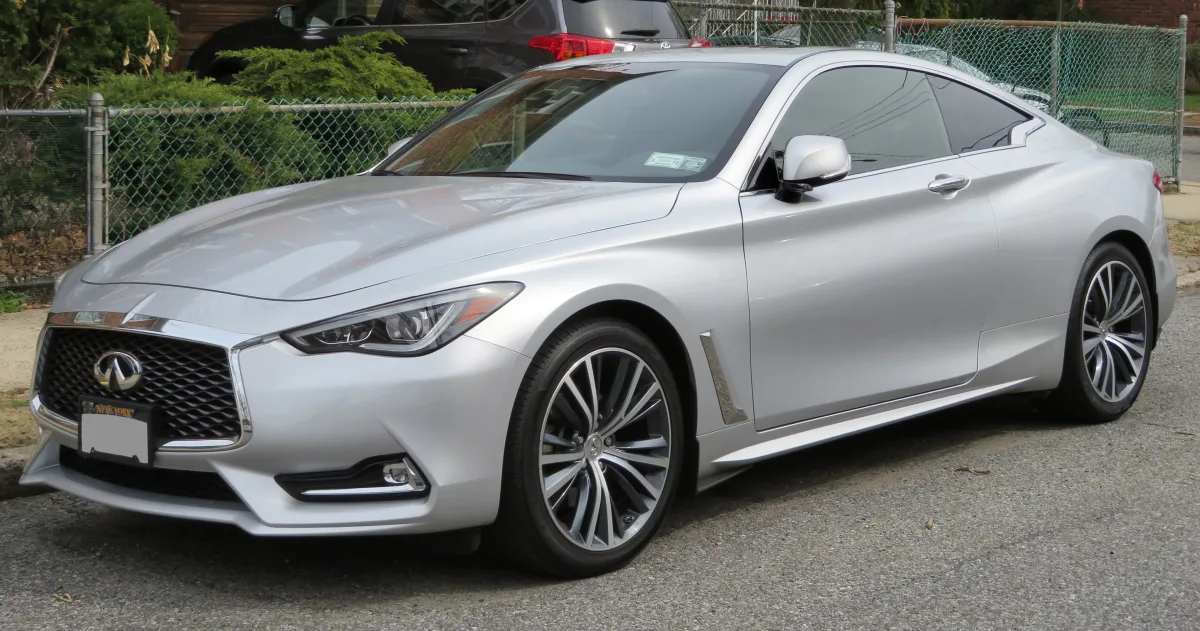
Infiniti Q60: generations, engines and trims
The Infiniti Q60 is a two-door coupe that has replaced the G37 coupe since 2013 and evolved into a completely new second generation in 2016. We look at how the two generations differ, which engines and trims are most popular, and what to check when buying a used Q60 in Lithuania.






Q60 in brief
The Q60 is a rear-wheel-drive (or optionally all-wheel-drive) sporty coupe with 2+2 seating. The first generation was essentially a rebranded G37 coupe, while the second (2016–2022) shares its platform with the Q50 sedan and features a more distinctive, aggressively styled design.
The Q60 is a rare sight in Lithuania — a niche car for those who appreciate unique styling over popularity. As a result, the used market is small, and prices vary depending on the engine and trim.
Which generation to choose
The first generation (circa 2013–2015) offers classic styling and a naturally aspirated 3.7-litre V6 engine, appealing to those who prefer simpler, more traditional technology.
The second generation (V37, 2016–2022) is more modern and spacious, with two multimedia screens, advanced safety systems, and turbocharged engines. Most used Q60s fall into this category, making it the primary focus.
Engines and transmissions
The first-generation Q60 came with a 3.7-litre V6 petrol engine (around 330 hp) paired with a 7-speed automatic or 6-speed manual gearbox. In Europe, the second-generation offered a 2.0-litre turbo petrol engine (around 210 hp), co-developed with Mercedes-Benz, and a 3.0-litre V6 twin-turbo petrol engine — around 300 hp, or around 400 hp in the sportier Red Sport 400 version.
Most second-generation models come with a 7-speed automatic gearbox. An all-wheel-drive option is also available, which is worth considering in Lithuania due to winter conditions.
What to check when buying a used Q60
In the second-generation models, test the steering: some have an electronic steering system (Direct Adaptive Steering) that operates differently from the norm — see if you like the feel before buying. Also, check if the infotainment system works smoothly, as it has been criticised for being sluggish since its launch.
Check turbo engines (especially the 3.0-litre) against their service history and oil change regularity, and due to the sporty suspension and large wheels, inspect the suspension and tyre wear. For the first-generation 3.7-litre V6, evaluate it based on mileage and oil consumption.


Trim levels
Names and equipment vary by market and year; we list the trims most commonly found in Europe.
Pure
2nd genBase trim with the 2.0-litre turbo engine.
- Often — light-alloy wheels
- Often — LED headlights
- Often — dual-screen infotainment system
Premium
2nd genA version that enhances comfort and equipment.
- Often — leather upholstery
- Often — heated seats
- Often — additional driver assistance systems
Sport
2nd genA sportier look and drive variant.
- Often — larger alloy wheels
- Often — sport seats
- Often — sportier suspension
Red Sport 400
2nd genThe most powerful version with a 3.0-litre V6 twin-turbo engine.
- Around 400 hp of power
- Exclusive Red Sport badging
- Often — sporty interior and larger alloy wheels
Second-generation trim comparison
| Pure | Premium | Sport | Red Sport 400 | |
|---|---|---|---|---|
| Who it's for | For everyday driving | For comfort | For a sporty look | For maximum driving pleasure |
| Wheels (most often) | 18–19 inch | 19 inch | 19–20 inch | 19–20 inch |
| Interior | Basic trim | Standard trim | Sport seats | Sport seats and special badging |
| Engine | 2.0-litre turbo, around 210 hp | 2.0-litre turbo or 3.0-litre V6 | 2.0-litre turbo or 3.0-litre V6 | 3.0-litre V6 twin-turbo, around 400 hp |
| Price in the used market (relatively) | €€ | €€ | €€€ | €€€ |
Most buyers' top pick is the Premium with the 2.0-litre turbo or 3.0-litre V6 engine. The Red Sport 400 is worth considering only if you prioritise raw power and are actively seeking a standout car.
Pros
- A distinctive, instantly recognisable design
- The option to choose a powerful V6 and all-wheel drive
- A comfortable interior and sporty handling
- A rare car in Lithuania
Cons
- Limited supply and restricted service options
- The infotainment system and electronic steering aren't to everyone's taste
- Fuel consumption is high with the more powerful engines
Frequently asked questions
Is the Q60 worth buying in Lithuania?
If you want a unique coupe and aren't put off by less common parts or servicing, then yes. Before buying, find out where you can get the car serviced.
Which engine is best?
For most, the 3.0-litre V6 turbo petrol is the way to go – it offers a great blend of power and comfort. If fuel economy is more important, consider the 2.0-litre turbo.
Does the Q60 have all-wheel drive?
Yes, it's offered as an optional extra. It's more practical for Lithuanian winters than just a rear-wheel drive.
Updated 2026-10-21 · Trim levels and equipment vary by market and model year — check the equipment of the specific car. · Translated automatically


