 English
 Lietuvių
 Latviešu
 Eesti
 Polski
 Русский
 Українська
 Deutsch
 Nederlands
 Čeština
 Slovenčina
 Svenska
 Norsk
 Dansk
 Suomi


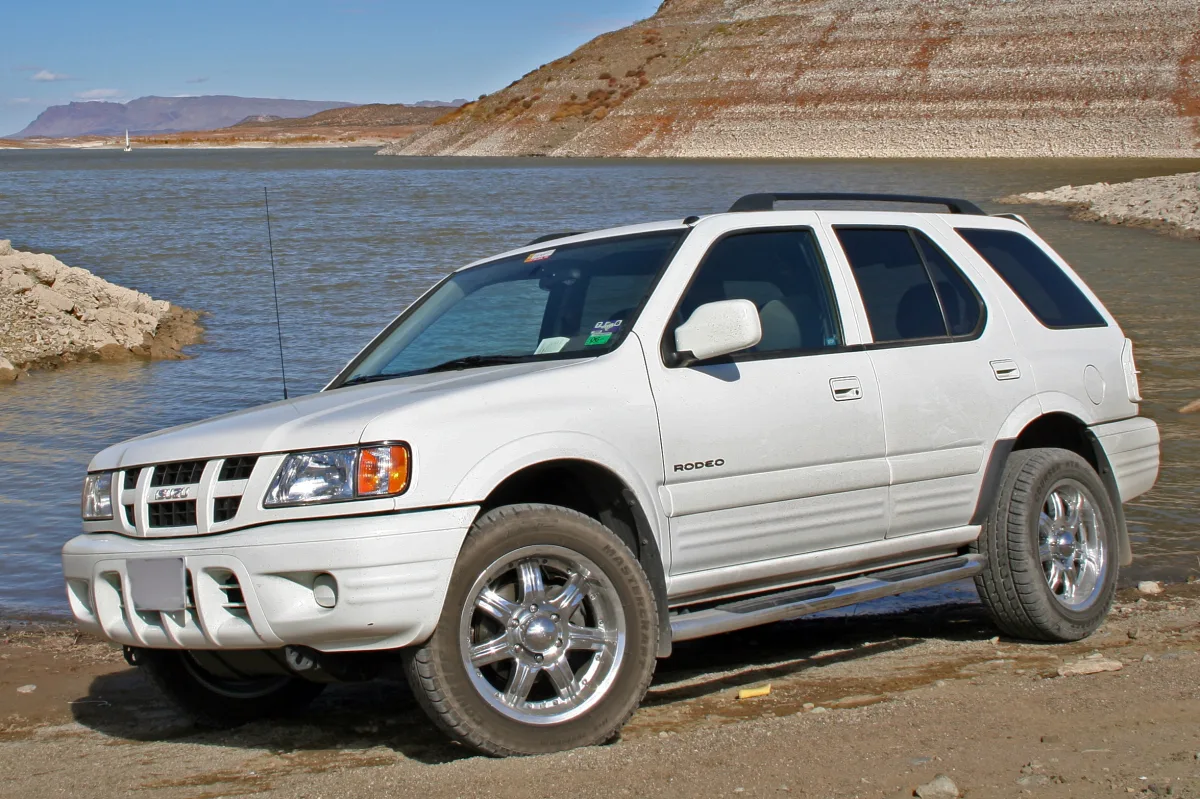
Isuzu Rodeo: pickup and SUV, generations, engines, and what the buyer should know
The name Rodeo was used by Isuzu for both a pickup and an SUV, so the model means different vehicles in different markets. We'll look at how they differ, which engines were offered, and what used buyers should pay attention to.






Rodeo in brief
Under the Rodeo name, Isuzu produced two distinct vehicles from 1988 to 2004. In many Asian and Oceanic markets, the Rodeo was a pickup, while in North America, it was a mid-size SUV, sold as the Isuzu Rodeo and Honda Passport sibling.
Therefore, in ads, check carefully which body style the Rodeo is. It wasn't widely sold in Europe, so you'll often find imports from other markets.
Pickup vs SUV — what's the difference
The pickup was a workhorse: sturdy frame, open cargo bed, and several cab configurations. It was known for its ruggedness and simple mechanics.
The SUV was a passenger vehicle with five seats, an enclosed cargo area, and full-time or part-time four-wheel drive. The second-gen SUV (1998–2004) was more modern and comfortable.
Engines and transmissions
SUV versions typically came with four-cylinder and V6 petrol engines (around 2.2L and 3.2L, 3.5L V6). Power output varied by market and year.
Pickups used four-cylinder petrol and diesel engines. Transmissions were manual or automatic, with rear-wheel or four-wheel drive.
What to check when buying a used Rodeo
Check the frame, body panels, and undercarriage for rust — this is crucial in 4x4s of this age. Ensure all-wheel drive and the transfer case are working.
Request information about its import history and check the mileage against the documents and service records. Ensure the vehicle meets your country's registration requirements.
Finding parts can be tricky, so check if spares are available before buying.


Versions
Names and equipment vary by market and year; we describe versions by body style.
Rodeo pikapas
from 1988A workhorse pickup with a frame.
- Robust construction
- Often — diesel engine
- Rear-wheel or all-wheel drive
Rodeo SUV (I karta)
1991–1997The first passenger-oriented Rodeo SUV.
- Five-door body
- Often — V6 petrol engine
- Simple mechanics
Rodeo SUV (II karta)
1998–2004A more modern and comfortable SUV.
- Refreshed design
- Often — 3.2-litre V6
- More comfort and safety
Comparing versions
| Pikapas | SUV (I) | SUV (II) | |
|---|---|---|---|
| Who it's for | For work and off-road adventures | Your everyday 4x4 | For families and road trips |
| Body style | Pikapas | Five-door SUV | Five-door SUV |
| Engine (most common) | 4-cylinder petrol or diesel | Petrol (4-cylinder or V6) | Petrol (4-cylinder or V6) |
| Price in the used market (relatively) | € | € | € |
If you need a straightforward, rugged SUV — opt for a second-gen model in good condition, while a pickup is ideal for those after a workhorse.
Pros
- Simple and rugged technology
- Ability to drive off-road with full four-wheel drive
- Various engine choices
- Often affordable in the used market
Cons
- Rare in Europe, parts can be hard to find
- Risks of corrosion and age
- High fuel consumption with V6 engines
Frequently asked questions
Is the Rodeo a pickup or an SUV?
Both: in different markets, the Rodeo nameplate was used for both pickups and SUVs.
Is the Rodeo related to the Honda Passport?
Yes, in North America, the SUV was also sold as the Honda Passport, which used Isuzu technology.
Is the Rodeo suitable for off-roading?
Many versions come with full four-wheel drive, so they handle well off-road, but each car's condition should be checked individually.
Updated 2026-10-21 · Trim levels and equipment vary by market and model year — check the equipment of the specific car. · Translated automatically


