 English
 Lietuvių
 Latviešu
 Eesti
 Polski
 Русский
 Українська
 Deutsch
 Nederlands
 Čeština
 Slovenčina
 Svenska
 Norsk
 Dansk
 Suomi


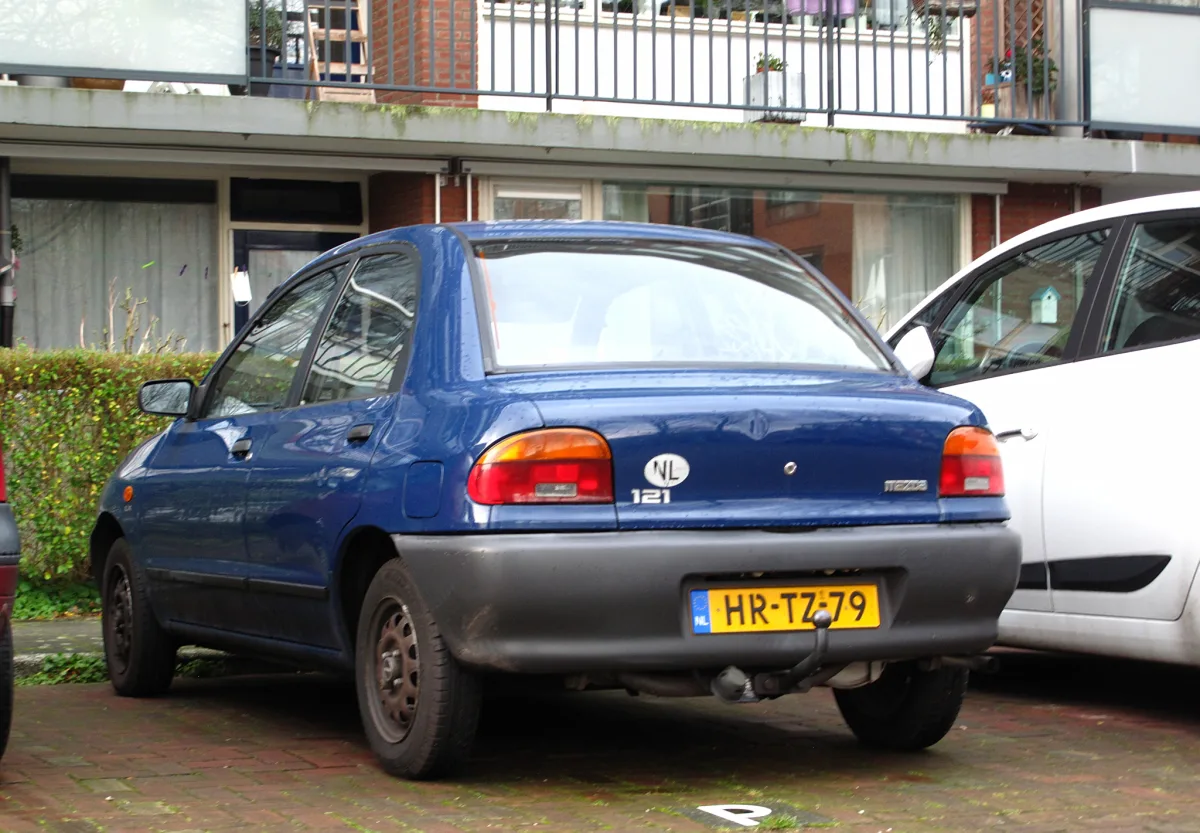
Mazda 121: generations, engines and what to know when buying
The Mazda 121 is a compact city hatchback produced from 1987 to 2002. We look at three generations, engines and what to check before buying a used one.






Mazda 121 in brief
The Mazda 121 was a compact, practical city hatchback that gained popularity in Europe for its simplicity and reputation for decent reliability. Over 15 years, three generations were produced.
Today, it's an affordable old car, often chosen as a city runabout or second car.
Which generation to choose
The first generation (1987–1990) is the simplest and oldest. The second generation (1990–1996) stands out with a smoother design and more modern tech, and one of its versions came with a fabric sunroof called the 'Funtop'.
The third generation (1996–2002) was built on Ford Fiesta underpinnings and is the newest, so it's often what buyers are after.
Engines and gearboxes
The Mazda 121 came with small-capacity petrol engines, roughly from 1.3 to 1.5 litres, and the third generation also had a 1.25-litre option. Some versions even had a diesel engine.
The gearbox is either manual or automatic.
What to check when buying a used Mazda 121
Inspect the body for rust, especially the sills, wheel arches and rear end. For a car of this age, that's the main issue.
Check the engine, cooling system, timing belt condition and oil leaks. Test the gearbox and clutch.
The range of parts depends on the generation — third-gen parts are similar to those of the Ford Fiesta, so they're easier to find.


Trims
Names and equipment vary by market and year; we list the versions most commonly found in Europe.
Mazda 121 I karta
1987–1990The simplest and oldest generation.
- Small petrol engine
- Basic equipment
- Hatchback body
Mazda 121 II karta
1990–1996The rounded design generation.
- Often — 1.3-litre 16-valve engine
- Often — electric windows in higher-spec versions
- One version comes with a fabric sunroof called the 'Funtop'
Mazda 121 III karta
1996–2002The newest generation based on the Ford Fiesta.
- Often — 1.25 l petrol engine
- More modern tech than earlier generations
- Parts similar to Ford Fiesta
Generation comparison
| I karta | II karta | III karta | |
|---|---|---|---|
| Who it suits | For classic and collector car enthusiasts | For everyday city driving | For daily use |
| Year | 1987–1990 | 1990–1996 | 1996–2002 |
| Price in the used market (relatively) | € | € | € |
For practical use, best to pick the third generation, while design and simplicity fans should go for the second. In all cases, condition is key.
Pros
- A small and practical city car
- Simple technology
- Low price
- Third time around — shares parts with the Ford Fiesta
Cons
- Risk of rust
- Old age and high mileage
- Small boot
Frequently asked questions
How many times was the Mazda 121 owned?
Three: 1987–1990, 1990–1996 and 1996–2002
Does the Mazda 121 have anything in common with a Ford?
The third generation was built on the Ford Fiesta platform
What is the Mazda 121 Funtop?
It's the second-generation model with a fabric sunroof
Updated 2026-10-19 · Trim levels and equipment vary by market and model year — check the equipment of the specific car. · Translated automatically


