 English
 Lietuvių
 Latviešu
 Eesti
 Polski
 Русский
 Українська
 Deutsch
 Nederlands
 Čeština
 Slovenčina
 Svenska
 Norsk
 Dansk
 Suomi


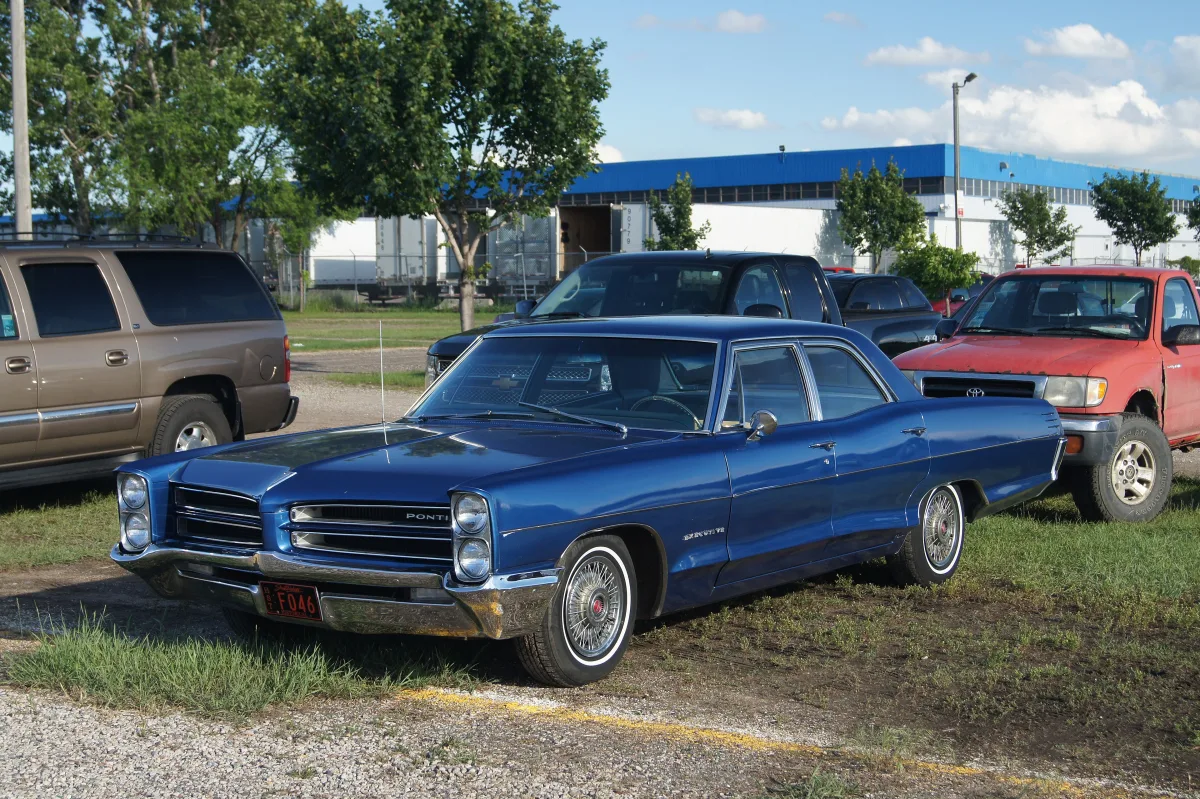
Pontiac Executive: 1967–1970 generations, engines, and what to check
Pontiac Executive — the large American car produced from 1967 to 1970. It replaced the Star Chief and slotted in between the Catalina and Bonneville. Here, we look at the body styles, engines, and what to know when hunting for a classic Executive.






Executive in brief
The Executive nameplate replaced the long-running mid-range Star Chief model. In 1966, all Pontiacs of this class were called Star Chief Executive, but from 1967 onwards, it was simply Executive. This model featured more luxurious trim, more standard equipment, a longer wheelbase, and a longer body than the cheaper Catalina, but it wasn't as luxurious as the Bonneville.
The Executive shared its wheelbase and dimensions with the Bonneville. It was the least popular full-size Pontiac: 35,491 units in 1967, 32,597 in 1968, 25,845 in 1969, and 21,936 in 1970. It was replaced by the Bonneville in 1971.
Body styles and years
The Executive was offered as a four-door pillarless sedan, a two-door hardtop coupe, a four-door hardtop sedan, and a Safari station wagon (with two or three rows of seats). There was no convertible.
Executive Safari wagons differed from the Catalina and Bonneville Safari with fake wood paneling on the sides.
Engines and transmissions
The Mechanically Executive was almost identical to the Catalina. The standard engine was a 400 cubic inch (around 6.6-litre) V8 with a dual-barrel carburettor (265 bhp). Optional more powerful V8s included the 428 HO, which produced around 390 bhp until 1969, and the 455 cubic inch (around 7.5-litre) V8 with 370 bhp, introduced in 1970.
The standard transmission was a three-speed manual with a column-mounted shifter, but from 1967 to 1968, a floor-mounted four-speed gearbox with a Hurst shifter was available. However, nearly 98% of Executives came with a three-speed automatic Turbo Hydra-Matic transmission.
What to check when buying an Executive
The most important thing is corrosion: inspect the frame, floor pans, sills, boot floor, and wings. These cars are large and heavy, so the condition of the suspension, steering mechanism, and brakes is also crucial.
Executive parts are often interchangeable with Catalina and Bonneville, making spares easier to find. However, unique trim details, such as the woodgrain dashboard, can be hard to come by. Check the VIN and engine numbers.


Trim Levels
The Executive didn't have distinct trim levels, so we present the body styles.
4 durų sedanas
1967–1970Four-door sedan with a pillar.
- The standard V8 engine (400 cubic inches)
- Mostly came with an automatic transmission
- More luxurious interior than the Catalina
2 durų kietaviršis
1967–1970Two-door coupe without a pillar.
- Sportier appearance
- The same V8 engine
- Mostly came with an automatic transmission
4 durų kietaviršis
1967–1970Four-door hardtop.
- No pillar between doors
- Spacious interior
- Mostly came with an automatic transmission
Safari
1967–1970Estate.
- Two- and three-row seating options
- Wood-effect trim on the sides
- Large boot
Executive body styles compared
| 4 durų sedanas | 2 durų kietaviršis | 4 durų kietaviršis | Safari | |
|---|---|---|---|---|
| Who it's for | The classic daily driver | Style and looks | Comfort and passengers | Family and cargo |
| Body | Saloon with a pillar | Coupe | Hardtop sedan | Station wagon |
| Engine | V8, 400+ cubic inches | V8, 400+ cubic inches | V8, 400+ cubic inches | V8, 400+ cubic inches |
| Price in the used market (relatively) | Mid-range | High-end | Mid-range | High-end |
For most buyers, a four-door sedan or hardtop is the best fit. Coupes and the Safari are rarer and more expensive.
Pros
- More luxurious interior than the Catalina
- Powerful V8 engine
- Classic American design
- Rarer than the Catalina and Bonneville
Cons
- High fuel consumption
- Very large and heavy car
- Low safety by modern standards
Frequently asked questions
How does the Executive differ from the Catalina and Bonneville?
The Executive had a more luxurious interior and a longer body than the Catalina, but it wasn't as luxurious as the Bonneville, which it shared a wheelbase with.
How many Executives were made?
In total, around 116,000 units were produced over four years: 35,491 in 1967, 32,597 in 1968, 25,845 in 1969, and 21,936 in 1970.
What replaced the Executive?
The Bonneville took over in 1971.
Updated 2026-10-21 · Trim levels and equipment vary by market and model year — check the equipment of the specific car. · Translated automatically


