 English
 Lietuvių
 Latviešu
 Eesti
 Polski
 Русский
 Українська
 Deutsch
 Nederlands
 Čeština
 Slovenčina
 Svenska
 Norsk
 Dansk
 Suomi


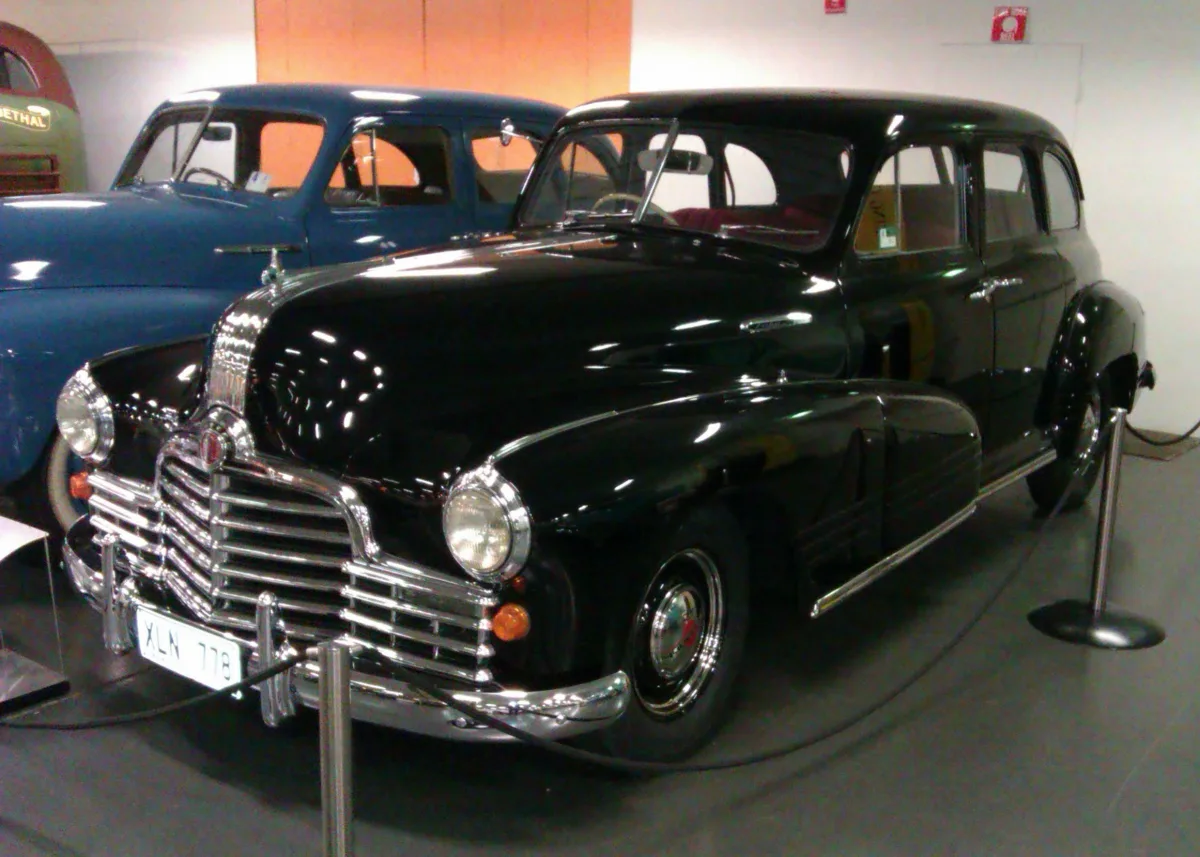
Pontiac Torpedo: post-war classic with a six or eight-cylinder engine
Pontiac Torpedo — the Pontiac model series from the 1940s, produced before and after World War II. We look at what sets it apart, which engines were used, and what to check before buying a classic car.






Torpedo in brief
The Torpedo was one of the main Pontiac series at the end of the 1940s and in the post-war years. The name indicated an aerodynamic body shape, which was trendy at the time.
The model was offered in several body styles: sedan, coupe, convertible, and station wagon. Pontiac was known for its distinctive chrome strips on the hood and grilles during this period.
Pre-war and post-war Torpedo
The post-war Torpedo essentially continued the pre-war design with minor changes, but differed in interior trim and the arrangement of chrome elements.
Post-war models are more common among surviving cars, so they are more likely to be found on the market. Before buying, find out which generation of the car the seller is offering.
Engines and transmissions
The Torpedo was equipped with L-type (flathead) inline engines — six-cylinder (around 3.9 l) and eight-cylinder (around 4.1 l). Both engines were known for their smooth operation and good low-end torque.
The transmission was manual, and in the post-war period, an automatic “Hydra-Matic” was optionally available.
What to check when buying a Pontiac Torpedo
First up — corrosion: check the sills, floors, undersides of the wings, and the boot floor. Ensure the body hasn't been repaired with outdated or subpar methods.
Inspect the engine, gearbox, brakes, and electrical system; original electrical components are often replaced. Parts selection in the US is vast, but they need to be shipped to Lithuania.


Trim levels
Torpedo trim levels depended on the year of manufacture and body type; differences often arise due to restoration.
Torpedo Sedan
Pre-war and post-warA four-door saloon is the most practical option.
- Four doors, spacious interior
- Chrome trim details
- Often — original or restored trim
Torpedo Convertible
Pre-war and post-warConvertible with a fabric roof.
- Fabric roof
- Open-top driving
- Rarer and pricier than the saloon
Body comparison
| Sedanas | Kupė | Kabrioletas | |
|---|---|---|---|
| Who it suits | For families and shows | For shows and relaxed driving | For collectors |
| Body | 4-door | 2-door | 2-door, fabric roof |
| Engine | Six or eight cylinders | Six or eight cylinders | Six or eight cylinders |
| Price in the used market (relatively) | €€ | €€ | €€€ |
The sedan is a smarter route to a post-war Pontiac, while the convertible is more suited to collectors seeking a unique automobile.
Pros
- Classic American styling
- A smooth six or eight-cylinder engine
- A good selection of parts from the USA
- Strong collectible potential
Cons
- Risk of corrosion and high repair costs
- High fuel consumption
- Some cars with unverified restoration quality
Frequently asked questions
Why is this model called the Torpedo?
The name indicates an aerodynamic, torpedo-shaped body, which was fashionable at the time.
Is the Torpedo suitable for daily use?
No, it's a collectible car. It's better suited for shows and leisurely drives.
Is it easy to find parts?
The selection in the USA is large, but they need to be ordered from abroad for Lithuania. Some body parts and interior elements can be expensive.
Updated 2026-10-21 · Trim levels and equipment vary by market and model year — check the equipment of the specific car. · Translated automatically


