 English
 Lietuvių
 Latviešu
 Eesti
 Polski
 Русский
 Українська
 Deutsch
 Nederlands
 Čeština
 Slovenčina
 Svenska
 Norsk
 Dansk
 Suomi


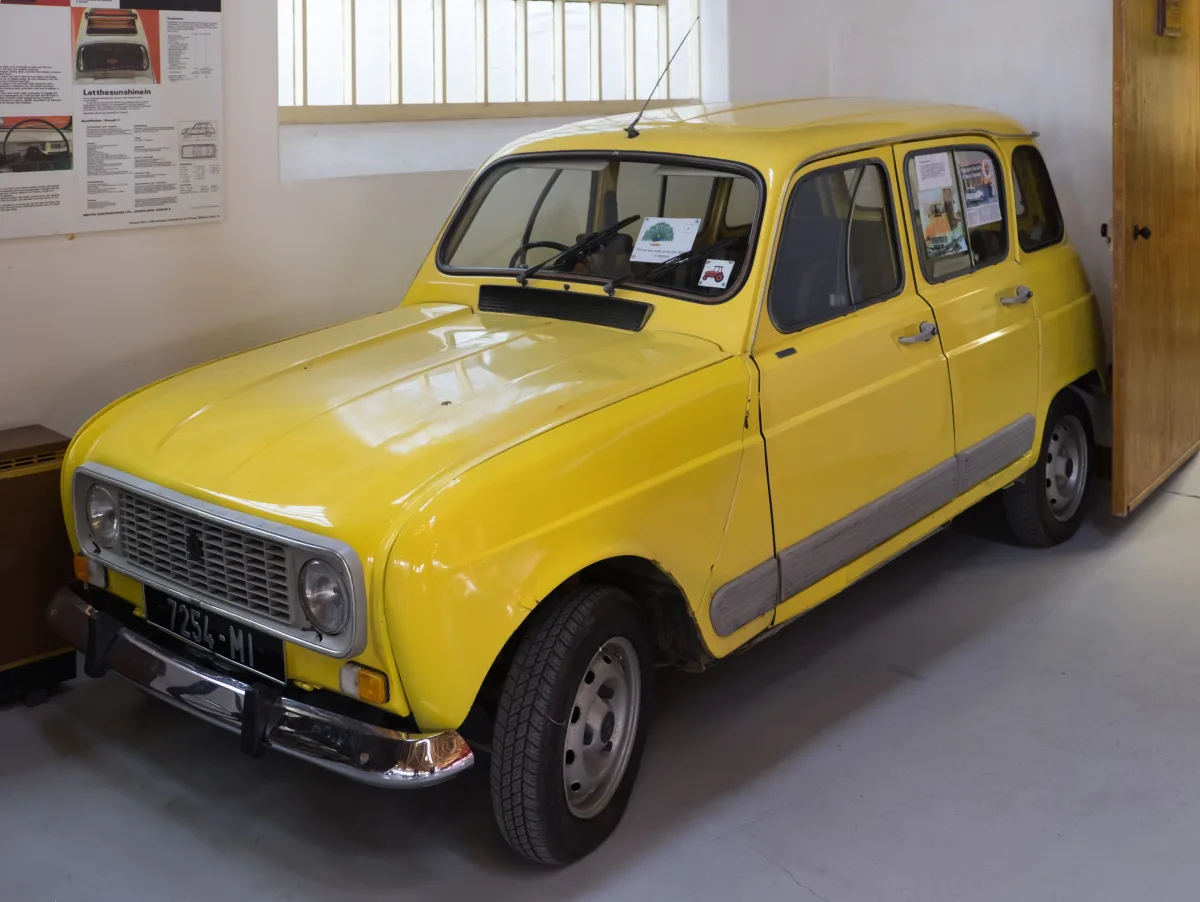
Renault 4: generations, engines and what to know before buying
The Renault 4 is a practical front-wheel-drive hatchback introduced in 1961, produced for over thirty years and sold in millions of units. In this article, we review the versions, engines, and what's important to check when buying a used Renault 4.






Renault 4 in brief
The Renault 4 was designed as a simple, affordable, and versatile car that could compete with the Citroën 2CV. It was one of the first mass-produced cars with front-wheel drive and a five-door body with a large rear hatch — a novelty at the time.
Production continued in France until the early 1990s, and the last cars were built in Slovenia in 1994. Today, the Renault 4 is valued as a classic car: simple, easy to maintain, and with a distinctive look.
Versions and generations
The Renault 4 didn't have clearly defined generations — the body shape barely changed, but the engines, interior, trim, and features did. Early cars have simpler trim, while later models offer more comfort in the cabin.
As well as the standard hatchback, commercial versions (Fourgonnette) and several limited editions were produced. When buying, it's important to know which specific version you're choosing, as parts and engines vary.
Engines and gearbox
The Renault 4 had small-capacity petrol engines, ranging from around 0.6 to 1.1 litres, with power outputs of about 23–35 hp. These engines are simple and long-lasting, but not suited to high speeds.
The gearbox is a 4-speed manual, with the gear shift lever protruding from the dashboard — one of the recognizable Renault 4 features. It takes some getting used to, but it's reliable.
What to check when buying a used Renault 4
The key question is rust. Check the floors, sills, chassis parts, and wings, as corrosion is the biggest issue for these cars. Also, consider that some body parts might be expensive to fit or hard to find.
Inspect the undercarriage, engine oil leaks, gearbox operation, and electrical installation. If the car has been restored, ask for documentation, and if it lacks a valid inspection, budget for the costs.


Trim levels
Names and equipment vary by market and year; we list the most commonly found trims in Europe.
Renault 4L
From 1961 onwardsThe classic, most widely recognized version.
- A small petrol engine
- 4-speed gearbox, lever from the dashboard
- Simple, reliable construction
Renault 4 TL
Later yearsMore comfort and better trim than the basic version.
- A more comfortable interior
- Often — additional interior trim
- The same trusty engine
Renault 4 GTL
Later yearsLater version with a larger engine and better kit
- Engine up to around 1.1 litres
- Often — a better interior finish
- Often — more comfortable seats
Fourgonnette
Most production yearsCommercial version with a large boot
- Without rear seats
- Built for work
- Practical
Comparing Renault 4 versions
| 4L | TL | GTL | |
|---|---|---|---|
| Who it's for | For classic car enthusiasts | More comfort | For a more comfortable drive |
| Engine (approx) | Up to 0.8 L | Around 0.8 L | Up to 1.1 L |
| Body | 5-door hatchback | 5-door hatchback | 5-door hatchback |
| Price in the used market (relatively) | Budget | Budget | Mid-range |
For most buyers, it's not the specific version that matters, but the condition of the body and engine. If you're after a bit more comfort, it's worth checking out the later TL or GTL trims.
Pros
- Simple, easy-to-fix construction
- Versatile interior and large boot with rear hatch
- Classic distinctive look
- Relatively affordable classic car
Cons
- Rust — the main issue
- Slow, not suited to high speeds
- Some parts are hard to find
Frequently asked questions
How much horsepower does the Renault 4 have?
Power varies roughly from 23 to 35 HP across different versions. It's a simple, uncomplicated car, perfect for relaxed driving.
Is the Renault 4 suitable for daily use?
By today's standards, it's limited: it's slow and lacks many safety systems. It's often used as a classic car, for example, on weekends.
Why is the Renault 4 called the Renault 4L?
The 'L' stood for 'Luxe'—a more comfortable version, and later the entire model was often referred to as the 4L. You might see both names in ads.
Updated 2026-10-19 · Trim levels and equipment vary by market and model year — check the equipment of the specific car. · Translated automatically


