 English
 Lietuvių
 Latviešu
 Eesti
 Polski
 Русский
 Українська
 Deutsch
 Nederlands
 Čeština
 Slovenčina
 Svenska
 Norsk
 Dansk
 Suomi


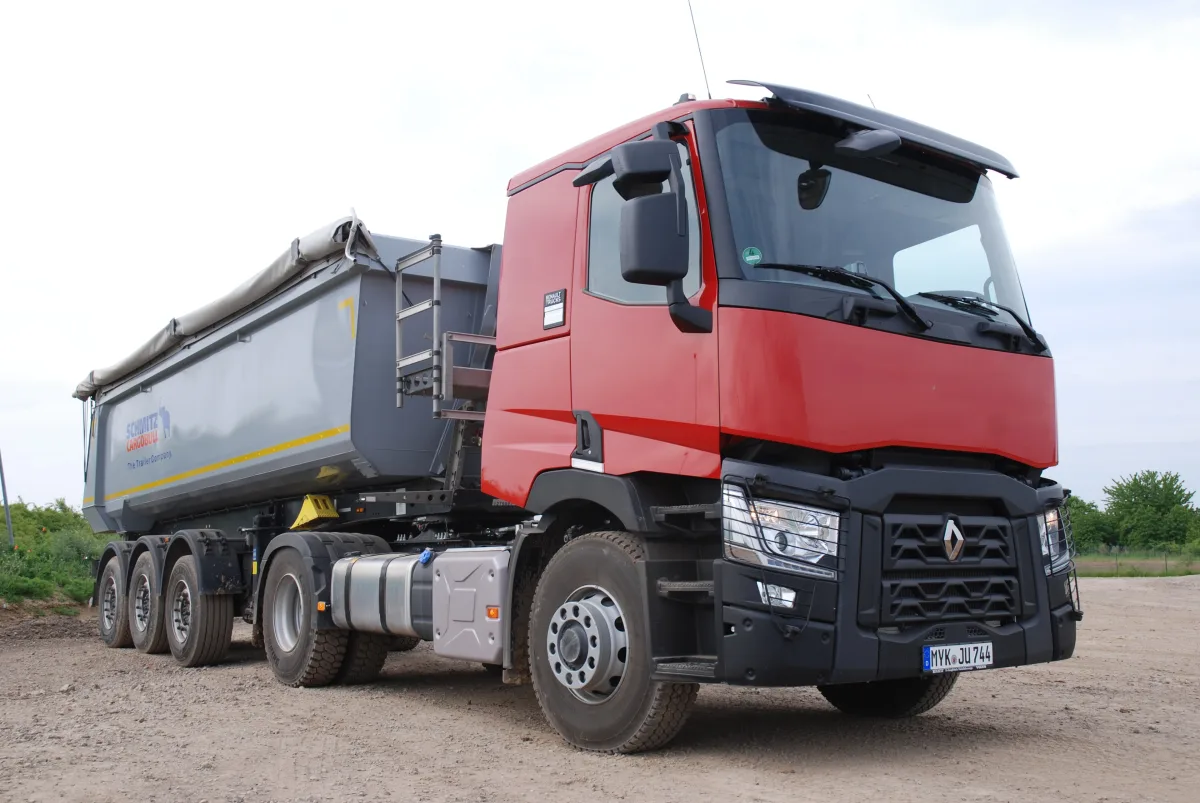
Renault Trucks C: construction and regional heavy-duty trucks and versions
Renault Trucks C — heavy-duty trucks for construction, regional hauling, and specialty bodies, produced since 2013. We look at the cab, axle configurations, engines, and what to check when buying a used C.






C in brief
Renault Trucks C is a range of heavy-duty trucks introduced in 2013 alongside the T, K, and D series. The C model is most often used for construction, waste and earth hauling, as well as a chassis for cranes and other specialty bodies.
The series' strength is its wide range of bodies: on the same chassis, tractors, rigid trucks, concrete mixers, and crane-equipped trucks are built, so there's plenty of choice in the used market.
Versions — what's the difference
The C is built with various axle configurations — from 4x2 tractors to 6x4 and 8x4 rigid trucks and chassis cabs. Cabs come in day and sleeper versions, making the series suitable for both local and regional work.
The C differs from the K series in that it's not designed for such heavy off-road work: it often travels on roads and construction sites with a reinforced chassis, while the K is more oriented towards heavy off-road use.
Engines and transmissions
The most common engines are Renault diesels DTI 8, DTI 11, and DTI 13 (later versions have DE family designations), with power ranging roughly from 280 to 520 hp. The number in the name (e.g., C 380, C 460, C 480) indicates the approximate power.
Transmissions are manual or automated Optidriver. In construction versions, additional reduction gears and power take-offs for the hydraulic system are often found.
What to check when buying a used C
First, assess the frame, suspension, and body condition. In dump trucks, check the hydraulic lifting mechanism, cylinders, and body corner condition, and in cranes, check the crane documents and periodic inspections.
Check the odometer and working hours via the tachograph data and service records. Construction trucks often work under heavy loads, so pay special attention to the chassis, transmission, and axles.
In Euro 6 engine vehicles, check the AdBlue system and particulate filter, as well as the error memory. Request the service history and verify the permitted weight and driver category.


Trims and versions
Trims and versions vary by market and year; below are the most commonly found versions.
Savivartis 6x4
C SeriesThe most common version for construction and earth-moving tasks.
- Hydraulic dump truck body
- Often a three-axle chassis
- Robust chassis for construction sites
Savivartis 8x4
C SeriesFour-axle version for heavier loads.
- Higher permitted weight
- Often with two steerable front axles
- Suitable for heavy construction loads
Su kranu
C SeriesTruck with hydraulic manipulator.
- Hydraulic crane
- Often — flatbed platform
- Check the crane's service history
Vilkikas
C SeriesFor local and regional hauling.
- Mostly 4x2 or 6x2
- Day cab or sleeper cab
- Suitable for transporting construction materials
Betono maišyklė
C SeriesWith concrete mixing drum for construction sites.
- Special concrete drum
- Hydraulic transmission
- Check the drum's condition
Comparing versions
| Savivartis 6x4 | Savivartis 8x4 | Su kranu | |
|---|---|---|---|
| Who it's for | For earth and gravel hauling | For heavy construction loads | For loads with a trailer |
| Axle configuration | 6x4 | 8x4 | Mostly 6x4 or 8x4 |
| What to check in particular | The hydraulics and body | The frame and suspension | The crane and its paperwork |
| Usage intensity | High | High | Medium to high |
| Price in the used market (relatively) | €€ | €€€ | €€€ |
Many construction firms will be happy with a well-maintained C series 6x4 rigid truck. For heavier loads, opt for an 8x4, and any truck with a crane must have all the necessary inspection documents.
Pros
- A wide range of cab and axle configurations
- Comfortable cab
- Robust construction chassis
- Easy access to parts and servicing
Cons
- Construction trucks often see heavy use
- Repairing Euro 6 systems can be expensive
- For heavy off-road work, the K series is a better fit
Frequently asked questions
How does the C differ from the K?
The C is designed for construction and regional work with a reinforced chassis, while the K is more focused on heavy off-road use.
How does the C differ from the T?
The T is a long-haul tractor unit, while the C is a construction and regional distribution truck with various body styles.
What does C 460 or C 480 mean?
The number indicates the approximate engine power in horsepower. Check your registration documents for the exact figure.
Updated 2026-10-21 · Trim levels and equipment vary by market and model year — check the equipment of the specific car. · Translated automatically


