 English
 Lietuvių
 Latviešu
 Eesti
 Polski
 Русский
 Українська
 Deutsch
 Nederlands
 Čeština
 Slovenčina
 Svenska
 Norsk
 Dansk
 Suomi


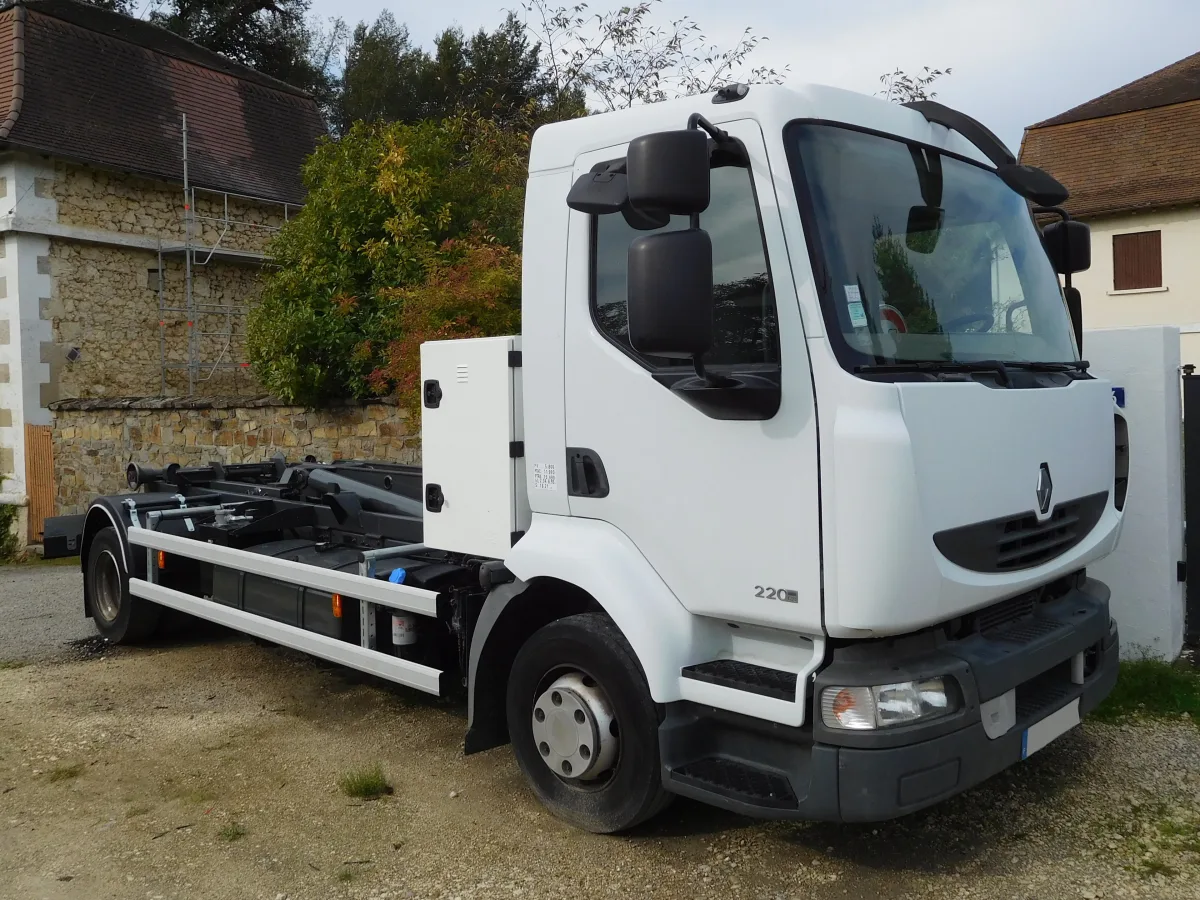
Renault Midlum: generations, cabs, engines and what to check
Renault Midlum — a mid-sized truck, produced from 2000 to 2013 for urban and regional freight distribution. We look at how early and updated Midlums differ, what cabs and engines are available, and what to check when buying a used vehicle.






Midlum in brief
The Midlum was designed for the middle ground between light trucks and heavy tractors. Mostly a 4x2 axle configuration, with a gross vehicle weight rating of around 7.5–19 tonnes, it can be fitted with box bodies, refrigerated units, drop-side bodies, tippers, hydraulic manipulators or flatbeds.
The number in the name indicates the engine power in horsepower, while the figure after the dot denotes the GVWR class: for example, Midlum 220 is a roughly 220hp truck. This naming convention helps you quickly navigate listings.
Generations — what's the difference
The first generation (around 2000–2006) has a more basic, mechanical character: these are the most affordable Midlums, but most have already clocked up plenty of miles, so the condition of the chassis, engine and cab is paramount. These trucks usually meet Euro 3 emissions standards.
Around 2006, the Midlum received a significant update: a new front end, improved cabin and newer 'DXi' engines that meet stricter Euro norms. These trucks are quieter and more economical, and some feature AdBlue systems, making it easier to enter low-emission zones.
From 2013, the Midlum was replaced by the Renault Trucks D series, so you won't find any Midlums newer than 2013.
Engines and Gearboxes
Midlum engines are four and six-cylinder turbodiesels ranging from around 150 to 280 HP. In the updated series, you'll often find the 'DXi 5' and 'DXi 7' engines, while earlier models feature 'dCi' family units.
The most common gearbox is manual, but some vehicles come with an automated or automatic transmission. Special-purpose vehicles, such as municipal trucks, often have an automatic gearbox.
All these engines are diesel; always check the Euro class and the presence of the AdBlue system in the vehicle's documents, as these vary by year of manufacture.
What to Check When Buying a Used Midlum
Inspect the body and chassis according to the service history and tachograph data. Distribution trucks spend a lot of time in the city, so carefully assess the body, gearbox, brakes, and turbocharger.
Check the frame for cracks, welds, and severe corrosion, especially under the cab mounts and near the axles. Inspect the air suspension system, and in vehicles with AdBlue, check the SCR system and NOx sensors.
The cab often costs almost as much as the truck itself: test the hydraulic tailgate, manipulator, or refrigeration unit, and check the condition of the doors and steps. Ensure the tachograph is working and has been checked.


Cabins and Trims
Names and equipment vary by year of manufacture; we list the most commonly found Midlum trims.
Dienos kabina
All SeriesThe most popular for distribution work is the short cab without a sleeper.
- 2–3 seats
- More cabin space on the same wheelbase
- Easy to get in and out of
Ilgoji kabina
All SeriesCabin with a sleeping area for regional trips
- Bed behind the seats
- More space for cargo
- Often comes with an autonomous heater
Dviguba kabina
Often used for specialist purposesCabin with a second row of seats for a crew
- Two rows of seats
- Common in municipal and emergency services
- Shorter body
Midlum su kėbulu — furgonas ar šaldytuvas
All SeriesThe most common commercial choice for distribution
- Often comes with a hydraulic tailgate
- Refrigeration unit depending on the version
- Often — driver's cabin air conditioning
Midlum su manipuliatoriumi ar savivarčiu
Mostly for constructionSpecialist vehicle for construction and municipal work needs
- Reinforced chassis
- Often — additional power take-off
- Body condition dictates value
Midlum version comparison
| Dienos kabina | Ilgoji kabina | Dviguba kabina | Su manipuliatoriumi | |
|---|---|---|---|---|
| Who it's for | For city distribution | For regional runs | For crews with tools | For construction and municipal work |
| Seating | 2–3 | 2–3 plus a bed | Two rows of seats | Mostly 2–3 |
| Most common body type | Van, refrigerated | Drop-side, van | Flatbed, special | Flatbed with crane |
| Price in the used market (relatively) | € | €€ | €€ | €€ |
For distribution, the best choice is often a refreshed Midlum with a day cab and suitable body. A long cab is worth it when you need to sleep on the road, and crane-equipped trucks should only be considered after assessing the crane's condition.
Pros
- Wide range of body types and large supply
- Refreshed series trucks are more economical and quieter
- Simple, well-known mechanics
- Parts and mechanics familiar with Renault Trucks are easy to find
Cons
- Older trucks often have very high mileage
- Repairing Euro 4/5 emission systems can be pricey
- The condition of the cab and additional equipment can vary greatly
Frequently asked questions
What does the number in the Midlum name mean?
The number indicates the approximate engine power in horsepower, for example, Midlum 220 is around 220 HP. Alongside this, it specifies the gross vehicle weight rating, so the name helps quickly assess the vehicle's purpose.
What category of license is needed to drive a Midlum?
Most Midlums with a gross vehicle weight rating over 3.5 tonnes require a C1 or C category license, and for those working in the freight transport business, a professional qualification is also needed. The exact category is determined by the vehicle's gross weight as stated in the documents.
Which Midlum series should you choose?
If you'll be working in cities with low-emission zones, it's worth choosing an updated series with a newer engine. Earlier Midlums are cheaper and simpler, so they might suit local jobs if their chassis, engine, and cab are in good condition.
Updated 2026-10-21 · Trim levels and equipment vary by market and model year — check the equipment of the specific car. · Translated automatically


