 English
 Lietuvių
 Latviešu
 Eesti
 Polski
 Русский
 Українська
 Deutsch
 Nederlands
 Čeština
 Slovenčina
 Svenska
 Norsk
 Dansk
 Suomi


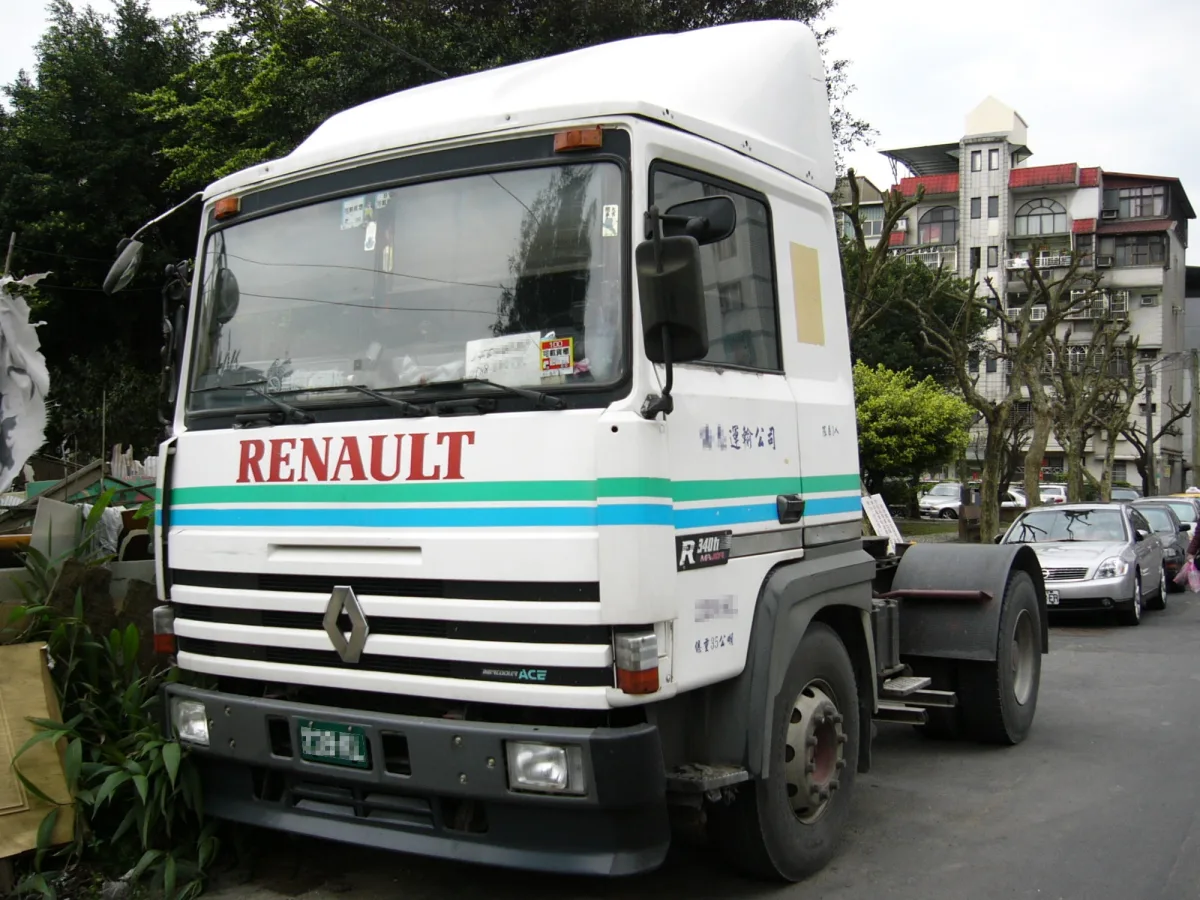
Renault R series: variants, engines and what to check
The Renault R is a heavy-duty truck series produced from 1980 to 1996 (later known as the 'Major') designed for long-haul journeys. We look at its versions, engines, and what to check when buying a used Renault R.






Renault R in brief
The Renault R was a French manufacturer's heavy-duty truck designed for long-haul journeys. It was most commonly produced as a 4x2 truck with a sleeper cab, but there were also heavier 6x2 and cargo versions.
Due to their age, Renault R series trucks are often bought today as affordable workhorses or for collections. First and foremost, the condition of the specific example is evaluated.
Series overview — what sets them apart
R series trucks were produced for over a decade, so early and later versions differ. In the later models, often marked 'Major', the cab and equipment were improved.
Earlier trucks are simpler and less powerful, while later ones, marked with 'Ti', feature a turbocharger and an intercooler, making them more powerful and economical.
In 1996, the R series was replaced by the Renault Premium, so all R models are now old. Their Euro class often doesn't comply with modern emission zones.
Engines and gearboxes
R series engines are six-cylinder turbodiesels with a capacity of around 12 litres. The number in the name indicates the approximate horsepower: for example, the R 340 has around 340 HP, the R 385 around 385 HP.
Gearboxes are usually manual, often with an overdrive. They're worth testing while driving: the condition of the synchros and clutch is particularly important.
The engine is considered reliable if it was properly maintained. Before buying, ask about the oil change history, the condition of the cooling system, and whether the engine has been overheated.
What to check when buying a used Renault R
First up — the chassis and cab. Rust is common on older trucks around the cab corners, seams, wings, and chassis cross members, and the cab lift system should operate smoothly.
Start the engine cold and assess the exhaust, oil pressure, and turbocharger noise. Check the pneumatic system and brakes, as repairs can be costly.
Check the mileage against the records, and ensure the vehicle meets the technical inspection requirements in the documents. If you're buying for a collection, originality is key.


Versions
The Renault R was produced in several versions; we list the most commonly encountered.
R 310
Earlier versionA simpler, less powerful version.
- More modest power
- Often — a simpler cab
- A more budget-friendly choice
R 340 Ti
Later versionWith a turbocharger and intercooler.
- More power
- Often — sleeper cab
- Popular among used cars
R 385 Ti
Later versionMost powerful version for long-distance trips.
- High power
- Often — spacious sleeper cab
- More expensive than standard versions
Krovininė važiuoklė
All versionsWith a flatbed, van, or tanker body.
- Simple body construction
- The body condition determines the value
- Often — drop-side body
Originali klasikinė būklė
Any versionCars that have retained their factory appearance.
- Original parts
- Often — collector's item
- Not suitable for towing
Comparing Renault R versions
| R 310 | R 340 Ti | R 385 Ti | Krovininė važiuoklė | |
|---|---|---|---|---|
| Who it's for | For occasional trips | For long-distance driving | For heavy-duty driving | For distribution |
| Power (approx.) | Around 310 HP | Around 340 HP | Around 385 HP | Depends on the version |
| Engine | Around 12 litres | Around 12 litres | Around 12 litres | Around 12 litres |
| Price in the used market (relatively) | € | €€ | €€ | € |
For long-distance journeys, it's usually worth opting for the R 340 Ti or R 385 Ti with a tidy chassis and a checked engine. The more basic version is suitable for less frequent trips if cost is the priority.
Pros
- A robust, well-known engine
- Spacious, comfortable sleeper cab
- Cheap to buy compared to newer trucks
- Simple, well-proven mechanics
Cons
- An older vehicle means corrosion and wear are common
- Parts availability is limited and not always cheap
- Euro class restricts work in low-emission zones
Frequently asked questions
What does 'Ti' mean in the Renault R name?
'Ti' denotes a turbocharged engine with an intercooler, making this version more powerful and economical than the standard. The number in the name indicates the approximate horsepower.
What category of license is needed to drive a Renault R?
A truck with a semi-trailer requires a CE category license, and for working in the freight transport business, a professional qualification and a valid tachograph card are also needed. The exact category depends on the specific configuration.
Is the Renault R still usable?
Yes, but due to its age, its Euro standard does not meet the requirements of modern emissions zones. Check where it can be operated and whether it meets the technical inspection requirements.
Updated 2026-10-21 · Trim levels and equipment vary by market and model year — check the equipment of the specific car. · Translated automatically


