 English
 Lietuvių
 Latviešu
 Eesti
 Polski
 Русский
 Українська
 Deutsch
 Nederlands
 Čeština
 Slovenčina
 Svenska
 Norsk
 Dansk
 Suomi


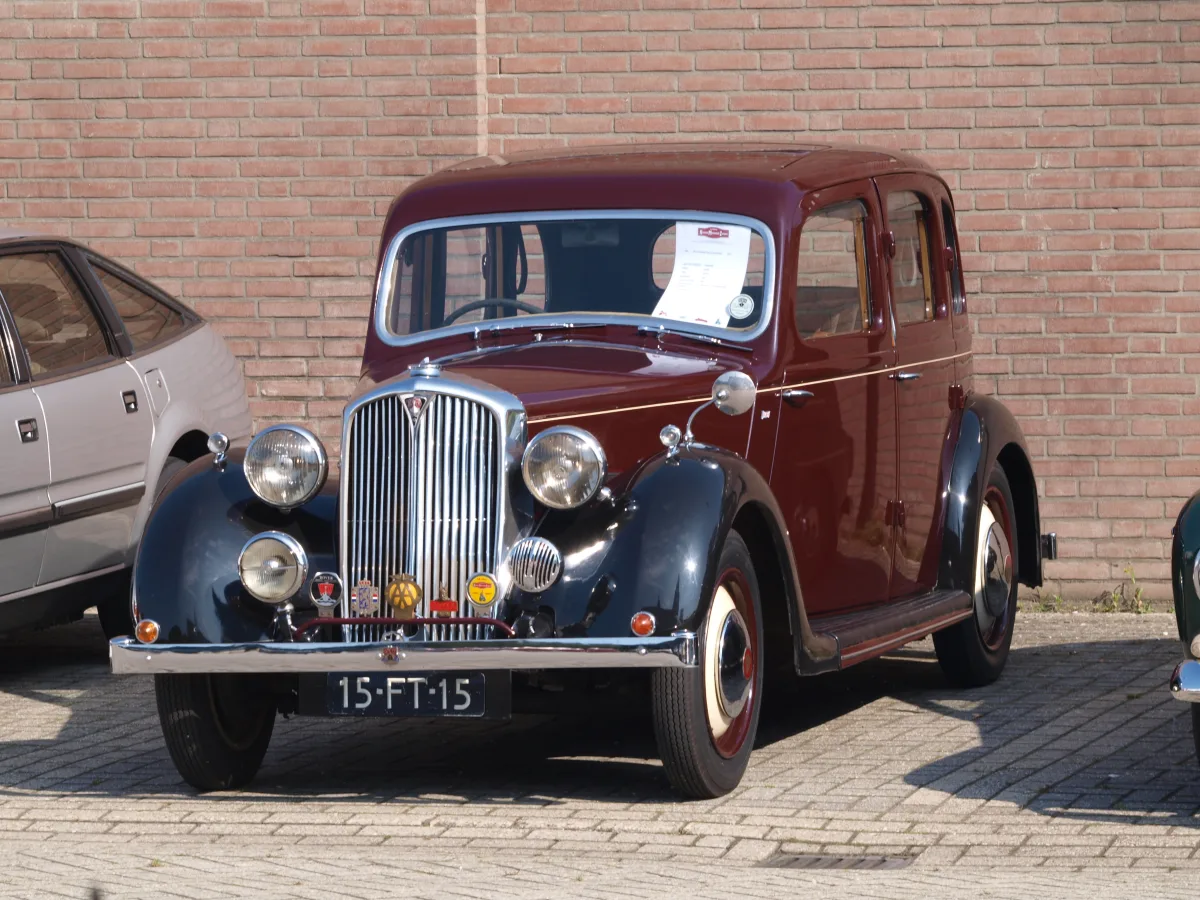
Rover 10 (P2): pre-war classic and what the collector needs to know
The Rover 10 from the P2 series is a compact, refined British saloon produced before and briefly after the Second World War. It's incredibly rare in the Lithuanian market, making it a true collector's item. In this article, we'll explore what makes it special and what to check if you're lucky enough to find one.






Rover 10 in brief
The Rover P2 was a mid-range family introduced at the end of the 1930s, featuring the 'Ten' (10) alongside larger, more powerful Twelve, Fourteen, Sixteen, and Twenty models. The Rover 10 was the smallest in the series, equipped with an approximately 1.4-litre four-cylinder engine.
The car was renowned for its high-quality, hand-built interior with wood and leather, robust construction, and smooth ride. In keeping with the fashion of the time, it features a vertical grille, separate wings, and a wide running board by the doors.
Which version to choose
You're likely to find both pre-war models and post-war production examples from 1946–1947. Post-war cars are technically very similar to their pre-war counterparts, so the main difference lies in the specific history and condition of the car, rather than the year of manufacture.
First, consider originality: surviving documents, the original engine, and body parts are more important to a collector than a shiny restoration. The body type (sedan or closed coupe) also affects the price and demand.
Engine and gearbox
The Rover 10 came with a small-capacity four-cylinder petrol engine (around 1.4 litres), designed for relaxed driving rather than speed. The gearbox was manual, with separate gear synchronisation and a driving experience that differs significantly from modern cars.
Exact figures for power and other technical specifications may vary between different year models, so before buying, check them against the specific car's documents or the manufacturer's club data.
What to check when buying such a car
The most important thing is to check for corrosion on the body and chassis, especially in the lower parts, sills, and around the wing mounts. Any wooden body parts should be in good condition and free from rot.
Check that the engine runs smoothly, that the brakes and steering mechanism work properly. Parts may need to be sourced through classic Rover car clubs and specialist suppliers, so assess their availability in advance.
These cars require proper storage (a dry garage) and classic car insurance conditions — before buying, find out how it is registered as a historic vehicle.


Trim levels
The Rover 10 was produced over several years and in various body styles, so below are the categories described, not the factory trim levels.
Prieškarinis Rover 10
P2, late 1930sThe original pre-war production version, highly prized by collectors.
- Often features a luxurious interior with wood trim
- Chrome details and large front headlight 'eyes'
- Simple, mechanical technology
Pokarinis Rover 10
P2, 1946–1947A short-lived post-war version with few changes.
- Technically similar to the pre-war model
- Often — simpler trim due to post-war conditions
- Availability is limited
Comparing Rover 10 versions
| Prieškarinis | Pokarinis | |
|---|---|---|
| Who it suits | For collectors and club members | For collectors and club members |
| The technical nuts and bolts | Around a 1.4-litre four-cylinder engine | Nearly the same technology |
| Usage | Weekend and event car | Weekend and event car |
| Price in the used market (relatively) | €€€ | €€€ |
This isn't a daily driver, but a collector's item. Choose based on condition and history, not just the year of manufacture.
Pros
- An authentic pre-war British car
- A quality interior with wood and leather
- A small and simple engine, straightforward mechanics
- A fascinating collector's item
Cons
- Very limited availability in Lithuania
- Some parts are hard to find
- Requires constant maintenance and dry storage
Frequently asked questions
Can the Rover 10 be used daily?
This is not recommended: the car is built to pre-war standards, has basic brakes and limited safety. It's better suited to shows and weekend drives.
How does the Rover 10 differ from other P2 models?
The Rover 10 is the smallest in the P2 range: it has a smaller engine than the Twelve, Fourteen or Sixteen, so it's lighter and more economical, but less powerful.
Where to find parts?
Mostly through Rover classic car clubs, specialist parts shops and collector communities across Europe. Before buying, check which parts your specific car will need.
Updated 2026-10-21 · Trim levels and equipment vary by market and model year — check the equipment of the specific car. · Translated automatically


