 English
 Lietuvių
 Latviešu
 Eesti
 Polski
 Русский
 Українська
 Deutsch
 Nederlands
 Čeština
 Slovenčina
 Svenska
 Norsk
 Dansk
 Suomi


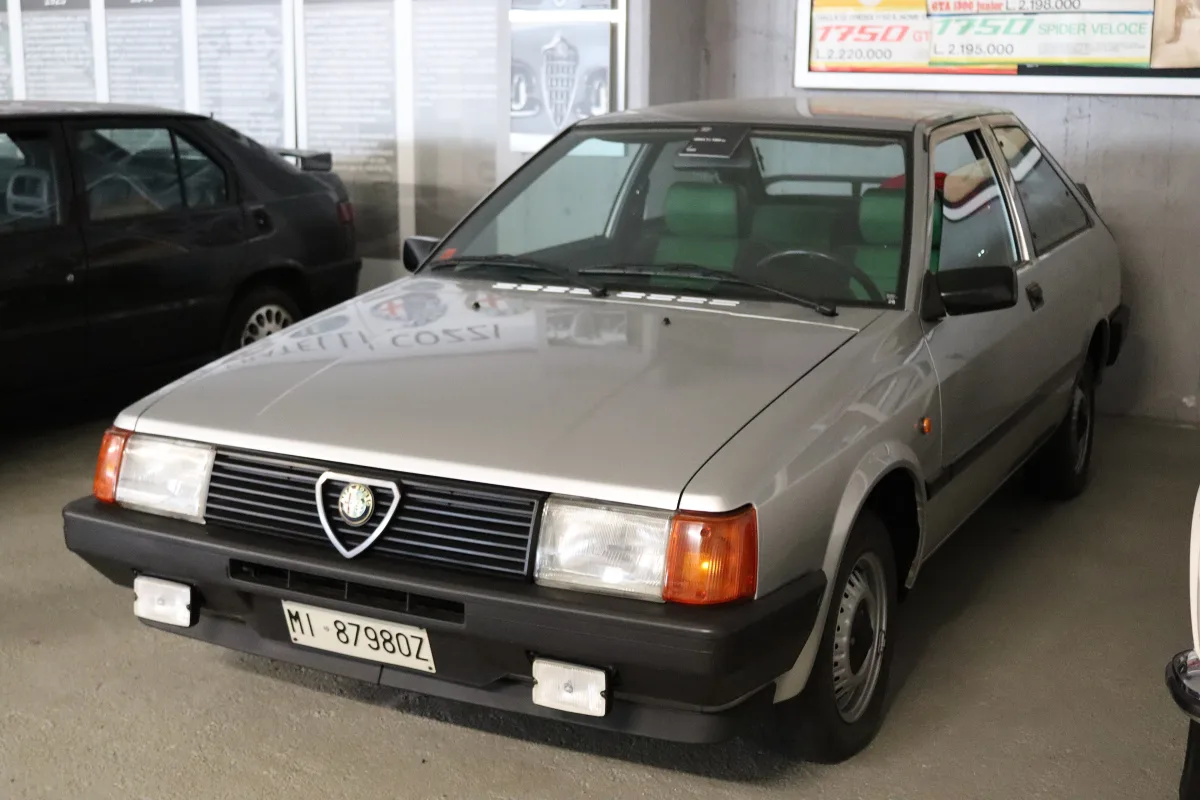
Alfa Romeo Arna: rare classic and what to know before buying
Alfa Romeo Arna — a compact hatchback produced from 1983–1987 as a joint project between Alfa Romeo and Nissan. We look at its construction, engines, and what to check if you're considering buying this rare car.






Arna in brief
Arna created in collaboration with Nissan: the body and much of the construction are related to the Nissan Pulsar, while the engines and gearbox are from Alfa Romeo. This car combined a Japanese body with an Italian boxer engine.
The Arna was offered as a 3 or 5-door hatchback. Today, it's a rare car, more likely to be found in collectors' hands than in the garages of everyday drivers.
Which version to choose
The Arna was produced just once and for only a few years, so the choice mainly depends on the body style (3 or 5 doors), the engine, and, most importantly, the condition of the specific example.
Since so few of these cars remain, it's more important than the trim level or engine whether the car is original, unmodified, and has a clear history.
Engines and gearboxes
The Arna is powered by four-cylinder boxer petrol engines derived from the Alfasud: usually 1.2 l and 1.3 l, with a sportier version featuring a 1.3 l engine with more power (around 86 hp). Smaller engines produce around 63–79 hp.
The gearbox is manual, with 4 or 5 speeds. Automatic gearboxes were not offered for this model.
What to check when buying a used Arna
The biggest issue with an older car like this is rust. Check the sills, wheel arches, floor, front bumper, and boot floor. This part of the car is often the most expensive and complicated to fix.
The boxer engine should be checked for oil leaks, uneven running, and the condition of the timing belt. Finding spare parts can be tricky, so before you buy, find out where you can source them.
Since the car is rare, it's worth consulting with members of the Alfa Romeo classic car club or specialists who can evaluate specific examples.


Trim levels
Names and equipment vary by market and year; we list the versions most commonly found in Europe.
Arna 1.2
1983–1987The base model with the smallest engine.
- Around 1.2-litre boxer engine
- Basic interior trim
- The most economical of the variants
Arna 1.3
1983–1987The more common version with a larger engine.
- Around 1.3-litre boxer engine
- Often comes with a bit more equipment than the 1.2
- More lively driving
Arna Ti
1983–1987The sportier version with a more powerful 1.3-litre engine.
- More powerful 1.3-litre engine (around 86 hp)
- Often — a sportier look and details
- Often — additional interior trim
Comparing versions
| 1.2 | 1.3 | Ti | |
|---|---|---|---|
| Who it's for | For everyday use | For daily driving | For enthusiasts |
| Power (approximately) | Around 63 hp | Around 79 hp | Around 86 hp |
| Price in the used market (relatively) | € | € | €€ |
The Arna is a car for enthusiasts, not for practical daily use. The key is to find one with as little corrosion as possible, ideally an original example.
Pros
- A rare and unique automobile
- A lively boxer engine
- Compact dimensions
- An interesting history – an Alfa Romeo and Nissan project
Cons
- High risk of corrosion
- Hard to find parts and mechanics
- May lack modern comfort and safety features due to its age
Frequently asked questions
Why does the Arna have a Nissan body?
It was a joint Alfa Romeo and Nissan project: the body and much of the construction are related to the Nissan Pulsar, while the engines and gearbox are from Alfa Romeo.
Is the Arna suitable for daily use?
It might be, if the car is well-maintained, but due to its age and parts scarcity, it is usually considered a collector's item.
What should you be most wary of when buying an Arna?
Corrosion and hard-to-find parts. That's why you should choose the best-preserved example you can find and use mechanics who specialise in classic cars.
Updated 2026-10-19 · Trim levels and equipment vary by market and model year — check the equipment of the specific car. · Translated automatically


