 English
 Lietuvių
 Latviešu
 Eesti
 Polski
 Русский
 Українська
 Deutsch
 Nederlands
 Čeština
 Slovenčina
 Svenska
 Norsk
 Dansk
 Suomi


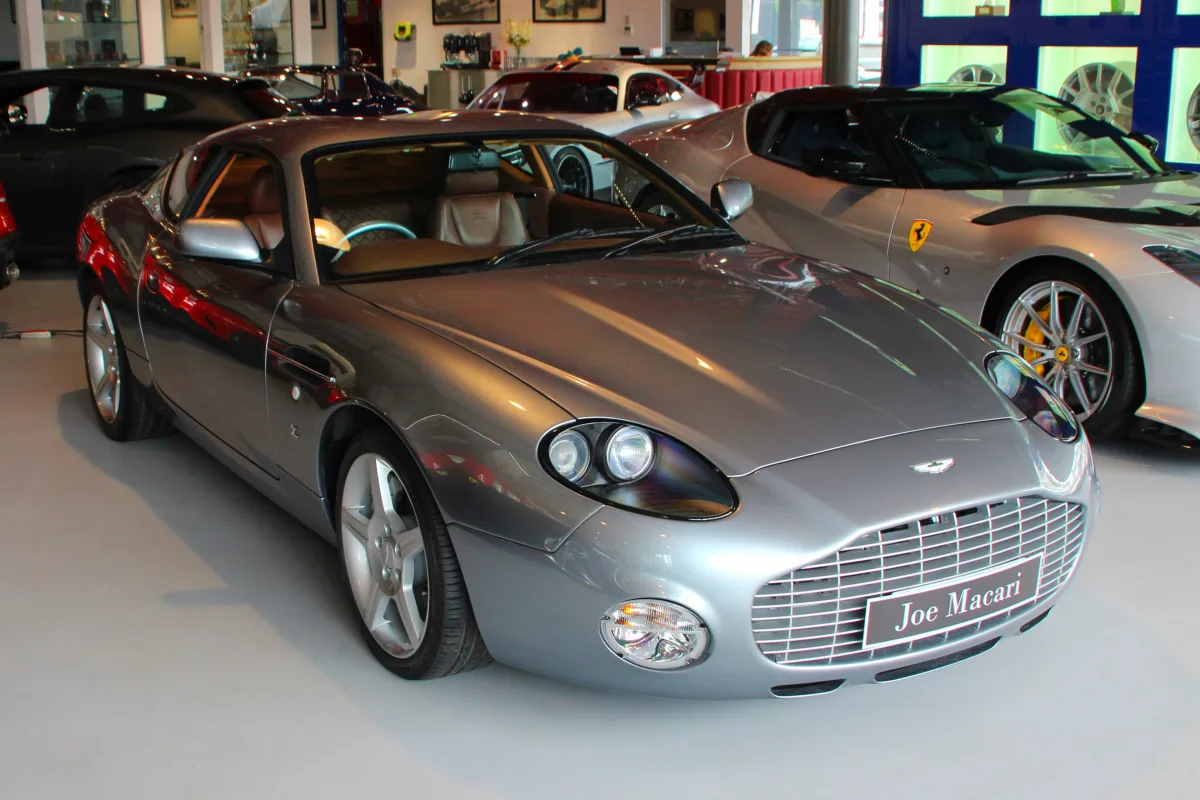
Aston Martin DB7 Zagato: limited series V12 coupe
Aston Martin DB7 Zagato — the limited series version of the DB7 crafted by Zagato studio, and one of the rarer modern classic Aston Martins. We delve into its history, technology, how it differs from the standard DB7, and what you need to know when buying such a car.






DB7 Zagato briefly
The DB7 Zagato is a two-door coupe with a long bonnet, short tail, and the signature Zagato 'double bubble' roof. Its design was created by Andrea Zagato alongside Henrik Fisker, who was then heading up Aston Martin design.
Only 99 examples were produced (plus one for a museum), making it an instant collector's item, often sold at specialist auctions or through dealers.
How it differs from the standard DB7
While technically based on the DB7 GT, its chassis was shortened: the wheelbase is shorter, and the overall length is less than the standard DB7. As a result, the car is slightly lighter and more compact.
The interior features unique leather, and the body panels differ from the standard DB7. All this, combined with its distinctive appearance, contributes to its high collectible value.
Engine and transmission
Under the bonnet lies a 6.0-litre V12 petrol engine, producing around 440 bhp. It's the same engine as in the DB7 GT, so the acceleration and top speed (around 300 km/h) are genuinely impressive.
The transmission is a 6-speed manual or optional 5-speed automatic. The car is rear-wheel drive.
What the buyer needs to know
First, check the provenance and ensure the car is indeed one of the 99 DB7 Zagatos. Service records are particularly important: the V12 engine and complex electronics require specialist maintenance.
Reach out to the Aston Martin club or an expert familiar with this model. Check the bodywork (it's very distinctive and expensive to repair) and the condition of the interior.


Versions
The DB7 Zagato was produced in a limited run and essentially had one trim level; differences are mostly related to the gearbox and custom orders.
DB7 Zagato (mechaninė)
2003Version with a 6-speed manual gearbox.
- 6.0-litre V12 engine
- 6-speed manual gearbox
- Often — custom paint and trim
DB7 Zagato (automatinė)
2003Version with an automatic gearbox.
- 6.0-litre V12 engine
- 5-speed automatic gearbox
- Often — custom paint and trim
DB AR1 Zagato
2003The related limited-series roadster that Zagato also created.
- Open-top Zagato body version
- The same V12 engine
- Approximately 99 examples were also produced
Comparing Versions
| Mechaninė | Automatinė | DB AR1 | |
|---|---|---|---|
| Who It's For | For Driving Enthusiasts | For Comfort | For Open Road Adventures |
| Common Wheels | Light Alloy | Light Alloy | Light Alloy |
| Interior | Distinctive Leather | Distinctive Leather | Distinctive Leather |
| Engine | 6.0-litre V12 | 6.0-litre V12 | 6.0-litre V12 |
| Price in the Used Market (Relatively) | €€€ | €€€ | €€€ |
A well-maintained example with a verified history is more important than the type of gearbox. The manual version is more valued among driving enthusiasts.
Pros
- Very rare — only 99 examples
- Powerful V12 engine
- Distinctive Zagato design
- High collectible value
Cons
- Very expensive
- Complex and costly maintenance
- Parts and specialist mechanics are almost non-existent in Lithuania
Frequently asked questions
How many DB7 Zagatos were made?
99 client-specific examples were made, plus one for a museum.
How does the DB7 Zagato differ from a standard DB7?
The body is completely different, the chassis is shorter and lighter, and the design and interior are uniquely Zagato.
Is the DB7 Zagato suitable for daily use?
Theoretically yes, but due to its rarity, value, and high maintenance costs, most owners use it only on special occasions.
Updated 2026-10-21 · Trim levels and equipment vary by market and model year — check the equipment of the specific car. · Translated automatically


