 English
 Lietuvių
 Latviešu
 Eesti
 Polski
 Русский
 Українська
 Deutsch
 Nederlands
 Čeština
 Slovenčina
 Svenska
 Norsk
 Dansk
 Suomi


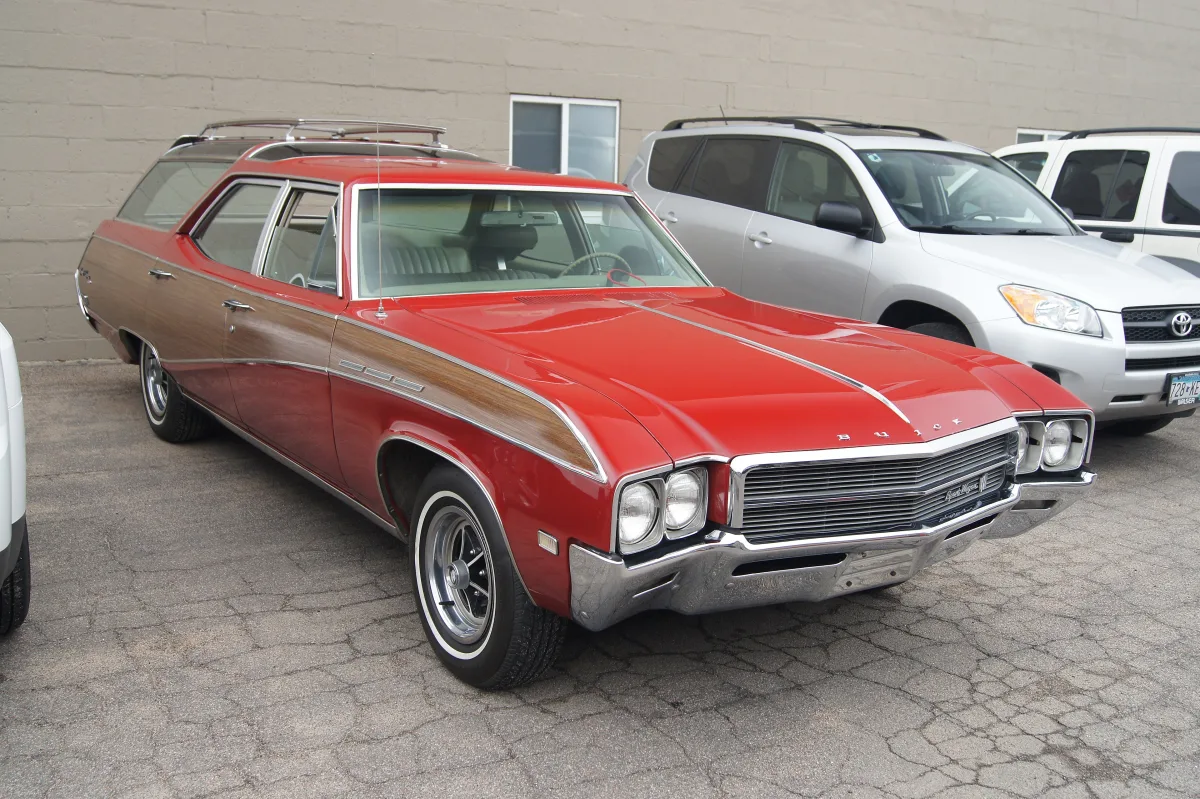
Buick Sport Wagon: the American estate car with roof windows and what the buyer needs to know
The Buick Sport Wagon is a mid-sized Buick estate car produced from 1964 to 1972. In this article, we look at what makes it special, how the three generations differ, which engines were offered, and what to check if you're hunting for one as a classic.






Sport Wagon in brief
The Sport Wagon was a longer-wheelbase version of the Buick Skylark estate, distinguished by a raised roof section with roof windows over the boot and second-row seats. It shared a common platform with the Oldsmobile Vista Cruiser and other GM estates of the time.
Until 1970, this was the only luxury estate in the Buick lineup, until the larger Estate Wagon returned. Thanks to its distinctive roof and woodgrain side panels, the Sport Wagon became one of the most recognisable American family cars of its era.
Three generations — how they differ
The first generation (1964–1967) had a 120-inch wheelbase and four tonneau roof sections. The second (1968–1969) gained a new bodyshell and a single roof window over the second-row seats, with the wheelbase stretching to 121 inches. The third generation covers the 1970–1972 cars.
The first generation optionally came with a forward-facing third-row seat, and from 1966, vinyl woodgrain trim was available. In 1969, some versions gained 'Dual-Action' tailgate doors that opened in two ways.
Engines and transmissions
For the 1964–1967 models, the standard engine was the 225 cubic inch (3.7 L) Buick V6, with an optional 300 cubic inch (4.9 L) V8. Transmission choices included a three-speed manual or the two-speed automatic “Super Turbine 300”.
The 1968–1969 models came with a standard 250 cubic inch (4.1 L) inline six-cylinder engine, built by Chevrolet, and an optional Buick V8. In later years, V8 engines dominated, but verify the exact power figures from the vehicle’s documentation.
What to check when buying such a car
The most crucial aspect is corrosion: check the roof pillars, floors, boot floor, and rear wings. Roof pillars can leak water, so inspect the seams and the underside of the roof. Also, check the woodgrain vinyl – it often bubbles or peels.
Ensure the engine and transmission match the documentation, and that the car hasn’t been overly modified. Since many of these cars are imported from the USA, familiarise yourself with the import and registration conditions in Lithuania.


Trim levels
The Buick Sport Wagon had several iterations and trim packages, so we outline the main variants below.
Sport Wagon
1964–1967First generation with four roof pillars.
- Standard V6 or optional V8
- Often – an optional third-row seat
- Three “ventiport” details on the wings
Sport Wagon Custom
1964–1967A more luxurious trim package.
- Often – vinyl woodgrain from 1966
- More chrome details
- Often – a more plush interior
Sport Wagon
1968–1969Second generation with a solid roof over the second row.
- 121-inch wheelbase
- Standard inline-six Chevrolet engine
- Optional V8
Sport Wagon
1970–1972Third generation, which was mostly dominated by V8 engines.
- New body contours
- Often — more luxurious equipment
- V8 more often
Comparing generations of the Buick Sport Wagon
| 1964–1967 | 1968–1969 | 1970–1972 | |
|---|---|---|---|
| Who it's for | For classic car enthusiasts | For families and collectors | For luxury lovers |
| Solid roofs | Four toned sections | Single above the second row | Remains as a distinguishing feature |
| Engine | V6 or V8 | Inline six-cylinder or V8 | Mostly V8 |
| Price in the used market (relatively) | €€ | €€ | €€ |
If you're after a classic American SUV, choose based on condition and originality. The second generation with a roof rack above the second row is often considered particularly iconic.
Pros
- Distinctive roof with roof racks
- Spacious interior with non-optional third-row seats
- Classic American design
- There are plenty of options on the market
Cons
- High fuel consumption
- Risk of corrosion and rust around the roof racks
- Parts need to be ordered from the USA
Frequently asked questions
Does the Sport Wagon have third-row seats?
Yes, third-row seats that fold forward were optionally available, so the car could accommodate up to nine passengers.
How does the Sport Wagon differ from the standard Skylark estate?
The Sport Wagon featured a longer wheelbase, a raised roof section with roof rails, and was more luxurious.
Is it hard to find parts for the Sport Wagon?
Some parts can be found through US classic car suppliers, but specific body and roof rail components might be pricier or harder to come by.
Updated 2026-10-21 · Trim levels and equipment vary by market and model year — check the equipment of the specific car. · Translated automatically


