 English
 Lietuvių
 Latviešu
 Eesti
 Polski
 Русский
 Українська
 Deutsch
 Nederlands
 Čeština
 Slovenčina
 Svenska
 Norsk
 Dansk
 Suomi


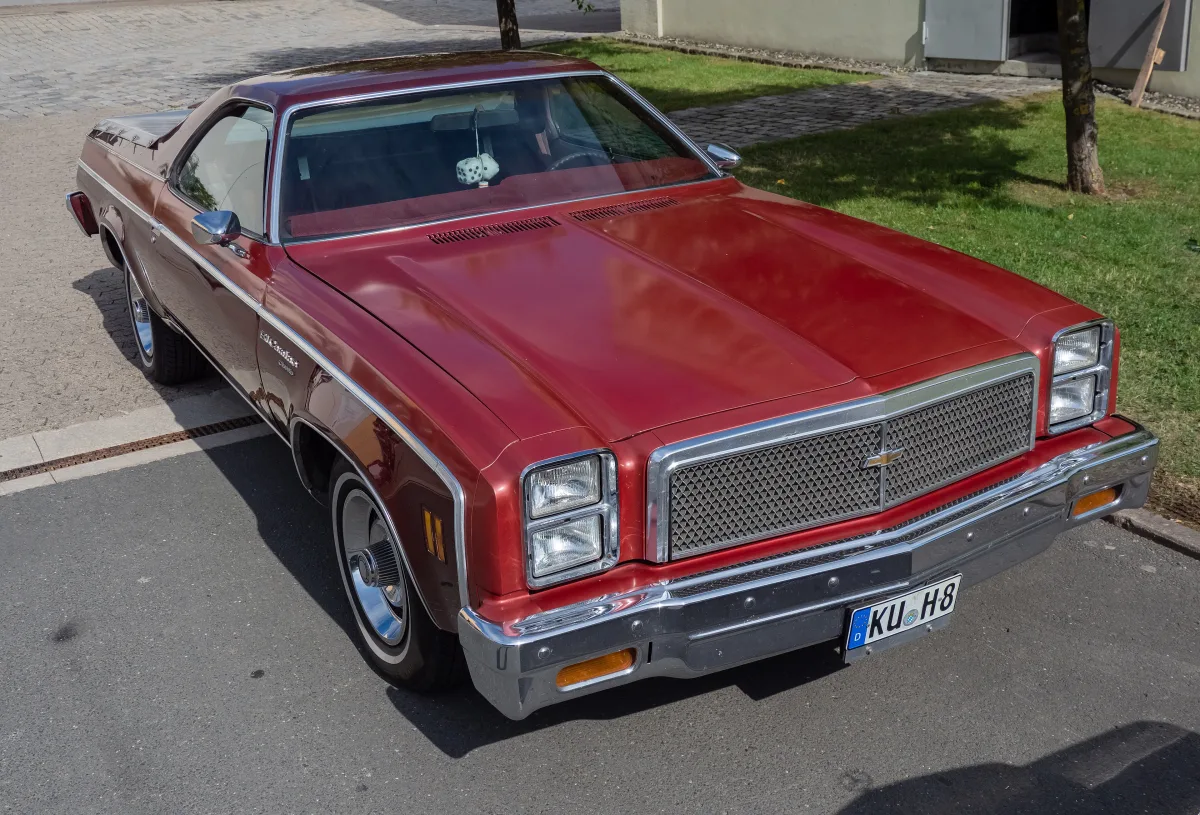
Chevrolet El Camino: generations, engines and what to know when buying a classic pickup
The Chevrolet El Camino is an American 'coupe utility' vehicle that combines a car's cabin with an open cargo bed. Produced from 1959 to 1987 with breaks in production. We'll cover the generations, engines, trims, and what to check when buying.






El Camino in brief
The El Camino was designed as a hybrid of car and pickup: a car-like front end with comfort, and an open cargo bed at the rear. It's based on Chevrolet's mid-size platform of the time.
Never officially sold in Europe, so all examples here are imported from the USA. They're usually snapped up by classic American car enthusiasts.
Which generation to choose
The first generation (1959–1960) features distinctive 'winged' styling and is quite rare. From 1964, the model is based on the Chevelle platform and changed several times up to 1987: 1964–1967, 1968–1972, 1973–1977, and 1978–1987.
Among the most popular are the 1968–1972 versions with sporty SS variants, which collectors prize the most. The 1978–1987 models are boxier, more economical, and usually cheaper, but less sought after.
Engines and transmissions
The El Camino was offered with inline six-cylinder and V8 engines. Sportier versions, especially from the late 1960s and 1970s, featured large-displacement V8s, while later years saw V6s and more economical V8s.
Transmissions were manual or automatic. Drive is always to the rear wheels.
What to check when buying a used El Camino
The main issue is rust. Check the cargo area floor, sills, fenders, rear wheel arches, and frame. These areas are most likely to rust and are the most expensive to fix.
Check if the engine and transmission are original: some cars have been modified, which affects their collectible value. Ask for documents and check the VIN to ensure it's a genuine El Camino and not a modified version of another model.
Parts for American classic cars are plentiful, but specific El Camino cargo area components can be pricier. Before buying, find out how the car was imported and if it's properly registered.


Trim levels
Names and equipment vary by market and year; we list the versions and trims most commonly found in Europe.
El Camino
1959–1960The first generation with distinctive fenders.
- Extended rear fenders
- Rare in the used market
- Often a collector's item
El Camino SS
Late 1960s–early 1970sThe sportiest version with a larger engine.
- More powerful V8 engine
- Sporty details
- Most prized by collectors
El Camino Conquista
1978–1987A more luxurious late-generation version.
- More interior trim
- Often — V8 engine
- More comfortable interior
Comparing versions
| Pirmoji karta | SS | Conquista | |
|---|---|---|---|
| Who it's for | For collectors | For sporty driving | For a comfortable classic car |
| Engine | Inline six-cylinder or V8 | Large V8 | V6 or V8 |
| Price in the used market (relatively) | €€€ | €€€ | €€ |
Most buyers find earlier, simpler generations more accessible, while the SS is the priciest and most collectible.
Pros
- Distinctive body design
- Spacious interior and cargo area
- The roar and power of the V8 engine
- Lots of parts tailored to classic American cars
Cons
- Never officially sold in Europe
- High fuel consumption
- Prone to rust
Frequently asked questions
Is the El Camino a car or a pickup?
It's a coupe utility — a car interior up front, an open cargo bed at the rear.
Which El Camino versions are most sought after?
Collectors prize the sporty SS versions with big V8 engines.
Can the El Camino be used daily?
Due to its age and high fuel consumption, it's better suited as a classic car rather than a daily driver.
Updated 2026-10-19 · Trim levels and equipment vary by market and model year — check the equipment of the specific car. · Translated automatically


