 English
 Lietuvių
 Latviešu
 Eesti
 Polski
 Русский
 Українська
 Deutsch
 Nederlands
 Čeština
 Slovenčina
 Svenska
 Norsk
 Dansk
 Suomi


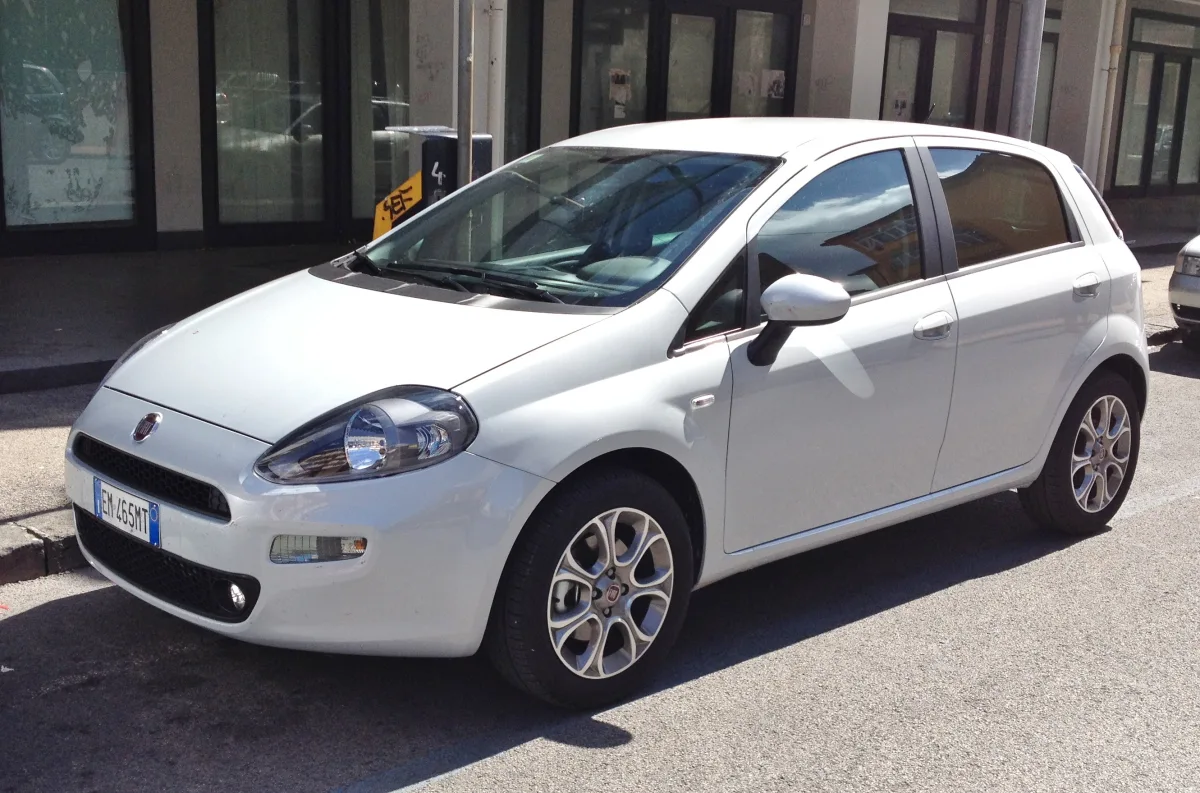
Fiat Punto: Grande Punto, Punto Evo and Punto, engines and trims
The Fiat Punto is one of Europe's most popular B-segment hatchbacks, produced from 1993 to 2018. In the used market, you'll most often encounter the third generation, known as the Grande Punto, Punto Evo, and simply the Punto. We'll look at what sets them apart, which engines are most popular, and what to check before buying.






The Punto in brief
The first Punto generation was produced from 1993 to 1999, the second from 1999 (refreshed in 2003 and sold in some markets until 2010). The third generation was introduced in 2005 as the Grande Punto: it's significantly larger and more modern, with a body design crafted by the Giugiaro studio.
All generations were available as three- and five-door hatchbacks. The Punto is praised for its spacious interior for the class, affordable spare parts, and straightforward maintenance, although interior materials and sound insulation are often more basic than some rivals.
Grande Punto, Punto Evo and Punto — what's the difference
The Grande Punto (2005–2009) is the most affordable option in this generation. These cars are quite old now, so when choosing, focus on the technical condition rather than the trim level.
The Punto Evo (2009–2012) features a revised front end with larger bumpers, an updated interior, and new engines, including MultiAir petrol and diesel units with automatic engine stop-start systems.
Punto (2012–2018) — the final facelift of this generation with a simpler, Grande Punto-like front end and a small twin-cylinder TwinAir engine. These are the newest and most often in the best condition, so for most buyers, it's worth seeking out these models.
Engines and gearboxes
Petrol engines — 1.2 (around 65–69 hp) and 1.4 (around 77 and 95 hp), turbocharged 1.4 T-Jet (around 120 hp) and Punto Evo-era 1.4 MultiAir (around 105 and 135 hp). From 2012, the 0.9 TwinAir (around 85 hp) was also offered. Some cars were factory-fitted to run on liquefied (LPG) or compressed natural gas.
Diesels — most commonly the 1.3 Multijet (around 75–95 hp), as well as the 1.6 Multijet (around 120 hp) and Grande Punto 1.9 Multijet (around 120–130 hp). The sportiest versions were sold under the Abarth badge.
Most commonly, you'll find a five- or six-speed manual gearbox. Some engines were offered with the robotised Dualogic box.
What to check when buying a used Punto
The robotised Dualogic box should shift smoothly without long pauses or judders; if it hesitates when shifting or shows errors, it often needs hydraulic block or clutch repair. On manual cars, check the clutch and the clarity of gear changes.
The 1.3 Multijet engine has a timing chain — on a high-mileage car, this can be stretched. Check the particulate filter and EGR valve on newer diesels. MultiAir engines are sensitive to oil quality, so it's important to regularly change the correct oil. The 1.2 and 1.4 petrol engines have a timing belt — ask when it was last changed.
For the second-generation Punto, test the electric power steering — failures are common for this model. For all cars — check the timing belt according to service records and inspections, and the suspension for worn-out and corroded parts.


Trim levels
Names and equipment vary by market and year; we list the most common trims found in Europe.
Active
Grande Punto, Punto EvoThe base trim with essential equipment.
- Steel wheels
- Basic sound system
- Air conditioning isn't always included
Dynamic
Grande Punto, Punto EvoThe most popular choice — more comfort for a modest price.
- Often — manual air conditioning
- Electrically operated front windows
- Often — fog lights
Emotion
Grande Punto, Punto EvoThe top standard trim.
- Light-alloy wheels
- Often — automatic climate control
- Often — steering wheel controls and Blue&Me system
Sport
Grande Punto, Punto EvoSporty appearance version.
- Sporty bumpers and larger alloy wheels
- Sport seats
- Often — more powerful engine
Pop
Punto (2012–2018)Base trim of the latest facelift.
- Steel wheels
- Essential equipment
- Often — manual air conditioning
Lounge
Punto (2012–2018)Best-equipped version of the latest facelift.
- Light-alloy wheels
- Often — automatic climate control
- Often — parking sensors
Comparison of Grande Punto and Punto Evo trims
| Active | Dynamic | Emotion | Sport | |
|---|---|---|---|---|
| Who it's for | Ideal for city driving | Everyday use | More comfort | Sporty looks |
| Wheels (most common) | 14–15 in., steel | 15 in. | 15–16 in., alloy | 16–17 in. |
| Interior | Basic | More features | Best equipped | Sport seats |
| Price in the used market (relatively) | € | € | €€ | €€ |
Most buyers will be best served by the Dynamic or Emotion with the 1.4 petrol or 1.3 Multijet engine. If budget allows, look for a newer 2012–2018 Punto — these cars are usually lower mileage.
Pros
- Spacious cabin for the class
- Low-cost spares and simple maintenance
- Economical 1.3 Multijet and 1.4 engines
- Plenty of used examples on the market
Cons
- Basic interior materials and less effective sound insulation
- The robotised Dualogic gearbox can be pricey to run
- Aging design – the latest models aren't much different from the 2005 version
Frequently asked questions
Which Punto is best to buy used?
For most buyers, the best choice is a 2012–2018 Punto or Punto Evo, as they're newer and usually have lower mileage. The Grande Punto is cheaper, but most of these cars are now quite old, so their condition needs to be checked very carefully.
Is it worth buying a Punto with a Dualogic gearbox?
Only if the gearbox is working smoothly and there's proof of its maintenance or repair. Before buying, test the car's movement from a standstill and gear changes while driving slowly. If in doubt, it's safer to choose a manual gearbox.
Which Punto engine is the most economical?
The 1.3 Multijet diesel is usually the most economical. For mostly city driving, it's more sensible to choose a 1.2 or 1.4 petrol engine, which is simpler and cheaper to maintain. The 0.9 TwinAir is small but actually uses more fuel than you might expect.
What's the difference between the Grande Punto and Punto Evo?
They're the same generation. The Punto Evo has a different front end, a refreshed interior and newer engines, including MultiAir and diesels with start-stop systems. The chassis and basic construction are essentially the same.
Updated 2026-10-09 · Trim levels and equipment vary by market and model year — check the equipment of the specific car. · Translated automatically


