 English
 Lietuvių
 Latviešu
 Eesti
 Polski
 Русский
 Українська
 Deutsch
 Nederlands
 Čeština
 Slovenčina
 Svenska
 Norsk
 Dansk
 Suomi


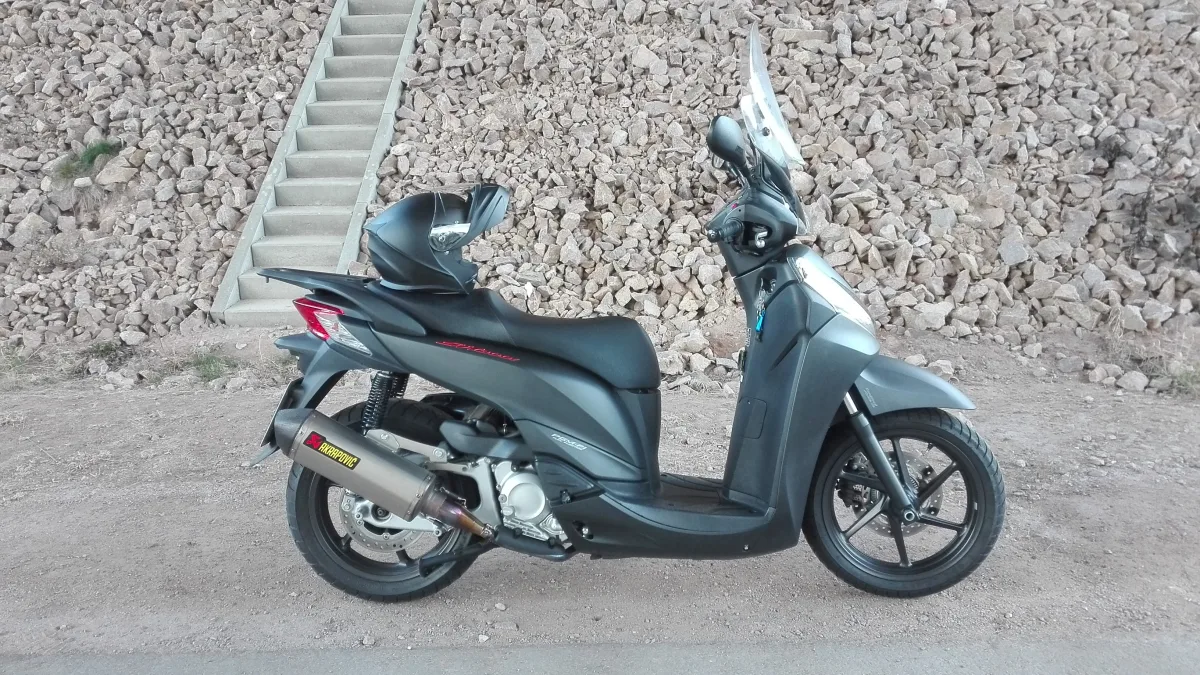
Honda SH 300: big-wheeled scooter, generations and what to check
Honda SH 300 (SH300i) — a prestigious 300 cm³ city scooter with big wheels, produced since 2007. We look at how the generations differ, its power, and what to check when buying used.






SH 300 in brief
SH 300 — one of the most popular mid-sized scooters in Europe. It's praised for its big wheels, which handle potholes and uneven roads more stably, spacious under-seat storage, and Honda's reliable construction.
With adequate power, it's suitable for both city driving and venturing beyond, while its lightweight and comfortable riding position make it a handy daily commuter.
Generations — how they differ
The first generation (from 2007) features a 300 cm³ engine with fuel injection and the classic SH look. The second, refreshed generation (around 2011) got a more modern design and improvements; later models came with enhanced features, including ABS in some markets.
Since 2021, the SH 350i with a larger engine capacity has replaced the SH 300 in Europe. In the used market, the latest SH 300 models are most sought after.
Engine and transmission
The engine is a single-cylinder, approximately 280 cm³, liquid-cooled, with fuel injection. Power is around 25 hp, so it generally qualifies for the A2 license category — check the documents.
Power is transmitted via an automatic CVT, so there's no need to shift gears. The CVT belt and pulleys need to be replaced periodically.
What to check when buying a used SH 300
Check the throttle and clutch operation: the throttle should engage smoothly, without hesitation or vibration. Ask when the clutch, cables, and engine oil were last changed.
Inspect the plastics (for damage), shock absorbers, brakes, wheel arches, and locking system. If there's ABS, make sure the ABS warning light isn't on.


Trim levels
Trim levels vary by market and year; we provide general descriptions of the variants.
SH 300 (pirmoji karta)
from 2007First generation with a 300 cm³ engine.
- Large wheels, stable handling
- Spacious compartment under the seat
- Often — no ABS
SH 300 (atnaujinta karta)
around 2011 and laterMore modern design and improvements.
- Refreshed styling
- Often — enhanced equipment
- In some markets — ABS
SH 300 ABS
some year versionsVersion with ABS braking system.
- Often — safer braking
- Recommended for city driving
- Worth checking the condition of the ABS
Comparison of variants
| Pirmoji karta | Atnaujinta karta | ABS versija | |
|---|---|---|---|
| Who it's suitable for | For those seeking a more affordable SH 300 | For a more modern variant | For safer braking |
| Engine | ~280 cm³ | ~280 cm³ | ~280 cm³ |
| Power | ~25 HP | ~25 HP | ~25 HP |
| Price in the used market (relatively) | €€ | €€ | €€€ |
Many buyers will appreciate the updated generation; if safety is a priority, opt for the version with ABS and check its condition.
Pros
- Large wheels — stable driving
- Adequate power for city and highway
- Reliable Honda construction
- Spacious compartment under the seat
Cons
- Often pricier than competitors in the used market
- Requires periodic replacement of the timing belt and pulleys
- Some examples have scratches
Frequently asked questions
What category is needed for the SH 300?
In many cases, an A2 category is sufficient, as the power is around 25 HP, but check the technical certificate and applicable requirements.
How does the SH 300 differ from the SH 125?
The main difference is the larger engine displacement and power, so the SH 300 is better suited for highways and longer routes, but requires a higher category.
Is the SH 300 suitable for daily use?
Yes. It is comfortable, stable, and has space for belongings, so it meets the needs of both city and intercity driving.
Updated 2026-10-21 · Trim levels and equipment vary by market and model year — check the equipment of the specific car. · Translated automatically


