 English
 Lietuvių
 Latviešu
 Eesti
 Polski
 Русский
 Українська
 Deutsch
 Nederlands
 Čeština
 Slovenčina
 Svenska
 Norsk
 Dansk
 Suomi


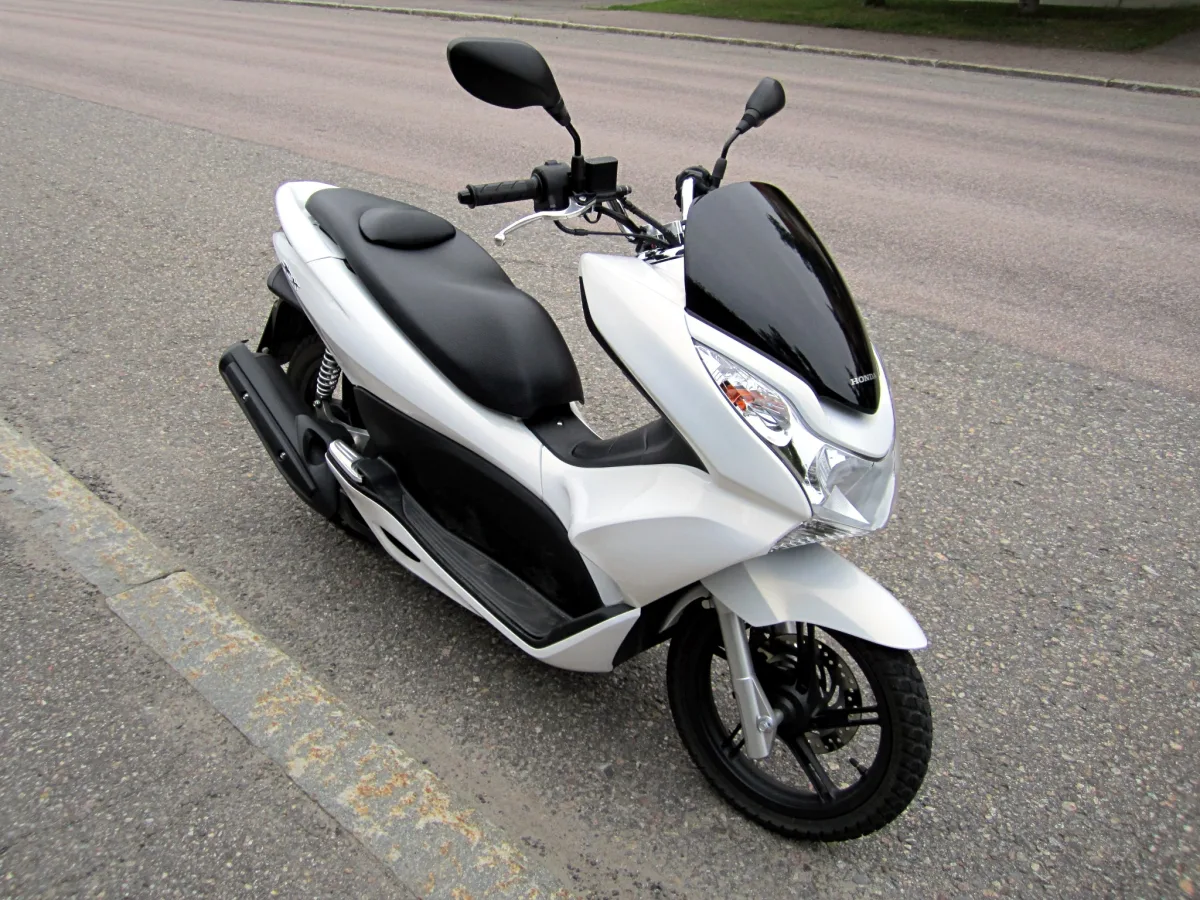
Honda PCX 125: generations, engine and what to check when buying used
Honda PCX 125 — produced since 2009, this economical large-wheeled scooter is one of the most popular in the 125 cm³ class. We look at the generations, tech specs and what to check when buying used.






PCX 125 in brief
The PCX 125 is designed for everyday city commuting: a comfortable seat, low fuel consumption, spacious under-seat storage and minimal running costs. As a result, it has been one of the most popular 125 cm³ scooters in Europe for many years.
It has been produced in several generations, each refining the engine, design and safety. There are plenty of used PCX options on the market, so you can choose based on generation and budget.
Generations — what's the difference
The first generation (2009–2013) featured a 125 cm³ engine and basic equipment; later models (from 2014) got an enhanced eSP engine and more economical gearing. From the earlier years came the Idle Stop system, which shuts off the engine at traffic lights.
Newer generations (from 2018) have a new frame, more space and a keyless option, while the 2021 update brought an enhanced eSP+ engine and traction control. This is the most advanced and expensive generation.
Engine and transmission
The engine is a 125 cm³ liquid-cooled single-cylinder, with power in the 125 class restricted (around 12–14 hp depending on the generation). It's designed for economical city riding and is adequate for suburban journeys too.
Gearbox — automatic. Clutch and brake pads are wear-and-tear parts that need replacing on schedule. Newer generations come with ABS or a combined braking system (depending on the year).
What to check when buying a used PCX 125
Check the automatic gearbox: movement should be smooth, without juddering or vibration. Ask when the clutch and brake pads were last changed, and if the oil has been changed on schedule.
Inspect the body for signs of a drop, check the brakes, tyres, and battery. A well-functioning battery is crucial for scooters with the Idle Stop system. Check the chain according to the service manual.


Trim levels
Trim names depend on the market and year; we provide a general overview.
PCX 125 (I karta)
2009–2013Early version.
- 125 cm³ engine
- Basic equipment
- Low running costs
PCX 125 (eSP karta)
From 2014Improved engine.
- eSP engine
- Often comes with the Idle Stop system
- More economical fuel consumption
PCX 125 (nuo 2018)
from 2018New platform and more equipment.
- New platform and body
- Often — keyless entry
- Anti-lock Braking System
PCX 125 (nuo 2021)
from 2021Updated engine and traction control.
- eSP+ engine
- Traction control
- More equipment
Generation comparison
| I karta | eSP (nuo 2014) | Nuo 2018 | Nuo 2021 | |
|---|---|---|---|---|
| Who it's for | Ideal for budget-conscious city riders | Economical driving | More modern equipment | Latest technology |
| Engine | 125 cm³ | 125 cm³ eSP | 125 cm³ eSP | 125 cm³ eSP+ |
| Keyless entry | None | None | Often has | Often has |
| Price in the used market (relatively) | € | €€ | €€ | €€€ |
Early PCX models are budget-friendly if they're mechanically sound. If modern equipment is important, opt for a 2018 model or newer.
Pros
- Low running costs
- Economical engine
- Comfortable seating and a spacious boot
- Honda has a solid reputation for reliability
Cons
- 125 cm³ power limits you to non-motorway roads
- The latest generation commands a higher price in the used market
- Seatbelts and tyres should be regularly replaced
Frequently asked questions
Can I ride a PCX 125 with a B licence?
In some countries, yes, if additional requirements are met (code 196 or similar). Otherwise, an A1 licence is needed. Rules vary by country.
Is the PCX 125 suitable for out-of-town trips?
Yes, for short trips, but 125 cm³ power limits you to non-motorway roads
What are the differences between the PCX 125 and PCX 150?
The main differences are engine size and power. The 125 cm³ version is more common in Europe.
Updated 2026-10-21 · Trim levels and equipment vary by market and model year — check the equipment of the specific car. · Translated automatically


