 English
 Lietuvių
 Latviešu
 Eesti
 Polski
 Русский
 Українська
 Deutsch
 Nederlands
 Čeština
 Slovenčina
 Svenska
 Norsk
 Dansk
 Suomi


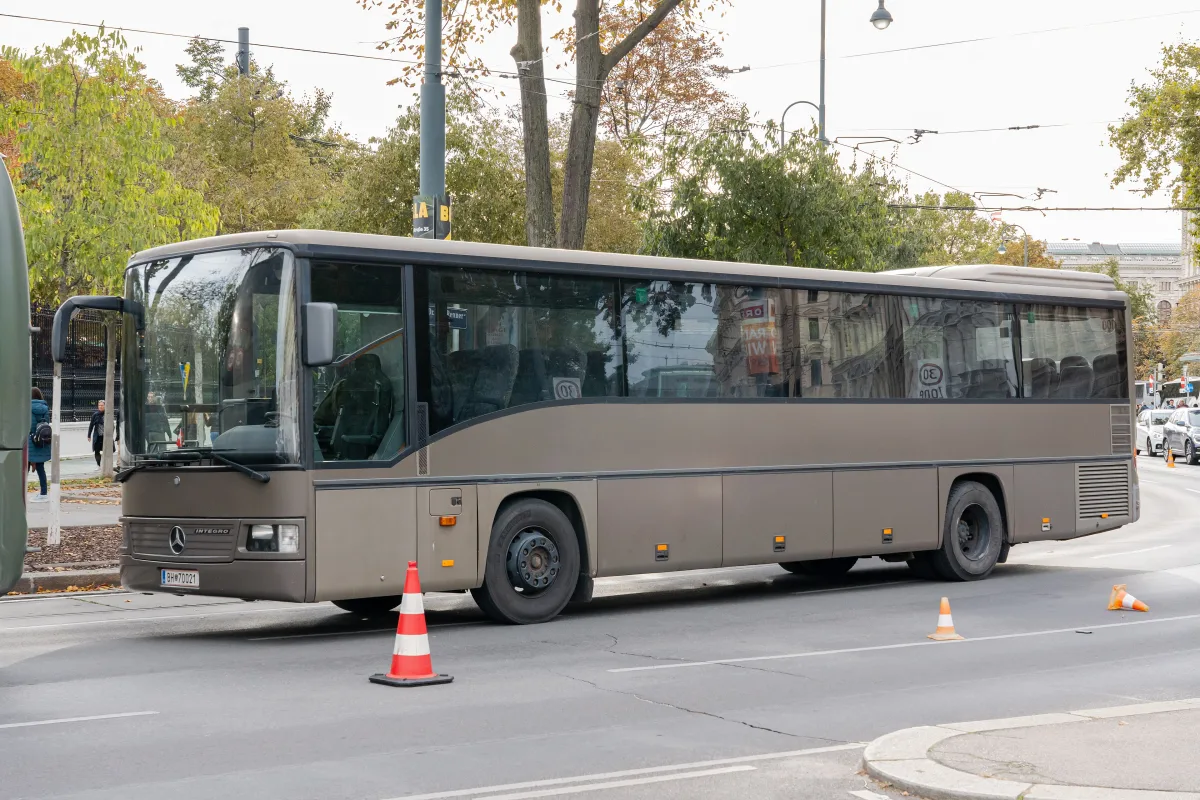
Mercedes-Benz Integro: intercity bus, engines and trims
Mercedes-Benz Integro — the intercity and suburban bus, produced since 1996. We look at the standard Integro, the longer L version, engines, and what to check when buying a used bus.






Integro in brief
Integro — the Mercedes-Benz intercity bus, with its body and chassis built as a single unit (integrated construction). It's designed for longer suburban and intercity routes where more comfort is needed than in a city bus.
In the used market, Integro is often bought by schools, municipalities, and regional carriers, as it's cost-effective to run and the mechanics are well-known.
Versions and purpose
The standard Integro is around 12 meters long, while the longer version (Integro L) offers more space for passengers. Typically with two doors, higher floors, and more comfortable seats than a city bus.
Integro is ideal for routes between towns, school runs, and commuter services. For long-distance tourist trips, consider the Tourismo or Setra buses.
Engines and transmissions
Integro is powered by six-cylinder Mercedes-Benz diesel engines, with standards varying by year (from Euro 3 to Euro VI). Older models often feature OM 457 and OM 906 engines.
Transmissions are manual or automatic (ZF). Automatic is more convenient for suburban routes but requires timely oil changes.
What to check when buying a used Integro
Check the service history, mileage, engine oil levels, SCR / AdBlue system (if applicable), gearbox, and suspension. Frequent stops wear out the doors and brakes.
Look for signs of corrosion around the wheel arches, floor, roof, and window seals. Inside, inspect the seats, handles, and climate control system.


Versions and trims
Names and equipment vary by market and production year; we list the versions most commonly found in Europe.
Integro
from 1996The main long-distance version.
- Often — two doors
- Often — more comfortable seats
- Often — a separate boot
Integro L
later yearsLonger version with more capacity.
- More seating positions
- Often — a longer body
- Often — a larger boot
Integro priemiesčio
depends on the orderConfiguration with more standing room.
- More standing room
- Often — wider doors
- Simpler interior
Integro mokyklinis
depends on the orderAdapted for school runs.
- Often — child safety features
- Often — special seats
- Often — additional exits
Integrated version comparison
| Integro | Integro L | Priemiesčio | |
|---|---|---|---|
| Who it's for | For intercity routes | For larger groups or routes | For urban routes |
| Capacity | Average | Larger | More standing room |
| Engine | Mercedes-Benz diesel | Mercedes-Benz diesel | Mercedes-Benz diesel |
| Price in the used market (relatively) | € | €€ | € |
The standard Integro is fine for long-distance routes, but if you need more space, go for the longer L version. In any case, mechanical condition and service history are key.
Pros
- Reliable Mercedes-Benz mechanics
- Affordable running costs
- Wide availability of parts and services
- Suitable for long-distance and urban routes
Cons
- Less comfort than in tour coaches
- Often has high mileage
- Older models have older Euro standards
Frequently asked questions
How does the Integro differ from the Tourismo?
Designed for intercity and suburban routes, the Tourismo is ideal for touring and long-distance travel with a more comfortable interior.
Is the Integro suitable for school transport?
Yes, many are used to transport children. It's important that the bus meets safety and seatbelt requirements.
What engine does the Integro have?
Most commonly, a Mercedes-Benz six-cylinder diesel. You'll find specific details in the bus's documentation.
Updated 2026-10-21 · Trim levels and equipment vary by market and model year — check the equipment of the specific car. · Translated automatically


