 English
 Lietuvių
 Latviešu
 Eesti
 Polski
 Русский
 Українська
 Deutsch
 Nederlands
 Čeština
 Slovenčina
 Svenska
 Norsk
 Dansk
 Suomi


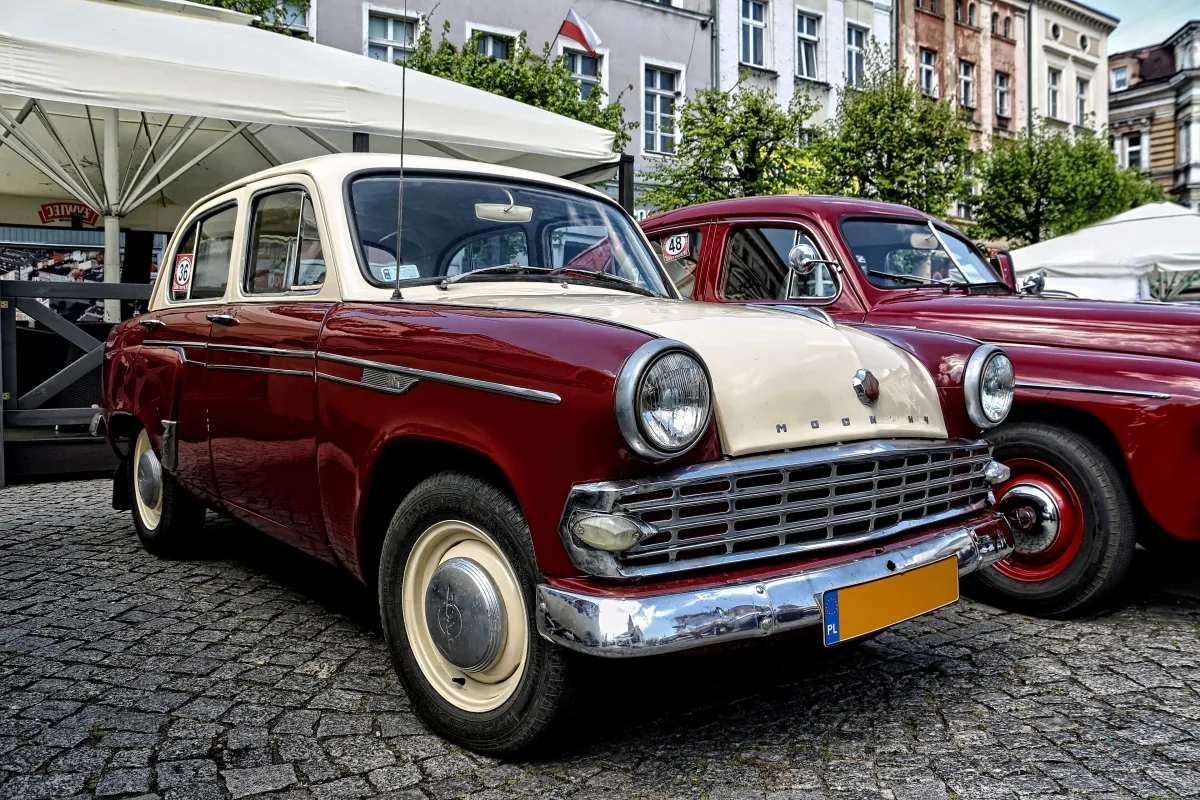
Moskvich 403: a Soviet-era sedan from the early 1960s
The Moskvich 403 is a four-door sedan produced in the early 1960s, serving as the successor to earlier models in the Moskvich line. Today, it's a collector's item often seen at classic car shows. We'll delve into its technical specs and what to check when buying.






Moskvich 403 in brief
The Moskvich 403 is a four-door sedan produced around 1962–1965. It was simple, compact, and designed for everyday use and family needs. Its design is typical of Soviet cars from that era: rounded shapes, chrome grilles, and plenty of chrome trim.
Today, it's a rare classic car. In Lithuania, it won't be your everyday transport — usually, it's maintained by enthusiasts and collectors, so it's often sold already restored.
How does it differ from other Moskviches?
The 403 belongs to the early Moskvich family, where simple sedans were gradually improved. Earlier models, like the 402, were more basic, while later ones, such as the 408 and 412, were significantly more modern.
When buying, it's crucial to verify that the car is indeed a 403, as it looks similar to other Moskviches from that era, and some parts might have been swapped with others.
Engines and gearboxes
The Moskvich 403 used a small-displacement petrol engine with a capacity of around 1.4 litres and an output of about 45 hp. The engine is of simple construction, making it easy to repair with basic tools.
Gearbox — manual, rear-wheel drive. Due to its modest power, the car isn't suited to high speeds, but driving is smooth and comfortable.
What to check when buying a Moskvich 403
First off — rust. Check the sills, wings, floor, boot floor, and lower door sections. During repairs, individual body parts are often replaced, so ensure they're properly fitted.
Inspect the chromed details, glass, and interior trim — original parts are limited. Have the engine and gearbox checked by a specialist familiar with Soviet cars.
Check the documents, VIN, and whether the car matches the original specification. When registering a classic car in Lithuania, familiarise yourself with the rules for historical vehicles.


Specifications
The Moskvich 403 was produced in one main version, so we provide a general overview.
Moskvich 403
1962–1965Standard four-door saloon body.
- Approximately 1.4-litre and approximately 45hp engine
- Manual gearbox
- Chromed grilles and trim
What to consider when choosing
| Restauruotas | Originalus | Nebaigtas projektas | |
|---|---|---|---|
| Who it's suitable for | For use in rallies and shows | For collectors who value originality | For enthusiasts ready to roll up their sleeves |
| Key point | Restoration quality is crucial | Important: documentation and condition | Requires a lot of work and parts |
| Price in the collector car market (relatively) | €€ | €€€ | € |
Best to choose a car that's been properly restored or well-maintained and check the body for rust. Unfinished projects often end up costing more than they initially seem.
Pros
- Authentic Soviet classic
- Simple, easy-to-fix technology
- Recognisable retro design
- Attracts collectors and show visitors
Cons
- Very low power and sluggish performance
- Corrosion is the biggest issue
- Safety is only up to the standards of its time, finding parts is tricky
Frequently asked questions
Can the Moskvich 403 be used daily?
Technically yes, but due to its low power, basic safety features, and old parts, it's mostly used for fair weather driving and events.
Is it hard to find parts?
Some parts can be found through clubs and specialist suppliers, but body parts and chrome trim can be expensive and rare.
How does the 403 differ from other Moskvich models?
The 403 is one of the earlier models, similar to other Moskvich cars of its time, so when buying, make sure to verify the model through documents and markings.
Updated 2026-10-21 · Trim levels and equipment vary by market and model year — check the equipment of the specific car. · Translated automatically


