 English
 Lietuvių
 Latviešu
 Eesti
 Polski
 Русский
 Українська
 Deutsch
 Nederlands
 Čeština
 Slovenčina
 Svenska
 Norsk
 Dansk
 Suomi


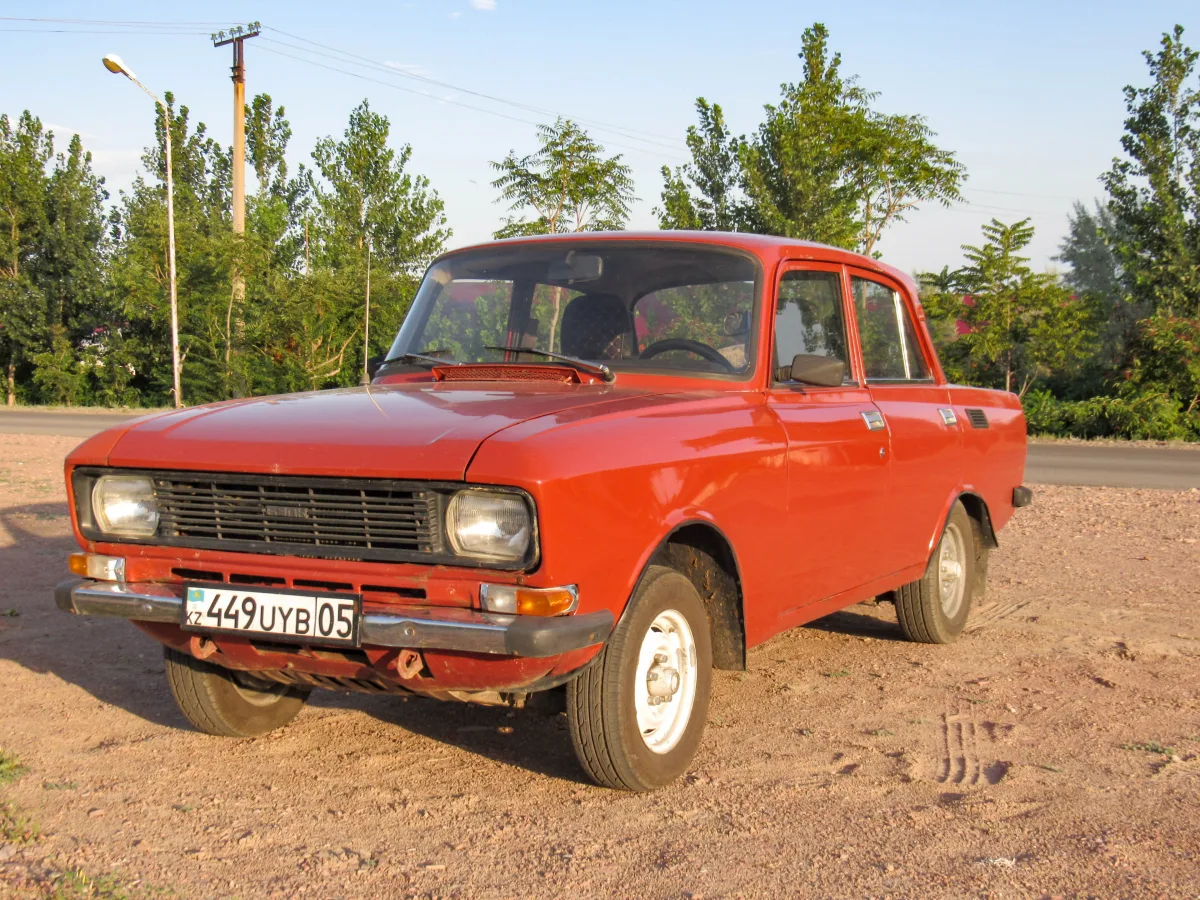
Moskvich 2140: 1976–1988 Soviet-era sedan and buying guide
The Moskvich 2140 is a Soviet-era four-door family sedan produced at the AZLK plant in Moscow from 1976 to 1988. We explain how it differs from its predecessor, the 412, what technology it had, and what to know if one of these cars appears in the collector or retro enthusiast market.






2140 in brief
The Moskvich 2140 replaced the earlier Moskvich 412 and was produced for around twelve years. It's a four-door sedan with an angular body that was considered quite modern at the time. Alongside it, other family cars were produced, such as the estate version.
Due to its widespread use in the USSR, the Moskvich 2140 is still encountered today — in Lithuania, you can find it as a retro car, valued for its history and simple mechanics.
Versions and differences
The base version is the 2140 sedan. There was also a higher-spec version, the 2140 SL (Lux), with better trim and more features. Differences are mainly in the interior and exterior details.
This family also includes other models — for example, the Moskvich 2137 estate — but their technical base is similar. It's important to verify in ads which specific model is being discussed.
Engine and gearbox
The Moskvich 2140 had a four-cylinder petrol engine — mostly around 1.5 litres (about 75 hp) and later around 1.7 litres. It's a simple, higher-quality design than earlier models, but still a slow construction.
Gearbox — manual, four-speed, rear-wheel drive. The manual is simple, so many repair jobs can be done with basic tools.
What to know if you're considering a Moskvich 2140
First, inspect the body — these cars are prone to rust in the wheel arches, floors, door sills, and arches. Check if the body hasn't been repaired and if there's no hidden corrosion under the paint.
Check the engine, gearbox, brakes, and suspension. The availability of spare parts is greater than for many other Soviet models, but the quality varies.
Before buying, check the documents and if the car can be registered in your country. If you're looking for a collector's item — assess the originality and quality of the restoration.


Versions
The Moskvich 2140 didn't have modern trims — we list the main versions.
2140
1976–1988The base sedan version.
- Four-door sedan
- Approximately 1.5-litre engine
- Four-speed manual gearbox
2140 SL (Lux)
1976–1988The higher trim with better interior.
- Often — better interior trim
- Often — additional details
- Same tech
Universalas 2137
from 1976Versatile variant.
- Versatile body
- Larger boot
- Less commonly seen
Comparison of versions
| 2140 | 2140 SL | Universalas | |
|---|---|---|---|
| Who it's for | For casual retro use | For a more comfortable interior | For hauling stuff |
| Body | Saloon | Saloon | Universalas |
| Engine | Around 1.5 litres, around 75 hp | Around 1.5 litres, around 75 hp | Around 1.5 litres, around 75 hp |
| Price in the used market (relatively) | € | €€ | €€ |
The Moskvich 2140 is perfect for those after a simple retro car or a collector's item. When buying, opt for examples with good bodywork and paperwork.
Pros
- Simple mechanics
- Parts availability is better than for other Soviet models
- Retro appeal
- Affordable purchase price
Cons
- Prone to rust
- Slow and unsuited to modern driving
- Poor safety equipment
Frequently asked questions
Is the Moskvich 2140 the same as the Moskvich 412?
No. The 2140 replaced the 412 and has a newer body, although the technology is quite similar.
What engine did the Moskvich 2140 have?
A four-cylinder petrol unit, usually around 1.5 litres and about 75 hp, later also around 1.7 litres.
Is the Moskvich 2140 suitable for daily use?
Rarely. It's an old, slow car, better suited to retro enthusiasts and shows.
Updated 2026-10-21 · Trim levels and equipment vary by market and model year — check the equipment of the specific car. · Translated automatically


