 English
 Lietuvių
 Latviešu
 Eesti
 Polski
 Русский
 Українська
 Deutsch
 Nederlands
 Čeština
 Slovenčina
 Svenska
 Norsk
 Dansk
 Suomi


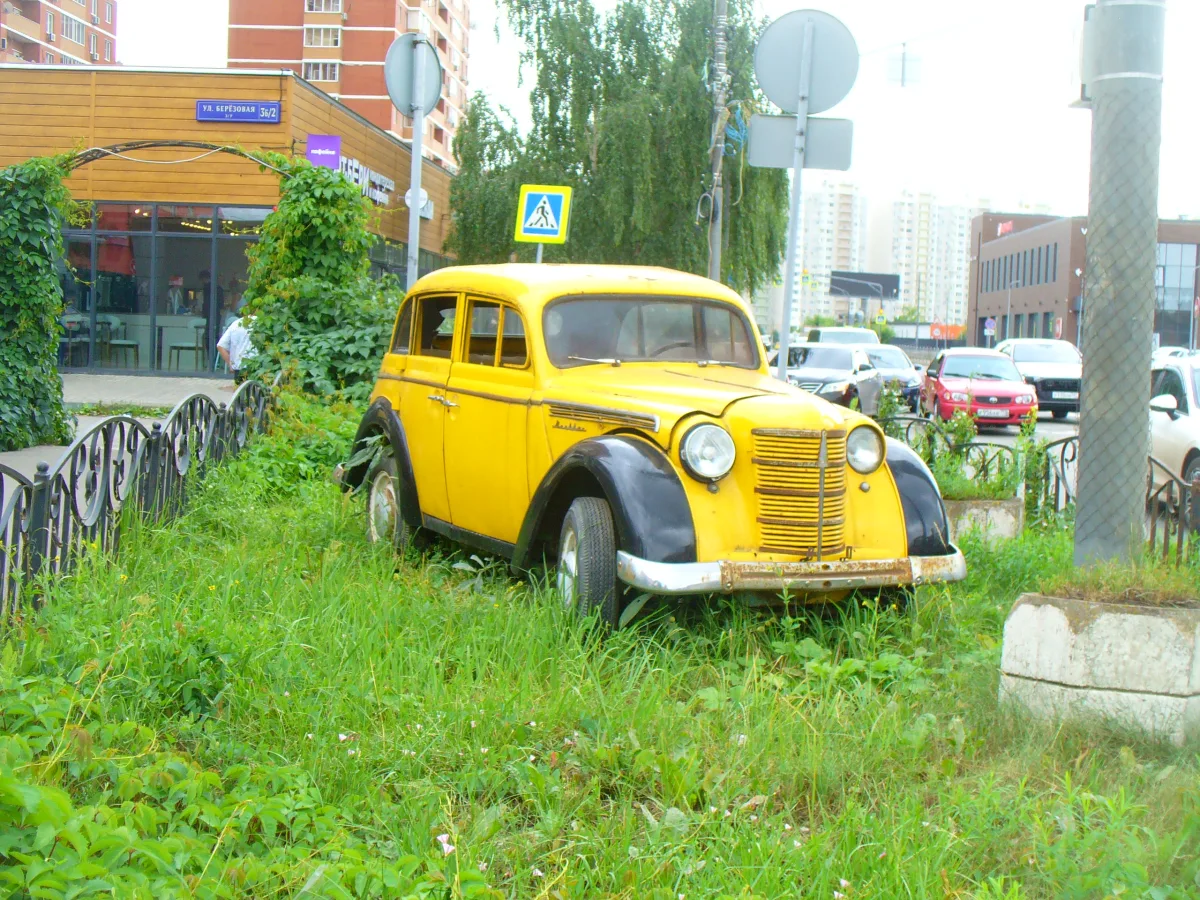
Moskvich 401: a Soviet post-war compact and what the collector needs to know
Moskvich 401 (401-420) — a compact sedan produced by the Moscow Automobile Plant (MZMA) from 1954 to 1956, an improved version of the 400-420. We look at what makes it special, its technology, and what collectors need to know.






Moskvich 401 in brief
The Moskvich 401 was introduced in 1954 as an improved version of the Moskvich 400-420, which had been in production since 1947. It was one of the first mass-produced Soviet popular cars, based on the Opel Kadett K38 design.
The exterior and interior space remained almost the same as the previous model. The main differences are technical: many engine and electrical components were changed and improved.
How the 401 differs from the 400
The 401 engine was built with a higher compression ratio (6.2:1) and improved intake and exhaust manifolds, increasing power from 23 to 26 hp. The starter, generator, wheel bearings, and handbrake were also changed.
Externally, both models were almost identical. A pickup version, the 401-420B, and a commercial sedan, the 401-422, were also produced, with production continuing until December 1956.
Engine and technology
The 401 had a 1074 cm³ four-cylinder side-valve engine producing 26 hp. The car's weight was around 885 kg, and the top speed was about 90 km/h.
The gearbox is manual, the technology is simple and uncomplicated. The suspension and steering met the standards of the time, so the driving experience is very different from modern cars.
What to check when buying such a car
The most important thing is body and frame corrosion: sills, floors, wings, and door bottoms. Check if the original engine, gearbox, and interior are still present.
Before buying, find out if there are documents proving the car's provenance and how to register it as a historic vehicle. Parts need to be sourced through clubs and specialist shops in Eastern Europe.


Trim levels
The Moskvich 401 was produced briefly and came in several body styles.
Moskvich 401 (401-420)
1954–1956The main four-door saloon.
- 1074 cm³ engine, 26 hp
- Top speed around 90 km/h
- Steel body
Moskvich 401-420B
1954–1956Pickup version.
- Pickup body
- Same engine technology
- Rare variant
Moskvich 401-422
1954–1956Estate version.
- Estate body
- Production until December 1956
- Same engine technology
Comparing Moskvich 401 versions
| 401-420 | 401-420B | 401-422 | |
|---|---|---|---|
| Who it's for | For collectors | For enthusiasts of rare cars | For enthusiasts of rare cars |
| Engine | 1074 cm³, 26 hp | 1074 cm³, 26 hp | 1074 cm³, 26 hp |
| Body style | Sedan | Pickup | Estate |
| Price in the used market (relatively) | Mid-range | High-end | High-end |
The Moskvich 401 is a collector's car with significant history. Choose based on condition, and seek out the pickup and estate variants as rarities.
Pros
- A significant chapter in Soviet automotive history
- Simple, uncomplicated technology
- Compact and easy to handle
- Exported to several countries, with enthusiast clubs
Cons
- Weak engine and modest performance
- Rust and outdated technology
- Parts can be hard to find outside of enthusiast clubs
Frequently asked questions
How does the 401 differ from the 400?
The 401 received an improved engine (26hp instead of 23hp), a new starter, generator, wheel arches and manual brake. The exterior remained almost unchanged.
How many Moskvich 400 and 401 models were produced?
Approximately 247,000 units were produced in total, including the 400 and 401 models.
Is the Moskvich 401 suitable for daily driving?
No, due to its outdated technology and poor safety, it's better suited to events, shows and weekend drives.
Updated 2026-10-21 · Trim levels and equipment vary by market and model year — check the equipment of the specific car. · Translated automatically


