 English
 Lietuvių
 Latviešu
 Eesti
 Polski
 Русский
 Українська
 Deutsch
 Nederlands
 Čeština
 Slovenčina
 Svenska
 Norsk
 Dansk
 Suomi


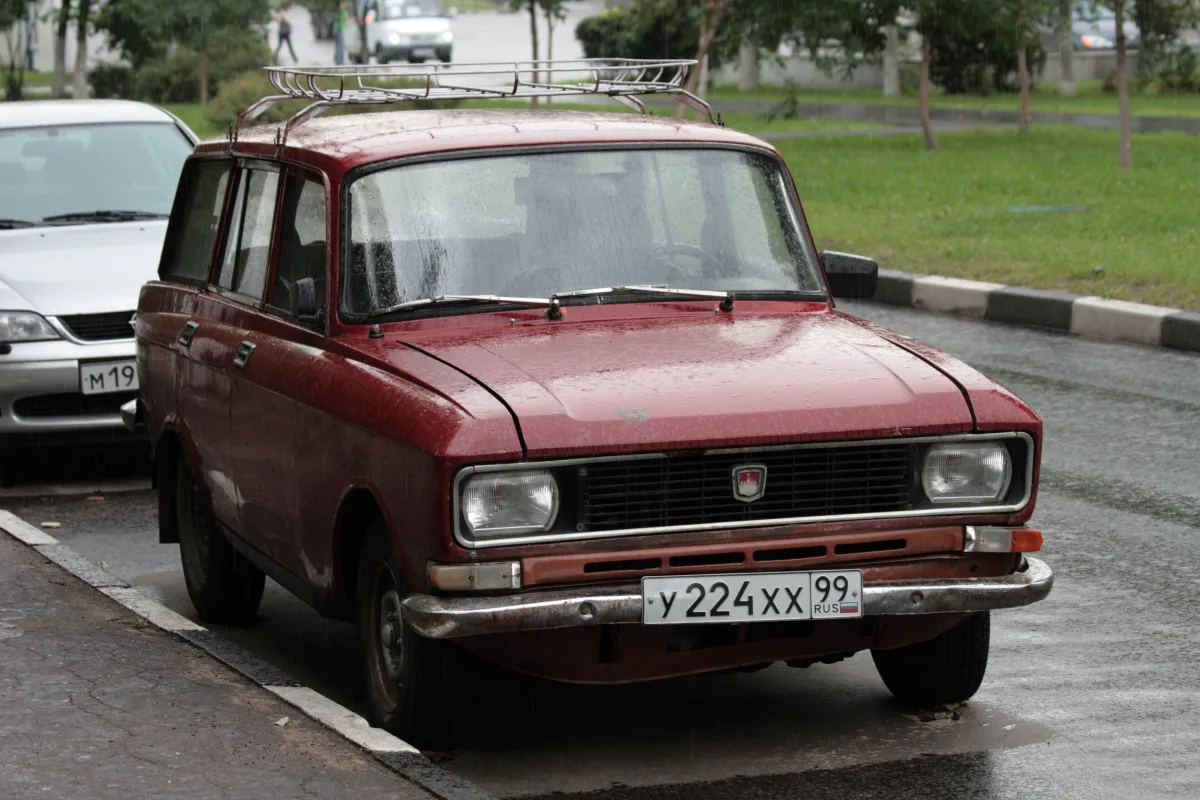
Moskvich 2137: the Soviet estate and what the collector needs to know
The Moskvich 2137 is an AZLK estate car built on the Moskvich 2140 series saloon chassis. We take a look at what makes it special, its technology, and what to check if you're after one as a classic.






Moskvich 2137 in brief
The Moskvich 2137 is the estate version of the 2140 series, which the Moscow AZLK factory produced from 1976 to 1988. The series itself evolved from a modified Moskvich 412 platform, so the estate inherited a reliable, simple, and widely known construction.
The estate was a practical choice for families and farm use: a larger boot and a sturdy, simple build.
Which version to choose
You'll most commonly find two versions: the standard 2137 and the more upmarket 2137 SL, which was intended for export. The SL version got large plastic bumpers with integrated indicator lights, different rear lights, and a partially revised interior.
In 1981–1982, the series was refreshed: there was less chrome on the outside, and an 'AZLK' badge replaced the previous logo. When choosing, prioritise the car's originality and condition over specific production years.
Engine and tech
Moskvich 2140 series cars had rear-wheel drive and a four-cylinder petrol engine — mostly around 1.5 litres in capacity. Check the exact power figures according to the specific car's documents, as they vary by version.
The 2140 series cars were the first of the 412 lineage Moskvich to feature disc front brakes. The gearbox is manual, the technology is simple and straightforward, but today it requires a specialist familiar with Soviet automobiles.
What to check when buying such a car
The most important thing is corrosion: check for rust on the sills, floors, underside of the wings, door sills, and boot floor. In the estate version, also check the condition of the rear arches, boot lid, and roof seams.
Check if the engine runs smoothly, if there are no leaks, if the brakes, electrical systems, and lighting work. Parts can be found through clubs and specialist shops in Eastern Europe, but SL version plastic parts might be harder to come by.


Trim levels
The Moskvich 2137 was produced in several versions, so we describe the main ones below.
Moskvich 2137
1976–1988Standard estate.
- Chrome trim details in early versions
- Basic interior.
- Rear-wheel drive
Moskvich 2137 po atnaujinimo
1981–1988Refreshed estate with less chrome.
- AZLK badge
- Less chrome, body-coloured stripe at the rear
- Base trim
Moskvich 2137 SL
from 1981Luxury export version
- Large plastic bumpers
- Different rear lights, refreshed interior
- Export version
Moskvich 2137 comparison
| 2137 | Po atnaujinimo | SL | |
|---|---|---|---|
| Who it's for | For collectors | For collectors | For export version enthusiasts |
| Engine | Around 1.5L, petrol | Around 1.5L, petrol | Around 1.5L, petrol |
| Trim | With chrome | Less chrome | Plastic bumpers |
| Price in the used market (relatively) | €€ | €€ | €€€ |
Moskvich 2137 — a practical Soviet classic estate. Choose based on condition, and the SL version if you're after a rarer variant.
Pros
- Spacious estate body
- Simple and uncomplicated technology
- Front disc brakes
- Parts are easily found in Eastern Europe
Cons
- Corrosion is a common issue
- Old technology and high running costs
- Lacks modern safety systems
Frequently asked questions
How does the Moskvich 2137 differ from the 2140?
The 2137 is the estate version, while the 2140 is the saloon. The technology and basic construction are very similar.
What does SL mean?
The SL was the more luxurious export version with large plastic bumpers, different rear lights and a refreshed interior.
Is it easy to find parts for the Moskvich 2137?
Some parts can be found through clubs and specialist shops in Eastern Europe, but plastic components for the SL versions might be harder to come by.
Updated 2026-10-21 · Trim levels and equipment vary by market and model year — check the equipment of the specific car. · Translated automatically


