 English
 Lietuvių
 Latviešu
 Eesti
 Polski
 Русский
 Українська
 Deutsch
 Nederlands
 Čeština
 Slovenčina
 Svenska
 Norsk
 Dansk
 Suomi


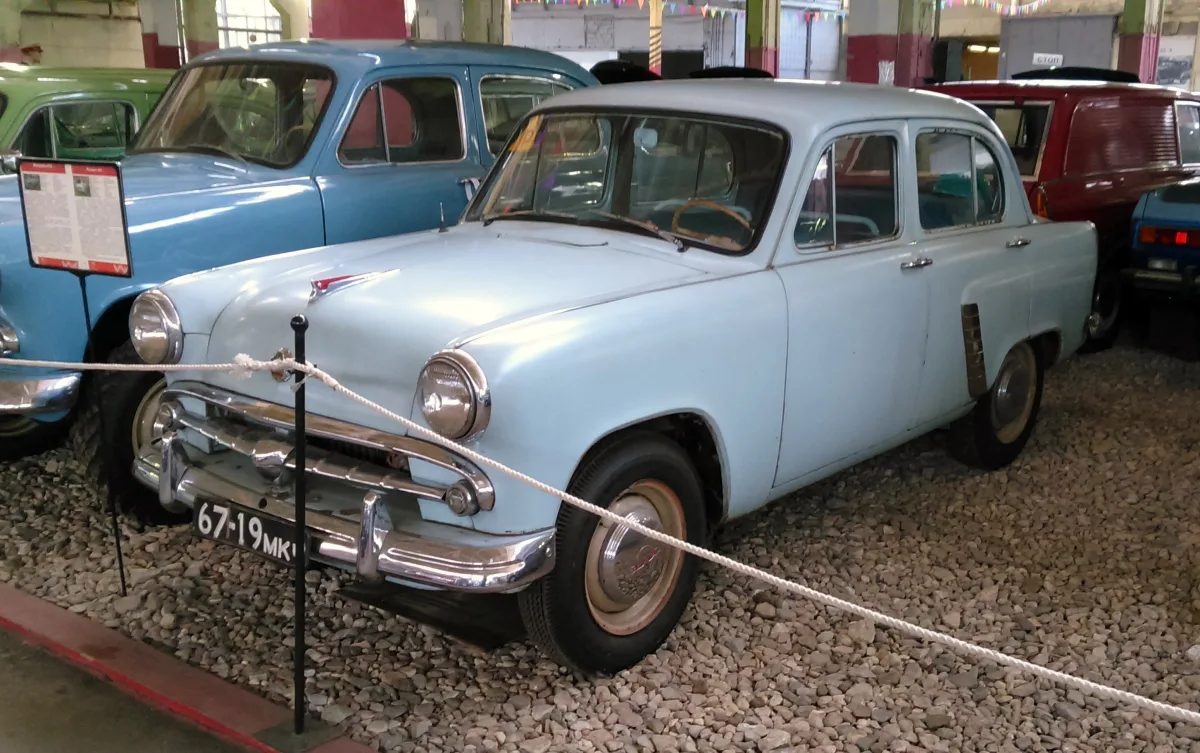
Moskvich 402: 1956–1958 Soviet-era sedan and collector's car
Moskvich 402 — a Soviet-era four-door sedan family car, produced in the mid-1950s and based on the earlier Moskvich 401 design. We explain how it differs from other Moskvich models, what technology it had, and what to know if such a car appears in the collector's market.






Moskvich 402 in brief
The Moskvich 402 was produced from 1956 to 1958. It's an updated version of the Moskvich 401 with improved bodywork, interior, and some mechanical parts. The main version is a four-door sedan.
Today, the Moskvich 402 is a collector's item — you can spot it in museums, retro events, and in the hands of collectors. Such cars rarely appear in listings, and each example is valued individually.
402 and other Moskvich models
The Moskvich 402 sits between the Moskvich 401 and the newer 407 — this transitional model has the older body shape but with some improvements. Listings might mix up the 401, 402, and 407 names, so it's crucial to check the documents and details.
Another variant in the same family is the Moskvich 423 estate, based on this model. It's even rarer than the sedan.
Engine and gearbox
The Moskvich 402 featured a four-cylinder petrol engine with a side-valve layout, with a capacity of around 1.1 litres and about 35 hp. It's a simple, slow, but reliable design for its time.
Gearbox — manual, three-speed, rear-wheel drive. The car is not suited to modern high-speed driving, so it should be driven with care.
What to know if you're considering a Moskvich 402
First, establish the car's provenance: is it original, restored, or cobbled together from parts of different models? Due to its similarity to other Moskvich models, parts may be mixed up, so it's worth calling in a specialist.
Check the bodywork — steel from that era is prone to rust in the sills, floors, arches, and door bottoms. Inspect the engine, gearbox, brakes, and suspension, as well as the interior.
Parts need to be sourced through clubs and specialist suppliers. Ensure the car can be legally registered in your country and that you have all the necessary documents.


Variants
The Moskvich 402 didn't have modern trim levels — we outline the main variants.
Moskvich 402 sedanas
1956–1958The main version — a four-door saloon.
- Four-door body
- Approximately 1.1-litre engine
- Three-speed manual gearbox
Moskvich 423
Around 1958The estate variant, based on the 402.
- Estate body
- Larger boot
- Less commonly seen
Restauruotas egzempliorius
nowMost surviving cars have been restored.
- Updated body
- Often — replaced parts
- Value depends on condition
Comparing variants
| Sedanas | Universalas 423 | Restauruotas | |
|---|---|---|---|
| Who it suits | For collectors and shows | For enthusiasts of rarer variants | For those who want a ready-to-go car |
| Body | Sedanas | Estate | Depends on the car |
| Engine | Around 1.1 L, around 35 HP | Around 1.1 L, around 35 HP | Around 1.1 L, around 35 HP |
| Price in the used market (relatively) | Mid-range | High-end | High-end |
The Moskvich 402 is only worth considering for collectors and retro enthusiasts. Before buying, check the provenance, documents, and restoration quality.
Pros
- A rare classic from the Soviet era
- Simple and straightforward mechanics
- An appealing retro design
- Highly valued by collectors
Cons
- Very rare, few specialists
- Slow and not suited to modern driving
- Prone to rust, hard to find parts
Frequently asked questions
How does the Moskvich 402 differ from the 401?
The 402 is an updated version of the 401 with improved interior and some mechanical parts, but they look similar, so check the documents in ads.
What engine did the Moskvich 402 have?
A four-cylinder petrol unit, around 1.1 litres in capacity and roughly 35 hp in power.
Is the Moskvich 402 suitable for daily driving?
No. It's a collector's car, better suited to shows and the occasional spin.
Updated 2026-10-21 · Trim levels and equipment vary by market and model year — check the equipment of the specific car. · Translated automatically


