 English
 Lietuvių
 Latviešu
 Eesti
 Polski
 Русский
 Українська
 Deutsch
 Nederlands
 Čeština
 Slovenčina
 Svenska
 Norsk
 Dansk
 Suomi


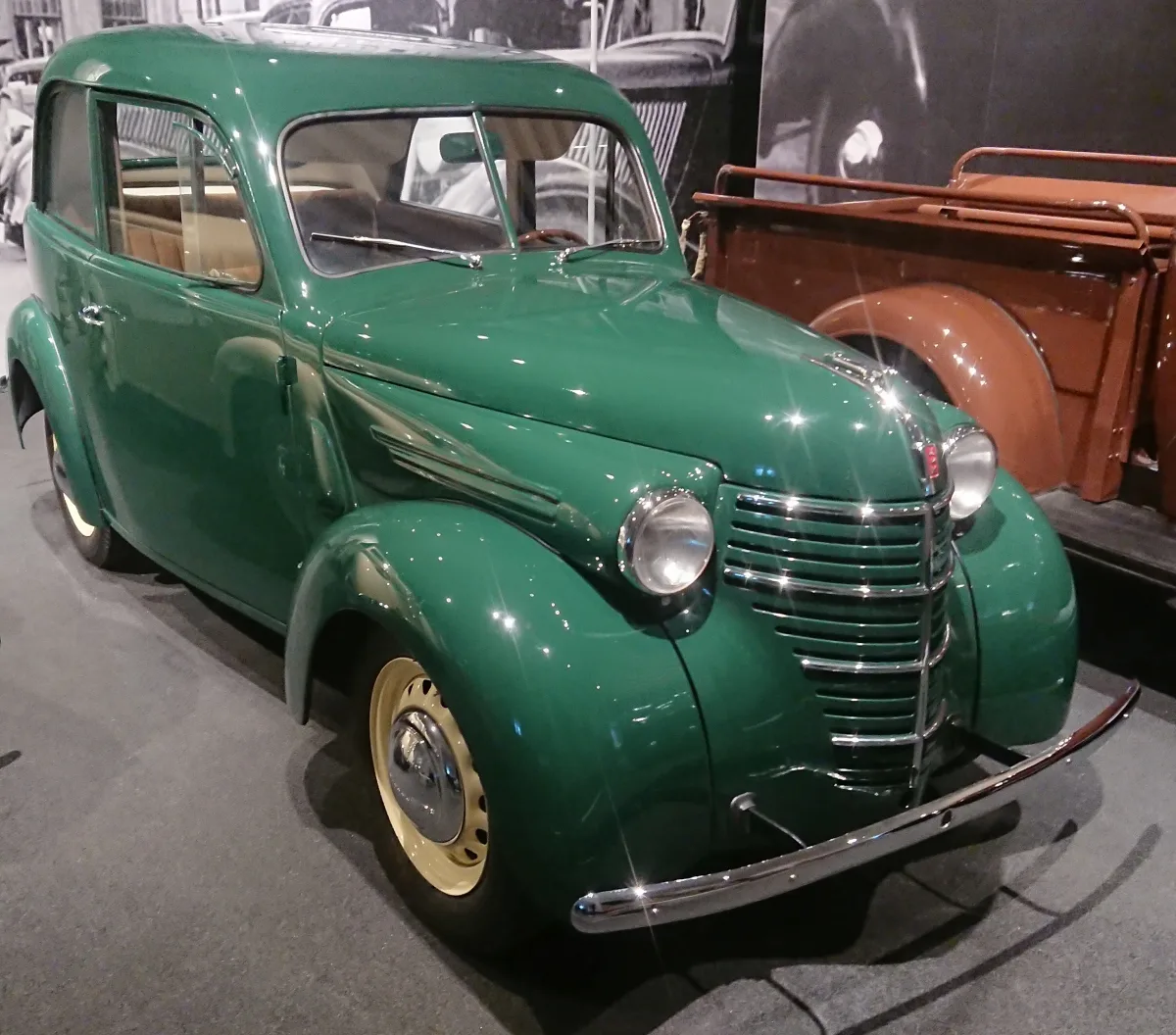
Moskvich KIM-10: the first Soviet subcompact car
KIM-10 — a compact Soviet car, produced from 1940 to 1941 at the Moscow KIM factory and becoming the forerunner of later Moskvich models. In this article, we look at its technology, versions, and what you need to know about this uniquely rare historic car.






KIM-10 in brief
The KIM-10 was one of the first subcompact cars in the Soviet Union, intended for personal use. It was manufactured in Moscow at the KIM factory, which later became the Moskvich producer.
Production was very brief — from November 1940 to April 1941, only around 340 cars were made. With the start of the war in 1941, the factory was evacuated east, halting production of the model.
Versions and bodies
Three versions were planned: the two-door sedan KIM-10-50, the two-door phaeton KIM-10-51, and the four-door sedan KIM-10-52. Only the two-door versions made it into production, while the four-door sedan remained as prototypes.
The phaeton (KIM-10-51) was produced in very small numbers and is considered particularly rare today. Most surviving cars are preserved in museums and collections.
Engine and transmission
The KIM-10 featured an 1170 cm³ side-valve engine with around 30 hp. It's a simple design, suitable for a lightweight car.
The transmission is a three-speed manual with synchronisers on the second and third gears. The engine is at the front, drive is to the rear wheels.
What to know about the KIM-10
Only around 340 of these cars were made, so they're virtually non-existent in the market. Even if you do find one, its value is determined by its collectability, not typical market factors.
Before buying, check the car's provenance, documentation, and authenticity — some cars might be restored or rebuilt. Use a specialist familiar with Soviet classics.
Spare parts are practically non-existent, so they'd need to be made individually. Also, check if the car can be registered in Lithuania.


Trim levels
Names and equipment vary by market and year; we list the versions most commonly found in Europe.
KIM-10-50
1940–1941 model yearsTwo-door sedan — the main production version.
- 1170 cm³ side-valve engine, around 30 hp
- Three-speed manual gearbox
- Two-door saloon
KIM-10-51
1940–1941 model yearsPhantom — a very rare version.
- Open-top body
- Same tech as the sedan
- An especially rare collectible car
Comparing versions
| KIM-10-50 | KIM-10-51 | |
|---|---|---|
| Who's it for? | For collectors and museums | Especially for collectors of rare cars |
| Body style | Two-door saloon | Open phaeton |
| Engine | 1170 cc, around 30 hp | 1170 cc, around 30 hp |
| Price in the used market (relatively) | €€€ | €€€ |
The KIM-10 is only worth buying as a collector's item. It's not suitable for daily use due to its rarity and lack of spare parts.
Pros
- Historically significant, one of the first Soviet small-capacity cars
- Very rare, valuable to collectors
- Simple mechanics
- Distinctive pre-war appearance
Cons
- Almost impossible to find
- Parts are virtually non-existent
- Weak power and outdated safety features
Frequently asked questions
How many KIM-10s were produced?
Around 340 cars from 1940–1941.
What is the KIM-10's power?
Around 30 hp from an 1170 cc side-valve engine.
Can you buy a KIM-10?
Very difficult. There are very few cars left, most are in museums or private collections.
Updated 2026-10-21 · Trim levels and equipment vary by market and model year — check the equipment of the specific car. · Translated automatically


