 English
 Lietuvių
 Latviešu
 Eesti
 Polski
 Русский
 Українська
 Deutsch
 Nederlands
 Čeština
 Slovenčina
 Svenska
 Norsk
 Dansk
 Suomi


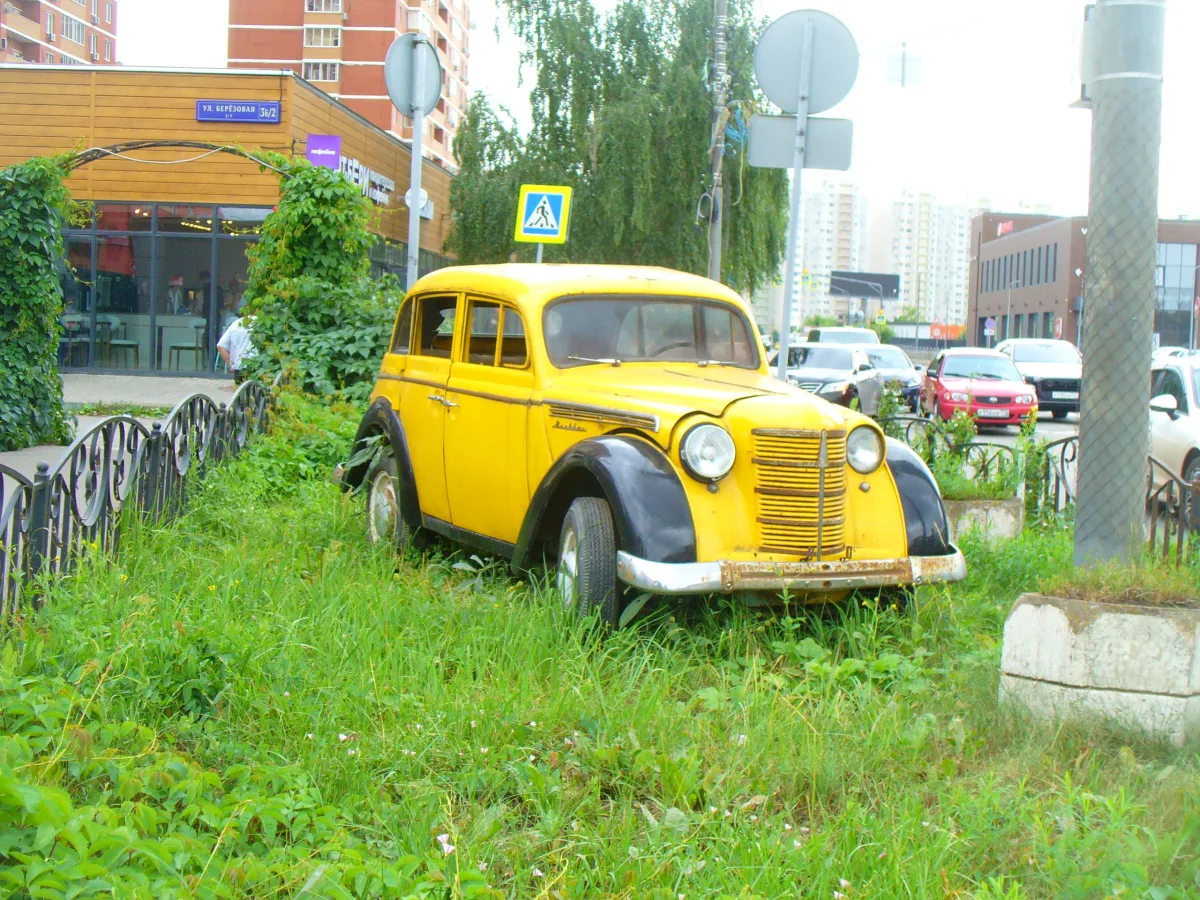
Moskvich 400-420: the first mass-produced Soviet car based on the Opel Kadett
The Moskvich 400-420 was a Soviet car produced at the end of the 1940s, based on the 1938 Opel Kadett K38. This article looks at its versions, engine, and what you need to know if you're interested in this rare classic car.






Moskvich 400-420 in brief
This was the first mass-produced popular Soviet car, based on the German Opel Kadett K38. After World War II, its production equipment ended up in the Soviet Union, and the Moskvich was produced in Moscow.
The car is small, of simple construction, and is now valued as a rare historical exhibit. Such cars are very rarely seen in Lithuania.
Versions and changes
The main version is the 400-420 four-door saloon. There was also a cabriolet version 400-420A (from 1949), an estate 400-422, and a pickup 401-420B.
Later, the modernised Moskvich 401 appeared, and in 1956 it was replaced in production by the Moskvich 402. Some cars were exported to certain European countries, including Belgium and Norway.
Engine and gearbox
The engine is a 1.1-litre (1074 cc) four-cylinder unit, producing around 23 hp. The later 401 model had around 26 hp.
The gearbox is a three-speed manual, with power sent to the rear wheels. Due to its modest power, the car is suited to relaxed driving.
What to check when buying a Moskvich 400-420
The most important factors are originality and condition. Due to its age, the car may have significant corrosion damage, especially in the body, floors, and chassis, so inspect everything thoroughly.
Check the engine and gearbox for oil leaks, noise, and smoothness. Spare parts are rare and often made to order.
Inquire about the documents: such cars are often imported from Russia or other countries, so proper registration and provenance are crucial.


Trim levels
Version names are indicated according to factory designations.
400-420 sedanas
circa 1947–1954The four-door base version.
- Four-door body
- Approximately 23 hp engine
- 3-speed manual gearbox
400-420A kabrioletas
from 1949The convertible is a rarer version.
- Convertible body
- The same mechanics as the sedan
- Rarer and more valuable
401
later versionModernized version with a slightly more powerful engine.
- Around 26 AG engine
- 3-speed manual gearbox
- Produced until 1956
Furgonas / pikapas
around 1948–1956Commercial versions (400-422, 401-420B).
- Pickup body
- The same technology
- Rare
Comparison of versions
| Sedanas | Kabrioletas | 401 | |
|---|---|---|---|
| Who it's for | For collections and shows | For open-top driving | For spirited driving |
| Engine | About 23 AG | About 23 AG | About 26 AG |
| Price in the used market (relatively) | €€ | €€€ | €€ |
Most buyers will find a well-maintained sedan a solid choice. Convertibles are rarer and more desirable, but also pricier.
Pros
- A rare historical gem
- Simple mechanics
- Compact and lightweight
- An interesting history — based on the Opel Kadett
Cons
- A very weak engine
- Parts can be hard to find
- Rust and age
Frequently asked questions
Is the Moskvich 400-420 really based on the Opel?
Yes, it was created based on the 1938 Opel Kadett K38, whose production equipment ended up in the Soviet Union after the war.
How many Moskvich 400s were produced?
Around 247,000 units of the 400 and 401 models were produced in total.
What engine did the Moskvich 400-420 have?
It had a 1.1-litre four-cylinder engine with around 23 hp.
Updated 2026-10-21 · Trim levels and equipment vary by market and model year — check the equipment of the specific car. · Translated automatically


