 English
 Lietuvių
 Latviešu
 Eesti
 Polski
 Русский
 Українська
 Deutsch
 Nederlands
 Čeština
 Slovenčina
 Svenska
 Norsk
 Dansk
 Suomi


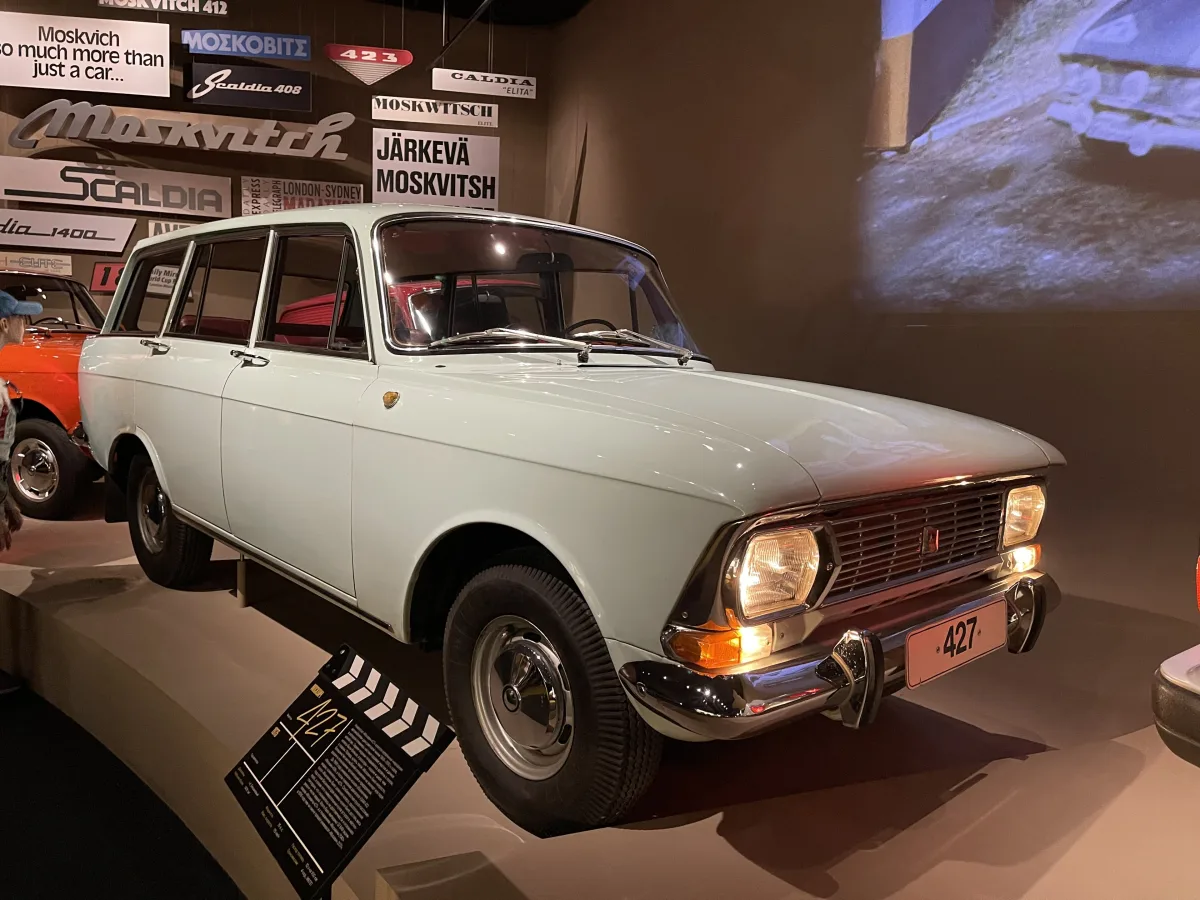
Moskvich 427: the Soviet estate car and what the collector needs to know
The Moskvich 427 is the estate version from the Moscow factory, produced from the late 1960s to the mid-1970s, technically based on the Moskvich-408 saloon. Today, it is primarily valued as a collector's car and a symbol of the Soviet era.






Moskvich 427 in brief
This is a compact five-door estate with a practical boot and simple, robust technology. Its body uses the front end and chassis of the saloon, with a practical estate body added to the rear.
The Moskvich 427 was a practical family and workhorse car, and today its value lies in its originality, surviving condition, and history.
What sets it apart
The car is small, light, and simple. The interior is basic, lacking comfort features, but it is practical and spacious by the standards of the time.
The hardest part today is finding a surviving, unmodified, and unrestored example, so originality often takes precedence over a 'showroom' restoration.
Engine and gearbox
The Moskvich 427 had around a 1.4-litre four-cylinder petrol engine with a four-speed manual gearbox and rear-wheel drive. Power was modest, but the technology was simple.
Exact engine specifications depend on the year of manufacture and version, so refer to the specific car's documents.
What to check when buying such a car
The most important thing is corrosion: sills, floors, wings, door sills, and boot floor. Also, check if the car has not been modified and if the original parts are present.
The engine should not smoke or leak oil, and the brakes and steering mechanism should be in good working order. Parts may need to be sourced from collector communities and specialist shops.


Trim levels
The Moskvich 427 came with straightforward, uniform equipment across all examples, so we'll describe a single common version.
Universalas
427The standard five-door estate version.
- A simple, functional interior
- A spacious boot for its time
- Manual gearbox
Buying scenarios for the Moskvich 427
| Originalus, sausai laikytas | Restauruotas | Reikalaujantis darbo | |
|---|---|---|---|
| Who it suits | Collectors | Events and shows | Enthusiasts |
| Main risk | High price | Restoration quality | Repair cost |
| Price in the used market (relatively) | Mid-range | Mid-range | Budget |
Opt for an original, lightly restored car with a history. Inspect a restored version closely for the quality of work.
Pros
- Simple mechanics
- Practical estate body
- Interesting collector's car
- Easily understandable construction
Cons
- Rust
- Low power and modest comfort
- Finding parts might take time
Frequently asked questions
Is the Moskvich 427 suitable for daily use?
Rarely — this is an old car with modest comfort and safety; more often used for events or weekend trips.
How does the 427 differ from the Moskvich 408?
The 427 is a hatchback, while the 408 is a sedan; the technology is very similar.
Is it easy to find parts?
Some parts can be found through collector communities or specialist shops, but finding body parts might take time.
Updated 2026-10-21 · Trim levels and equipment vary by market and model year — check the equipment of the specific car. · Translated automatically


