 English
 Lietuvių
 Latviešu
 Eesti
 Polski
 Русский
 Українська
 Deutsch
 Nederlands
 Čeština
 Slovenčina
 Svenska
 Norsk
 Dansk
 Suomi


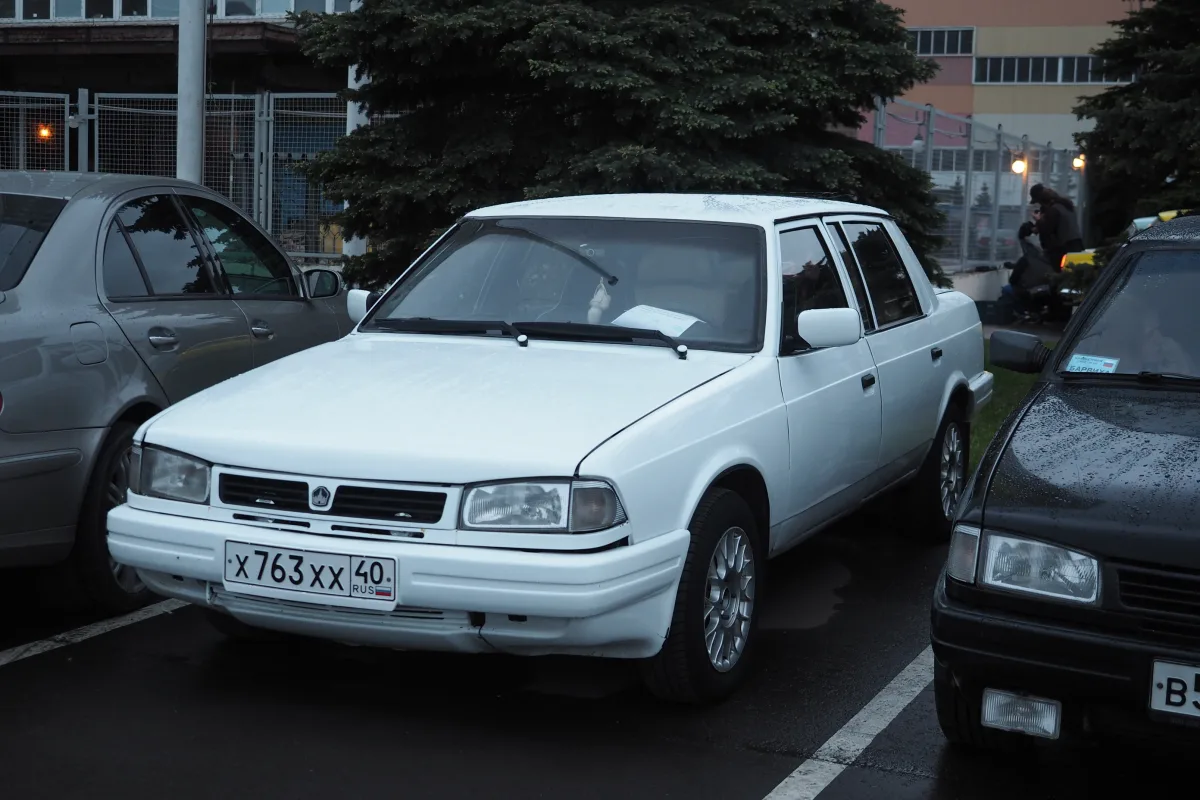
Moskvich 2142: „Prince Vladimir“ and other executive sedans
The Moskvich 2142 is a luxurious sedan produced by AZLK (Moscow's Moskvich plant) between 1997 and 2002. It's best known as the „Prince Vladimir“. This article explores its versions, engines, and what you need to know about this rare car.






2142 in brief
The Moskvich 2142 was an attempt to create a more modern and luxurious car according to Moskvich standards. It was aimed at the business and executive market, so production was very limited — around 3,500 units of this family were made in total.
Production ended in 2002 when the plant shut down and declared bankruptcy. As a result, the 2142 is a rare car today, and in Lithuania, it can only be found as a private import.
Versions — what's the difference
The main version was called „Prince Vladimir“ — a large family sedan introduced in September 1998. Alongside it came the „Ivan Kalita“ — an executive-class sedan, and in May 1999, the „Duet“, an executive-class coupé, which was updated again in 2002.
All these models were developed as part of a joint project with Renault and were intended to be a cheaper alternative to imported cars.
Engines and gearboxes
A few engines were offered: the 1.6-litre VAZ-2106-70, the 1.7-litre UZAM-331.17, and two 2.0-litre Renault engines (F3R single and F7R dual camshafts). The Renault engines were the most powerful and modern.
Gearbox — front-wheel drive. Transmission — manual. Before buying, check which engine is fitted to the specific car.
What to check when buying a 2142
Very few were made, so there are hardly any on the used-car market. Before buying, check the car's history, documents, and authenticity, as well as the engine type.
Inspect the body for corrosion and signs of repair, check the engine, gearbox, suspension, and electronics. Russian cars are often repaired non-standardly, so it's worth hiring a specialist.
Parts need to be sourced through clubs and foreign suppliers, as their availability is limited after the bankruptcy. Also, check how to register such a car in Lithuania.


Trim levels
Names and equipment vary by market and year; we list the versions most commonly found in Europe.
Kniaz Vladimir
From 1998A large family saloon.
- Often — a 1.6–2.0-litre engine
- Front-wheel drive
- Four-door saloon body
Ivan Kalita
From 1998Executive saloon.
- Often — the Renault 2.0-litre engine
- Better interior trim
- Four-door saloon body
Duet
From 1999Executive coupé.
- Coupe body style
- Often — the Renault 2.0-litre engine
- Refreshed in 2002
Comparing versions
| Kniaz Vladimir | Ivan Kalita | Duet | |
|---|---|---|---|
| Who it's for | For families | Executive looks | Coupe for enthusiasts |
| Body | Sedan | Sedan | Coupe |
| Engine | 1.6–2.0-litre | Often 2.0-litre | Often 2.0-litre |
| Price in the used market (relatively) | € | €€ | €€ |
The „Kniaz Vladimir“ is a standout for many buyers as a historic, rare Russian sedan. A duo for collectors seeking a unique automobile.
Pros
- A rare and intriguing car for collectors
- More modern technology than previous „Moskvich“ models
- The option to have a „Renault“ engine
- Spacious interior
Cons
- Finding parts and mechanics can be challenging
- Manufacturer went bankrupt
- Poor resale value
Frequently asked questions
How many Moskvich 2142 were produced?
Around 3,500 cars in total for all models in this series.
How does the „Kniaz Vladimir“ differ from the „Ivan Kalita“?
The „Kniaz Vladimir“ is a large family sedan, while the „Ivan Kalita“ is an executive-class sedan with better trim.
When did production of the 2142 end?
2002, when the AZLK plant ceased operations.
Updated 2026-10-21 · Trim levels and equipment vary by market and model year — check the equipment of the specific car. · Translated automatically


