 English
 Lietuvių
 Latviešu
 Eesti
 Polski
 Русский
 Українська
 Deutsch
 Nederlands
 Čeština
 Slovenčina
 Svenska
 Norsk
 Dansk
 Suomi


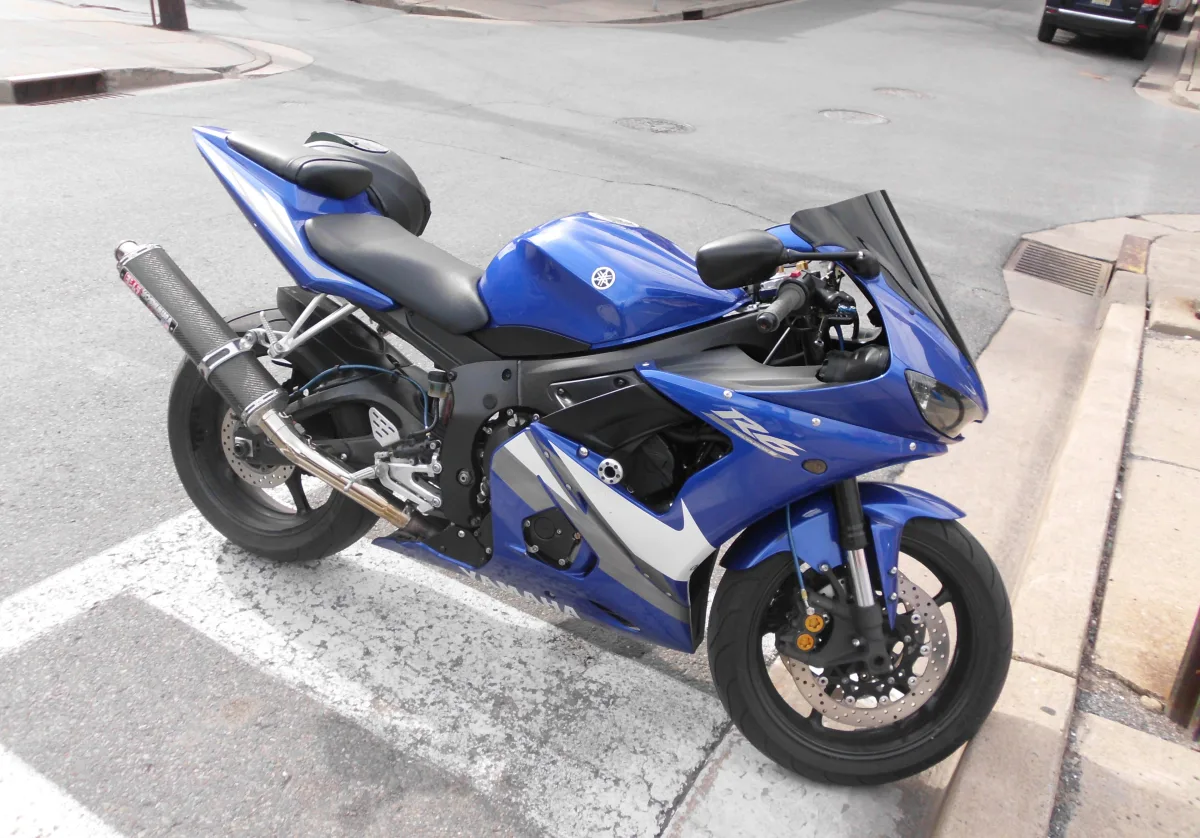
Yamaha R6: 600 cm³ sports motorcycle, generations and what to check when buying used
Yamaha YZF-R6 — 600 cm³ inline-four sports motorcycle, produced 1999–2020. We look at the generations, tech and what’s crucial to check when buying a used R6.






R6 in brief
The R6 is one of the most famous supersport bikes: light, precise and with a very high-revving engine. It’s designed for dynamic riding and the track, so the riding position is sporty and comfort is limited.
Due to these characteristics, the R6 is often ridden aggressively: crashes, track days and training sessions are common parts of its history. When buying used, it’s essential to inspect the true condition, not just the appearance.
Generations — what’s different
The first generation (1999–2002) has a carburettor and classic 'R6' styling. The second generation (2003–2005) got fuel injection, stronger brakes and a more modern design.
The third generation (2006–2007) features an updated engine with variable-length intake tracts (YCC-I) and a new chassis, while the fourth generation (2008–2016) has an electronic throttle (YCC-T) and engine modes (D-Mode).
The fifth generation (2017–2020) boasts more modern electronics: traction control, ABS and R1-inspired styling. Since 2020, the R6 is no longer produced for public roads (only a track version remains).
Engine and gearbox
All generations feature a 599 cm³ inline-four, liquid-cooled engine. Power is around 120–130 hp, with a redline of over 16,000 rpm.
The gearbox is a 6-speed manual, with drive to the rear wheel via chain. Most bikes have a slipper clutch (in later versions).
What to check when buying a used R6
First off — check for signs of a drop: inspect the fairing, frame, foot pegs, handlebars, and mirrors. Ensure the frame isn't bent and that all fasteners are intact.
Check the chain, sprockets, brakes, tires, and engine operation. The engine should run smoothly and not smoke, and the cooling fan should engage.
Request the service history and ask if the motorcycle was used on the track. R6 engines last a long time if well-maintained, but aggressive use shortens their lifespan.


Trims and versions
Names and equipment vary by market and year; below are the main generations.
R6 I karta
1999–2002The first generation with a carburetor.
- 599 cm³ inline four-cylinder engine
- Basic tech
- Often — old and modified
R6 II karta
2003–2005Fuel injection system and refreshed design.
- Fuel injection
- More powerful brakes
- Often — a tidied-up write-off
R6 IV karta
2008–2016More modern engine and electronics.
- YCC-T and D-Mode
- Often — a sliding sunroof
- Often — tidied-up
R6 V karta
2017–2020Latest generation with modern electronics.
- Traction control and ABS
- Refreshed design
- Often — lower mileage
R6 generation comparison
| I karta | II karta | IV karta | V karta | |
|---|---|---|---|---|
| Who it's for | For a budget sports start | For sporty driving | Sporty and track-focused | For those who value electronics |
| Engine | 599 cm³, carburettor | 599 cm³, injectors | 599 cm³, YCC-T | 599 cm³, more advanced electronics |
| Price in the used market (relatively) | Budget-friendly | Mid-range | Mid-range | Premium |
For most buyers, the best choice is a well-maintained fourth generation. The fifth generation is worth considering for its modern electronics, while the first and second generations are only suitable for heavily discounted prices.
Pros
- Light and precise handling
- High-revving engine and sporty dynamics
- Solid ride and brakes
- Long-lasting tech, if well-maintained
Cons
- Uncomfortable sporty stance for daily driving
- Often aggressively used and neglected
- Low torque at low revs
Frequently asked questions
Is the R6 suitable for a beginner?
No, it's designed for experienced drivers: powerful and responsive tech, and a sporty seating position. Category A license required.
Why isn't the R6 being made anymore?
Due to tightening emissions standards in Europe, the R6 for public roads is no longer produced from 2020, but the track version remains.
Which R6 generation is the best?
For many buyers, the IV generation (2008–2016) is the best bet: modern tech, plenty of choice, and good value. The V generation has more electronics, but it's pricier.
Updated 2026-10-21 · Trim levels and equipment vary by market and model year — check the equipment of the specific car. · Translated automatically


