 English
 Lietuvių
 Latviešu
 Eesti
 Polski
 Русский
 Українська
 Deutsch
 Nederlands
 Čeština
 Slovenčina
 Svenska
 Norsk
 Dansk
 Suomi


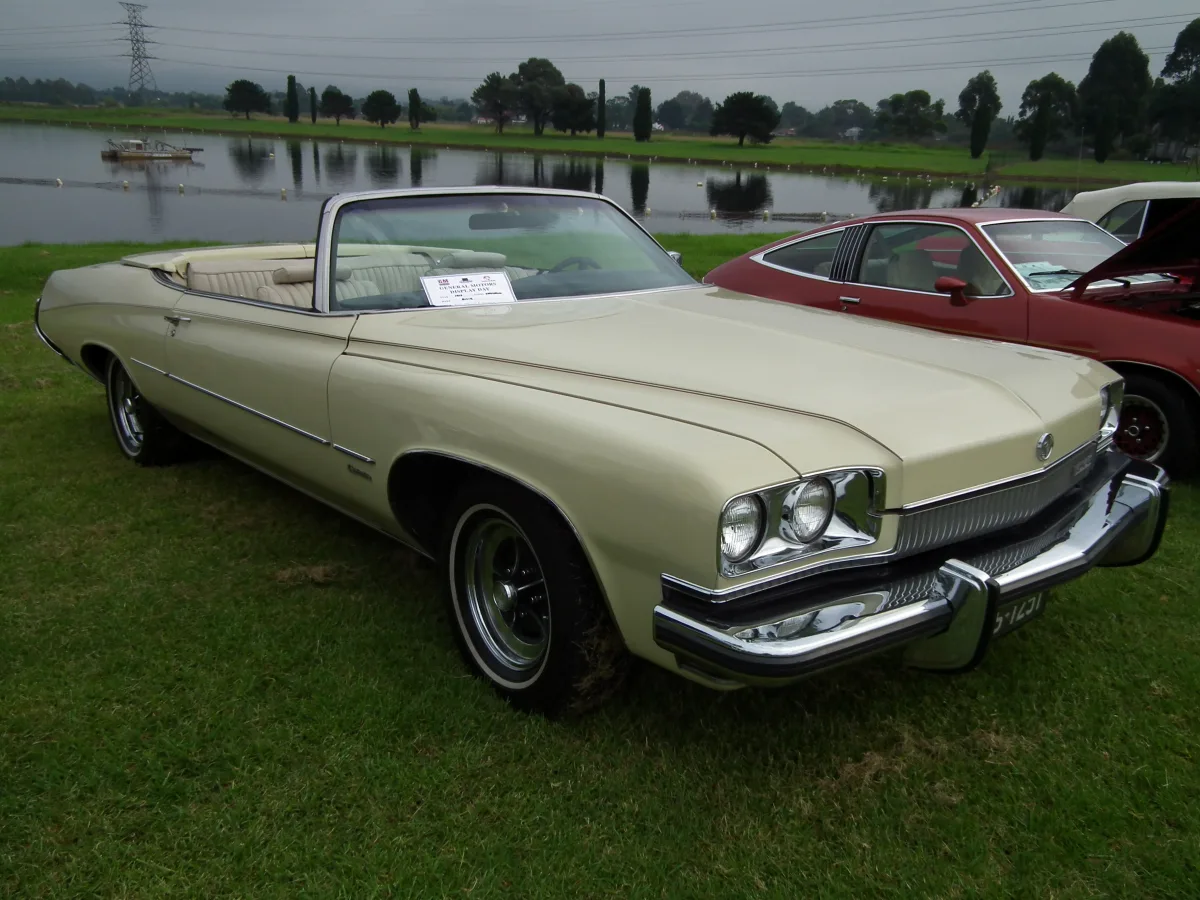
Buick Centurion: 1971–1973 American V8 coupe and convertible
Buick Centurion — the 1971–1973 large American car with a V8 engine, offered as a coupe, four-door hardtop, and convertible. We review the bodies, engines, and what you need to know to buy this classic.






Centurion in brief
The Centurion was positioned between the LeSabre and Electra, and in 1971, it became Buick's sportier large car option, replacing the Wildcat. The name comes from the 1956 Motorama show concept car, but the production Centurion is an entirely different model.
Production lasted just three years. Approximately 110,000 cars were made, including around 10,000 convertibles.
Bodies and year-by-year differences
Three body styles were offered: a two-door coupe, four-door hardtop, and convertible. Convertibles are rarer, making them more valuable.
1971 was the most powerful: the standard 455 cu in (7.5 L) V8 had around 315 HP (by the old measurement), and the optional Stage 1 was even more potent. From 1972, power figures are given by the stricter new standard, so the numbers look lower, and in 1973, the standard engine became the 350 cu in V8 (around 175 HP), with the 455 remaining an option.
Engines and transmissions
All Centurion engines are large-displacement V8s: 455 cu in (7.5 L) and, in 1973, 350 cu in (5.7 L). These cars were more about relaxed, comfortable driving than sporty performance.
Box — automatic, drive — rear-wheel. Engines are thirsty, and maintenance is expensive compared to modern cars.
What to check when buying a Buick Centurion
Most important — rust: inspect the floors, sills, boot floor, and underbody. For convertibles — the roof mechanism and seals.
Check if the engine and box are original, if there are no oil leaks, how the brakes work. Ask for history documents and verify that the vehicle identification number matches the documents.
Most of these cars are imported to Lithuania from the USA, so inquire about registration, technical inspection, and parts availability.


Trim levels
Names and body styles as per the US market.
Kupė (2 durų)
1971–1973Two-door hardtop coupe — elegant, but not the most practical.
- Two-door body
- Large V8 engine
- More luxurious interior than in lower-class models
4 durų hardtopas
1971–1973More practical, four-door version.
- Four-door body without a central B-pillar
- Often — more space in the rear
- Large V8 engine
Kabrioletas
1971–1973Convertible — rarer and more valuable.
- Often — electric roof operation
- Convertible
- Approximately 10,000 units produced
Stage 1
1971 model yearMore powerful 455 engine version.
- More robust 455 cu. in. V8 version
- Sportier character
- Optional equipment, less commonly found
Body style comparison
| Kupė | 4 durų hardtopas | Kabrioletas | |
|---|---|---|---|
| Who it's for | For the elegant classicist | For families and road trips | For open-top driving |
| Engine | 350 or 455 V8 | 350 or 455 V8 | 350 or 455 V8 |
| Price in the used market (relatively) | €€ | €€ | €€€ |
If you're after a comfortable classic American, opt for a coupe or four-door hardtop. The convertible is the most desirable, but often the priciest, especially in good condition.
Pros
- A luxurious, comfortable large American car
- Powerful V8 engine
- Rare model with a short production history
- The convertible is the ultimate summer car
Cons
- Very high fuel consumption
- Large and tricky to park
- Corrosion and parts sourcing can be challenging
Frequently asked questions
Is the Centurion the same as the 1956 concept Centurion?
No. The 1956 Centurion was a Motorama show concept car with a glass "bubble" roof, while the 1971–1973 Centurion was a production large Buick.
How many Centurions were made?
Approximately 110,000 units were produced over three model years, including around 10,000 convertibles.
What engines were available in the Centurion?
Most commonly, the 455 cubic inch V8, but in 1973 the 350 cubic inch V8 became standard, with the 455 remaining an option.
Updated 2026-10-21 · Trim levels and equipment vary by market and model year — check the equipment of the specific car. · Translated automatically


