 English
 Lietuvių
 Latviešu
 Eesti
 Polski
 Русский
 Українська
 Deutsch
 Nederlands
 Čeština
 Slovenčina
 Svenska
 Norsk
 Dansk
 Suomi


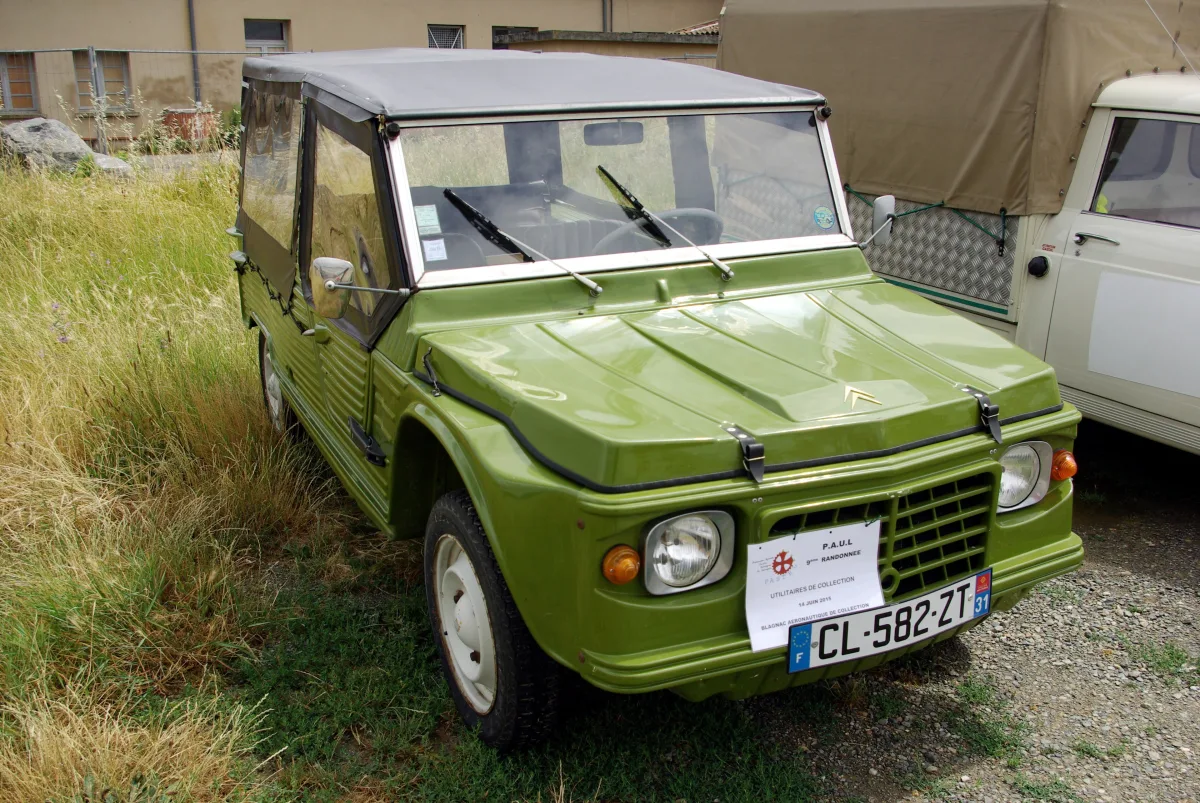
Citroën Méhari: a plastic-bodied car based on the "2CV"
The Citroën Méhari is a lightweight open-top car with a plastic body, produced from 1968 to 1988. It was built on the "2CV" and "Dyane" platforms, so it features simple, robust engineering. We'll look at its versions, engine, and what to check when buying a Méhari.






The Méhari in brief
The Méhari is a compact, straightforward car with a plastic body, built on the "2CV" chassis. It stands out with its open design, soft top, and rust-free body.
The name is linked to swift gazelles. The car was used both as a workhorse and a beachside leisure vehicle, and today it's valued as a charming classic.
Which version to choose
Most commonly found is the classic Méhari with a front-wheel-drive engine. There's also a rarer 4×4 version (1979–1983), which features all-wheel drive and is significantly more valuable.
If you're after a simple, enjoyable car, the standard Méhari will do. The 4×4 is more for collectors, as there are very few around.
Engine and gearbox
The Méhari has a small air-cooled two-cylinder engine with a capacity of around 0.6 litres and about 29 hp. It's not a powerful engine, but the car is very light, making it suitable for leisurely, enjoyable driving.
The gearbox is a 4-speed manual. The design is simple, and repairs can usually be done with basic tools.
What to check when buying a used Méhari
While the plastic body may not rust, the frame and running gear do, so first inspect these.
Check the condition of the engine and gearbox, as well as the seals on the roof, doors, and windows. A soft top can sag over time, so replacing it can be costly.
There are also new body shells or replicas on the market, so ensure the car is original and check the documents.


Trim levels
Names and equipment vary by market and year; we list the most common trim levels found in Europe.
Méhari
1968–1988The base model with front-wheel drive.
- Plastic body
- Approximately 0.6-litre air-cooled engine
- Soft top
Méhari 4×4
1979–1983The rarer four-wheel-drive version.
- Four-wheel drive
- Better ground clearance
- Highly collectible
Comparing buying options
| Standartinis Méhari | Méhari 4×4 | Restauruotas egzempliorius | |
|---|---|---|---|
| Who it's for | For comfort | For collectors | For those who don't want to tinker |
| Transmission | Front-wheel drive | All-wheel drive | By version |
| Main risk | Body rust | Rarity and price | Restoration quality |
| Price in the used market (relatively) | €€ | €€€ | €€€ |
Many buyers will opt for the standard Méhari with a sound body. The 4×4 is worth considering for collectors, but restored examples should come with clear restoration documentation.
Pros
- The plastic body doesn't rust
- Very simple technical construction
- Distinctive, fun appearance
- Low fuel consumption
Cons
- Weak engine
- The body can rust
- Soft roof and poor protection from the elements
Frequently asked questions
Is the Méhari suitable for daily use?
Rarely. It's slow, has little comfort, and doesn't protect from the elements, so it's usually bought as a second, fun car.
Why is the Méhari body made of plastic?
That was the manufacturer's idea: a lightweight, rust-free body that's easy to maintain and cheap to produce.
Is the Méhari 4×4 worth considering?
If you're a collector, yes, as there are very few of these cars. For daily use, the standard version is usually sufficient.
Updated 2026-10-19 · Trim levels and equipment vary by market and model year — check the equipment of the specific car. · Translated automatically


