 English
 Lietuvių
 Latviešu
 Eesti
 Polski
 Русский
 Українська
 Deutsch
 Nederlands
 Čeština
 Slovenčina
 Svenska
 Norsk
 Dansk
 Suomi


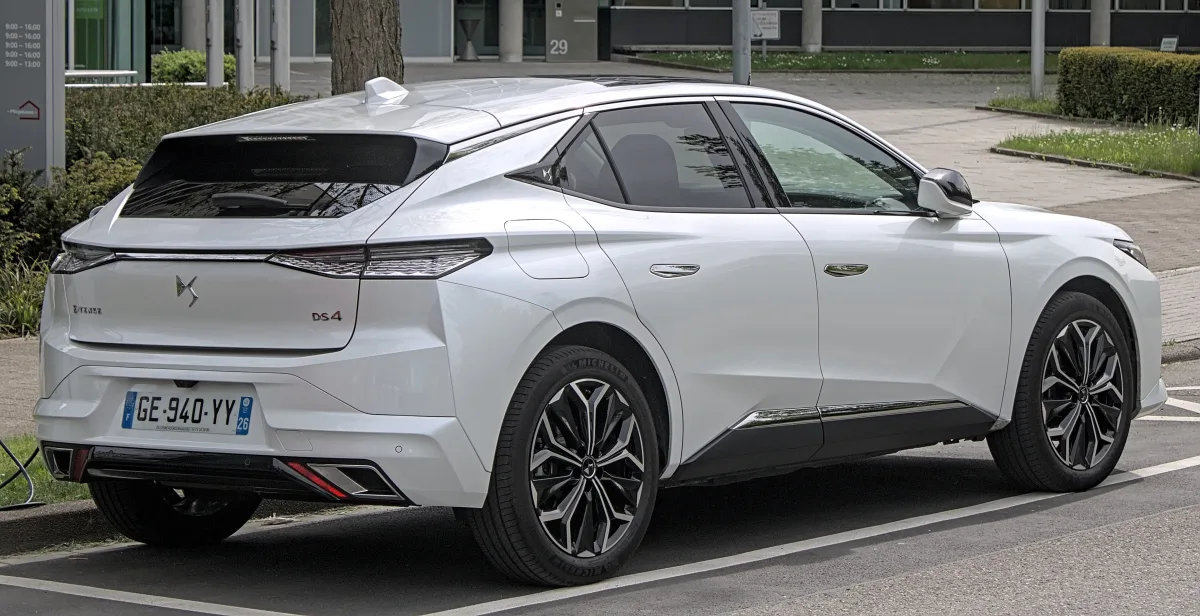
DS 4: First and Second Generations, Engines, and Trims
DS 4 — the French prestige compact car: the first generation (from 2011) was the Citroën DS4, while the second (from 2021) is a standalone model from the DS Automobiles brand. We review both generations, engines, trims, and what to check when buying used.






DS 4 in brief
The first DS4 generation combined hatchback and coupé features: a higher-than-average compact body, hidden rear door handles, and a distinctive style. The second generation (from 2021) resembles a taller hatchback with crossover elements, a more luxurious interior, and modern tech.
The DS 4 is appealing in the used market for its design and comfort, but it's worth choosing carefully — like many French cars, it demands a good service history.
Which generation to choose
The first generation (2011–2018) is more accessible, available with petrol and diesel engines. It stands out with its unique design, but rear seat space and rear window opening are limited, and some cars already have high mileage.
The second generation (from 2021) is more modern: digital instrument cluster, large screen, more driver assistance systems, and plusher trim. It's offered with the plug-in hybrid E-Tense. The 2024 model was refreshed, making these versions the newest.
Engines and gearboxes
First-time buyers can choose from 1.2 PureTech, 1.6 THP petrol engines, and 1.6 or 2.0 HDi/BlueHDi diesel engines, with either manual or automatic transmissions. Power outputs range from around 115 to 200 hp, depending on the version.
Second-time buyers are offered the 1.2 PureTech petrol engine, 1.5 BlueHDi diesel, and the 1.6 E-Tense plug-in hybrid (around 225 hp). The transmission is usually an 8-speed automatic (EAT8). Exact variants differ by year and market.
What to check when buying a used DS 4
For first-generation petrol engines (especially the 1.6 THP), check the timing chain condition and oil consumption — these engines are known for such issues in some cases. For PureTech engines, inquire about service history and belt condition.
Test the electronic systems, multimedia, and driver assistance features — French car electronics can sometimes be finicky. If the car has an automatic transmission, test the initial movement and slow driving.
In E-Tense hybrid versions, request a check of the battery condition and charging system. Inspect the body, lights, and wheels, as parts can be expensive.


Trim levels
Names and equipment vary by market and year; we list the most commonly found trims in Europe.
So Chic
First generationThe higher first-generation trim comes with more luxurious upholstery.
- Often — leather upholstery
- Often — 17-inch wheels
- Often — climate control
Sport Chic
First generationThe sportier first-generation trim.
- Often — sport seats
- Often — 18-inch alloy wheels
- Often — sport seats
Bastille
Second generationThe base second-gen spec with plenty of kit.
- Often — 17–18-inch alloy wheels
- Often — LED headlights
- Often — digital instrument cluster
Rivoli
Second generationThe higher second-gen spec with more comfort.
- Often — leather upholstery
- Often — 19-inch alloy wheels
- Often — advanced driver assistance systems
Trocadero
Second generationThe top second-gen spec.
- Often — Alcantara and leather
- Often — Matrix LED headlights
- Often — Focal sound system
Comparison of trims
| So Chic (I) | Bastille (II) | Rivoli (II) | Trocadero (II) | |
|---|---|---|---|---|
| Who's it for? | For those who appreciate original design | For daily driving | For comfort and equipment | For luxury |
| Common wheel sizes | 17-inch | 17–18-inch | 19-inch | 19-inch |
| Interior | Higher class | Modern | More luxurious | Most luxurious |
| Price in the used market (relatively) | € | €€ | €€€ | €€€ |
Most buyers' best bet is the second-gen Bastille or Rivoli, which come with the most essential kit. If budget is tight, consider the first-gen with the best service history.
Pros
- Distinctive design
- Comfortable ride and luxurious interior
- Wide range of engines, including a plug-in hybrid
- The second-gen boasts modern tech
Cons
- The first-gen's rear seats and windows are cramped
- Some engines have issues in older versions
- Parts and repairs can be pricey
Frequently asked questions
How does the second-gen differ from the first?
The second-gen is larger, more luxurious, and tech-savvy, with a hybrid option. The first-gen is more compact, with a distinctive coupe body style.
Is the DS 4 reliable?
For many owners, it runs well, but it's crucial to choose a car with a full service history and check the electronics and engine condition.
Is the DS 4 a Citroën?
The first generation was initially sold as the Citroën DS4, before becoming a standalone model under the DS Automobiles badge. The second generation is purely DS.
Updated 2026-10-17 · Trim levels and equipment vary by market and model year — check the equipment of the specific car. · Translated automatically


