 English
 Lietuvių
 Latviešu
 Eesti
 Polski
 Русский
 Українська
 Deutsch
 Nederlands
 Čeština
 Slovenčina
 Svenska
 Norsk
 Dansk
 Suomi


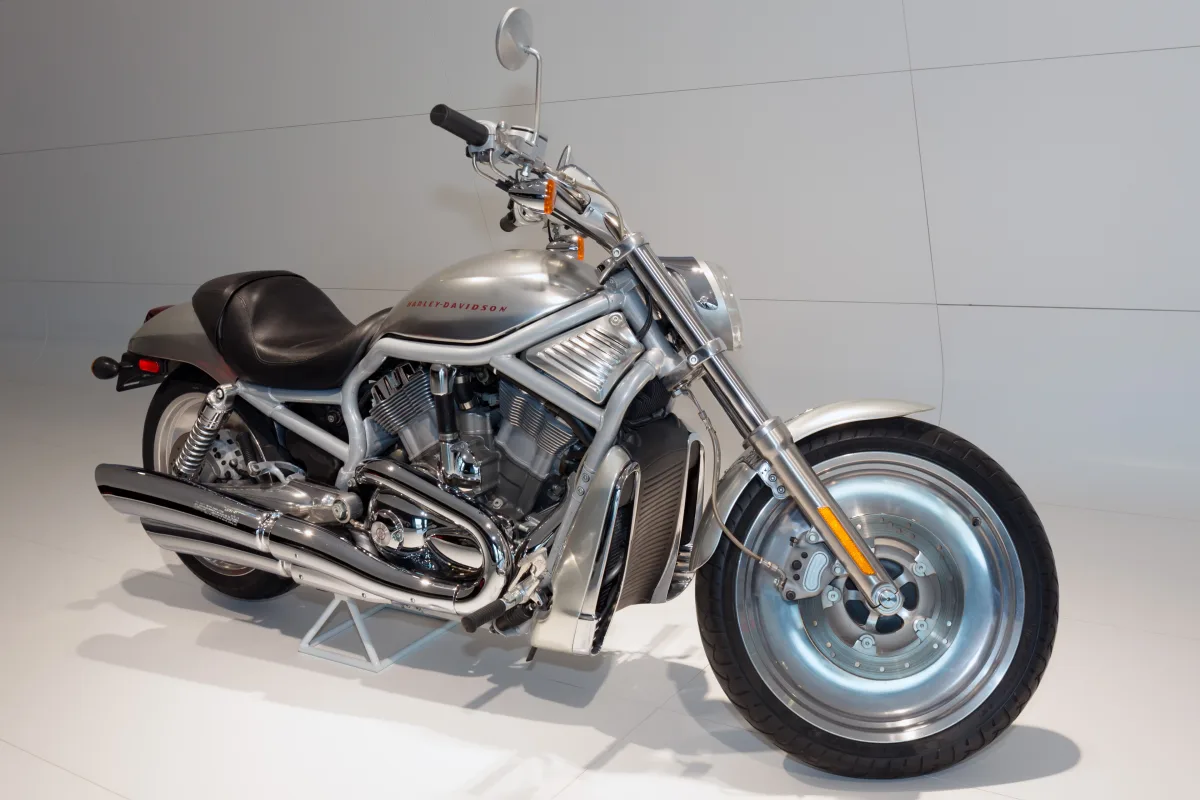
Harley-Davidson V-Rod: 2001–2017 model years, engine, and what to check
Harley-Davidson V-Rod — a cruiser with a liquid-cooled 'Revolution' engine, produced from 2001–2017. We look at its model years, engine, and what to check when buying used.






V-Rod in brief
V-Rod — an unusual Harley-Davidson model: instead of the classic air-cooled engine, it features a liquid-cooled 'Revolution' engine, developed in collaboration with Porsche. The motorcycle is low, long, and has a sporty character.
In the used market, it stands out from other Harley-Davidsons with its power, design, and technology.
Model years and choices
The first V-Rod (VRSCA) appeared in 2001–2002. Later, the family expanded: Night Rod, Night Rod Special, V-Rod Muscle, and other models. Some versions have a wider rear wheel and different styling.
When shopping, pay attention to the condition, service history, and modifications: many V-Rods are individually tailored.
Engine and transmission
The engine is a liquid-cooled 60° V-twin 'Revolution'. Early versions have an 1130 cm³ engine, later ones a 1250 cm³. Power output is around 115–125 hp, with smooth and sporty delivery.
The transmission is a 5-speed manual.
What to check when buying a used V-Rod
Check the cooling system: condition of the coolant, radiator, hoses, and fan. Ask for information about oil and coolant change history.
Inspect the frame, wheels, and brakes. The fuel tank is under the seat, so check the fuel system operation and electrical installation.
Many V-Rods are modified (exhaust system, ECU, handlebars). Ensure that changes comply with documentation and that the engine runs smoothly.


Trim levels
Names and equipment vary by market and year; we list the versions most commonly found in Europe.
V-Rod (VRSCA)
2001–2006The first-generation model with an 1130 cm³ engine.
- The 1130 cm³ 'Revolution' engine
- Liquid-cooled engine
- Sporty character
V-Rod (vėlesnės versijos)
Later yearsA family with wider tyres and a larger engine.
- Often — the 1250 cm³ engine
- Wide rear tyre
- Several models (Night Rod, Muscle, etc.)
Comparing V-Rod versions
| Ankstesnė V-Rod | Vėlesnės versijos | |
|---|---|---|
| Who it's for | For Classic V-Rod Enthusiasts | Maximum power and choice |
| Engine | 1130 cm³ | Often 1250 cm³ |
| Price in the used market (relatively) | €€ | €€€ |
The V-Rod is ideal for those who want a Harley-Davidson with a sportier character; the key is to find examples with a clear history.
Pros
- Distinctive design and technology
- Liquid-cooled engine with plenty of power
- Stable ride thanks to wider tyres
- Fewer vibrations than classic Harley-Davidsons
Cons
- Heavier weight and less agility in corners
- Maintenance is more expensive than standard cruisers
- Many modified examples
Frequently asked questions
How does the V-Rod differ from classic Harley-Davidsons?
The V-Rod features a liquid-cooled 'Revolution' engine, co-developed with Porsche, and a sportier character.
Is the V-Rod suitable for touring?
It might be, but it's not a touring motorcycle — wind protection is minimal, and the seating position is sportier.
What engine does the V-Rod have?
1130 cm³ 'Revolution' in earlier versions; later versions have 1250 cm³.
Updated 2026-10-21 · Trim levels and equipment vary by market and model year — check the equipment of the specific car. · Translated automatically


