 English
 Lietuvių
 Latviešu
 Eesti
 Polski
 Русский
 Українська
 Deutsch
 Nederlands
 Čeština
 Slovenčina
 Svenska
 Norsk
 Dansk
 Suomi


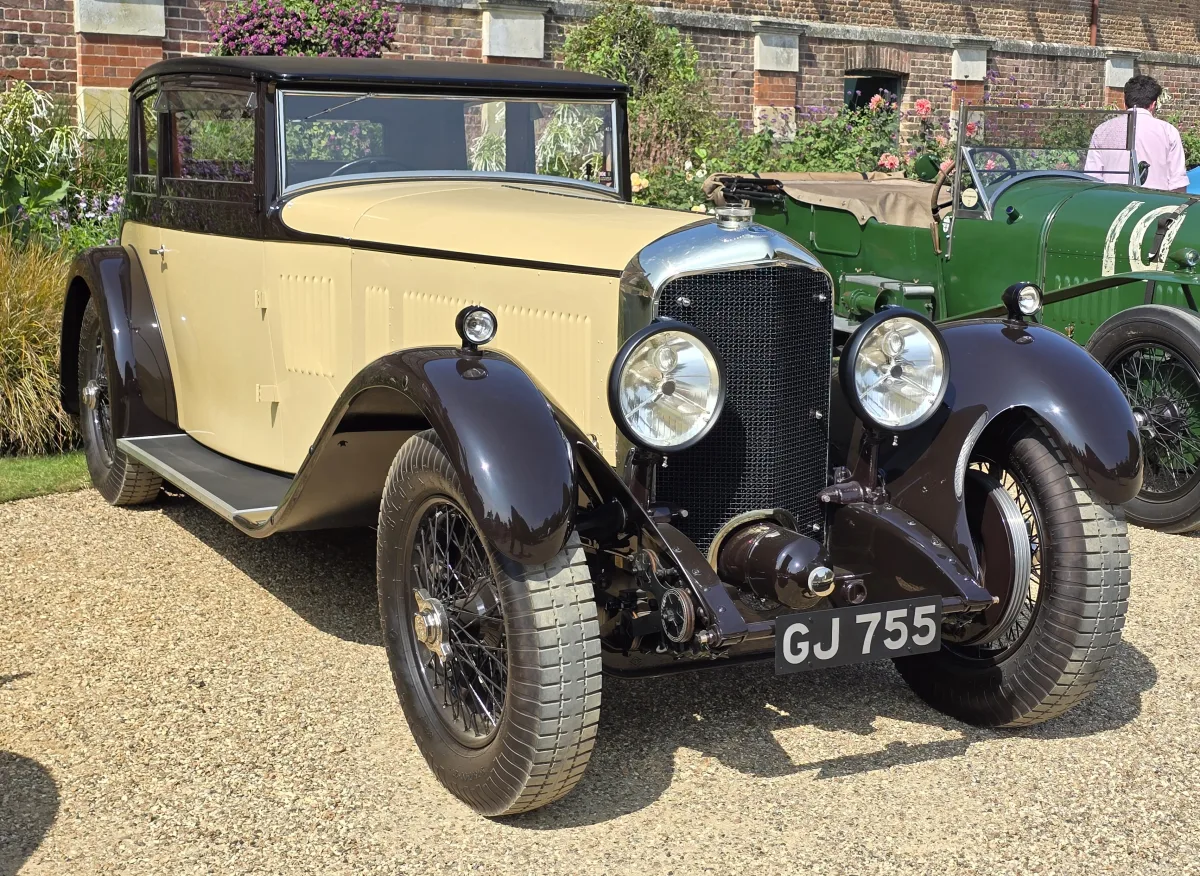
Bentley Speed Six: the legendary 1920s Bentley and what buyers need to know
The Bentley Speed Six was the sporty version of the 6½ Litre model from the late 1920s, becoming one of the most famous interwar Bentley legends. We delve into its history, technology, body styles, and what you need to know to buy a genuine example rather than a copy.






Speed Six in brief
The Speed Six was a sportier version of the 6½ Litre model, produced at the end of the 1920s and the beginning of the 1930s. Around 180 units were made, and some Bentley models were supplied as rolling chassis (frame with engine) — the body was chosen by the customer from a separate coachbuilder.
Because of this, each Speed Six is almost unique: one car might be an open sports tourer, another a closed luxury saloon. The model also gained fame through racing victories, achieved by the legendary 'Bentley Boys' team.
What sets the model apart
The most significant moment in the Speed Six's history is its victories at the 24 Hours of Le Mans in 1929 and 1930. The most famous racing example is known as 'Old Number One'. The car's reputation and collectible value are extremely high as a result.
Another famous legend is the 'Blue Train' races: in 1930, Bentley boss Woolf Barnato raced against a French express train, driving a Speed Six, and, according to the legend, arrived in London before the train. These episodes created the model's aura.
Engine and technology
The Speed Six used a 6.6-litre (around 6,600 cc) inline six-cylinder engine with twin carburetors; according to the manufacturer, it produced around 180 bhp, while the more basic 6½ Litre version had less. The gearbox was a manual four-speed.
This is a hefty but robustly built car with a ladder frame and drum brakes. Driving it requires an old-school approach: no synchromesh, needing experience to change gears, and brakes that are weak by modern standards.
What the buyer needs to know
A genuine Speed Six is a collectible car, sold at auctions and through specialist dealers. The key is the provenance: chassis and engine numbers, the originality of the body, documentation, and previous owners. A significant number of cars seen today are later restorations or replicas.
Before buying, consult the Bentley Drivers Club or a specialist expert who can verify the car's authenticity. Pay attention to whether the body might not be original or has been replaced — this significantly affects the value.


Body styles
The Speed Six was supplied as a rolling chassis, so body variants are highly diverse; the most common types are mentioned here.
Open Tourer
1928–1930A sporty open body, similar to a racing car.
- Often — a lightweight body
- Often — a small saloon
- Popular among collectors
Saloon
1928–1930A closed, more luxurious body for everyday journeys.
- Often — a leather interior
- Often — more comfort
- Built by individual bodywork specialists
Drophead Coupé
1928–1930Open-top with luxurious interior
- Often — work by renowned bodywork specialists
- Often — handcrafted interior
- Highly prized by collectors
Sportsman Coupé
1928–1930Two-door coupé with a sporty silhouette
- Often — a smaller cabin
- Often — a sportier look
- Rarer body style
Comparison of body styles
| Open Tourer | Saloon | Drophead Coupé | |
|---|---|---|---|
| Who it suits | For spirited driving | For comfort | For collectors |
| Classified ads (most often) | Body styles | Body styles | Body styles |
| Interior | Basic, open-top | Luxurious, enclosed | Luxurious, with a removable roof |
| Engine | 6.6-litre straight-six | 6.6-litre straight-six | 6.6-litre straight-six |
| Pricing in the used market (relatively) | Very expensive | Very expensive | Very expensive |
All Speed Six models are collector cars. Choose based on provenance and authenticity, not body style.
Pros
- One of the most famous interwar Bentley legends
- A powerful and robust 6.6-litre engine
- High collector value
- A fine example of early Bentley opulence
Cons
- Very expensive and rare
- Fiddly controls and less effective brakes
- Lots of copies and modifications, making authenticity hard to verify
Frequently asked questions
How many Speed Six were made?
Around 180 examples, making it a very rare car.
Can the Speed Six be driven daily?
Technically yes, but due to its age, rarity and outdated safety standards, it's best suited to occasional outings.
How does the Speed Six differ from the 6½ Litre?
The Speed Six is the sportier version with a more powerful engine, while the 6½ Litre is the more straightforward, comfort-focused variant.
Updated 2026-10-21 · Trim levels and equipment vary by market and model year — check the equipment of the specific car. · Translated automatically


