 English
 Lietuvių
 Latviešu
 Eesti
 Polski
 Русский
 Українська
 Deutsch
 Nederlands
 Čeština
 Slovenčina
 Svenska
 Norsk
 Dansk
 Suomi


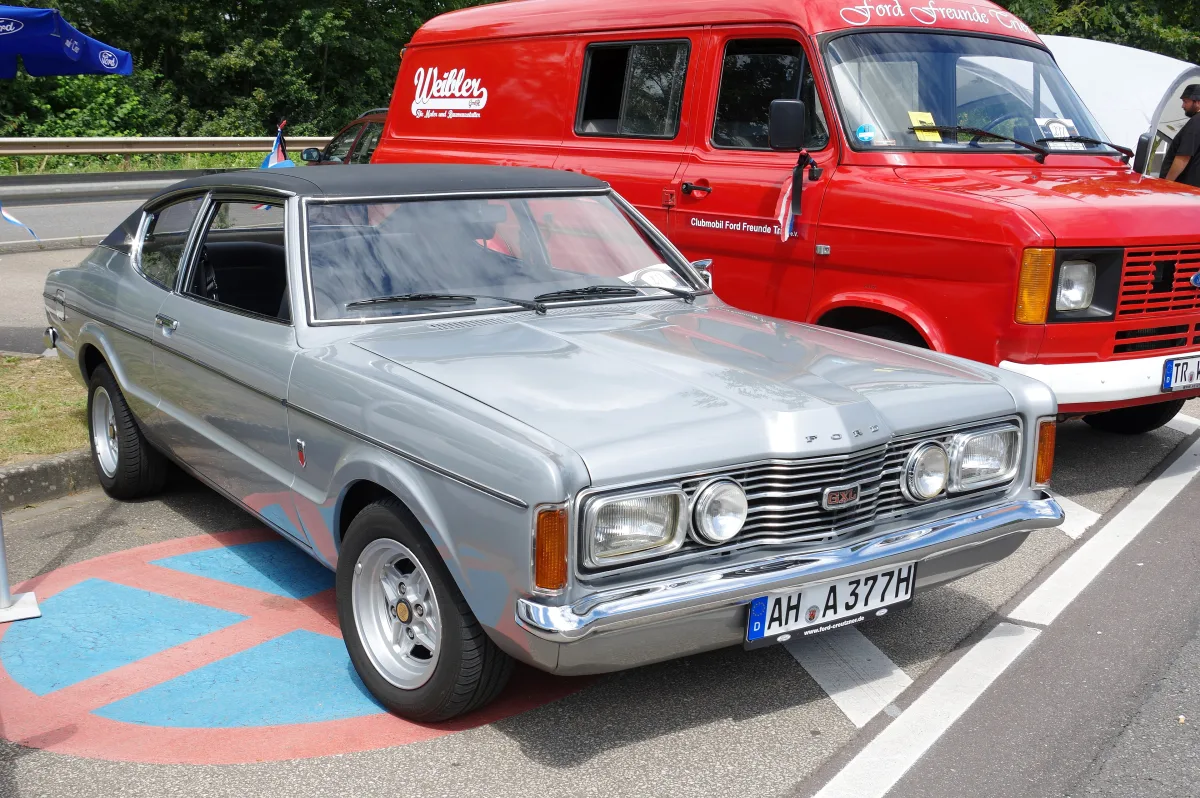
Ford Taunus: generations, engines and what to know when buying a classic car
The Ford Taunus was a mid-size family car produced in Germany between 1970 and 1982, available as a sedan, coupe, and estate. We look at how the earlier and later versions differ, which engines and trims were offered, and what to check before buying.






Taunus in brief
The Taunus was Ford's mid-size model that competed in Germany with the Opel Ascona and other family cars of the time. Its technology was simple and reliable, while the body was spacious by the standards of the day.
Today, the Taunus is a classic car sought after by collectors and enthusiasts. Thanks to its straightforward design, it can be maintained by the owner, provided they have the experience.
Which version to choose
The first version (around 1970–1976), known as the TC, featured an angular body with two or four-door sedans, coupes, and the estate model Turnier. It was technically similar to the contemporary Ford Cortina.
The later version, from 1976–1982, received a refreshed front and rear, along with a more modern interior. The mechanicals remained largely the same, but later cars are generally better protected against rust, although this depends on the specific example.
Engines and gearboxes
The Taunus was sold with four-cylinder petrol engines, ranging from about 1.3 to 2.0 litres, and more powerful versions came with V6 engines. The specific engine variants depended on the year and market.
Gearbox — manual or automatic. Drive is always rear-wheel, and classic diesel versions of the Taunus didn't have it.
What to check when buying an old Taunus
The most important thing — corrosion. Inspect the sills, floor, wings, door bottoms, front and rear body sections. Repairing rust can be more expensive than the car itself.
Check the engine, gearbox, and rear axle for oil leaks and unusual noises. Early cars' electrical systems can be sensitive to moisture, so check the wiring and lights.
Parts availability — a crucial question: body and interior parts can be rare, but mechanical parts can be found through clubs and specialist suppliers. Before buying, check if there are documents and if the car is properly registered.


Trim levels
Names and equipment vary by market and year; we list the versions and trims most commonly found in Europe.
L
TC 1970–1976The basic, no-frills trim level.
- Simple interior trim
- Often smaller engines
- Often — modest equipment
XL
TC 1970–1976Higher trim level with more comfort.
- More interior trim
- Often — additional extras
- More comfortable seats
GT / GXL
TC 1970–1976The sportier, more luxurious version.
- Often — a more powerful engine
- Sportier details
- More gadgets and trim
Comparison of trims
| L | XL | GT / GXL | |
|---|---|---|---|
| Who it's for | Usually a daily driver | For more comfortable use | For a sportier look or drive |
| Engine (usually) | Smaller | Mid-range | More powerful |
| Interior | Base | Mid-range trim | Top-tier trim |
| Price in the used market (relatively) | € | €€ | €€ |
Opt for the best-condition car, not the highest trim level. GT and GXL models are rarer these days and command higher prices.
Pros
- Simple and reliable design
- Spacious interior and estate version available
- Rear-wheel drive
- Classic car with collector's value
Cons
- Prone to rust
- Some body parts can be tricky to find
- Modest safety levels by today's standards
Frequently asked questions
What body styles were available?
Two- and four-door saloons, coupés and the estate version Turnier.
Does the Taunus have a diesel engine?
No, the classic Taunus was offered with petrol engines.
Is the Taunus suitable for daily driving?
Due to its age and safety levels, it's more of a classic car for weekends and shows.
Updated 2026-10-19 · Trim levels and equipment vary by market and model year — check the equipment of the specific car. · Translated automatically


