 English
 Lietuvių
 Latviešu
 Eesti
 Polski
 Русский
 Українська
 Deutsch
 Nederlands
 Čeština
 Slovenčina
 Svenska
 Norsk
 Dansk
 Suomi


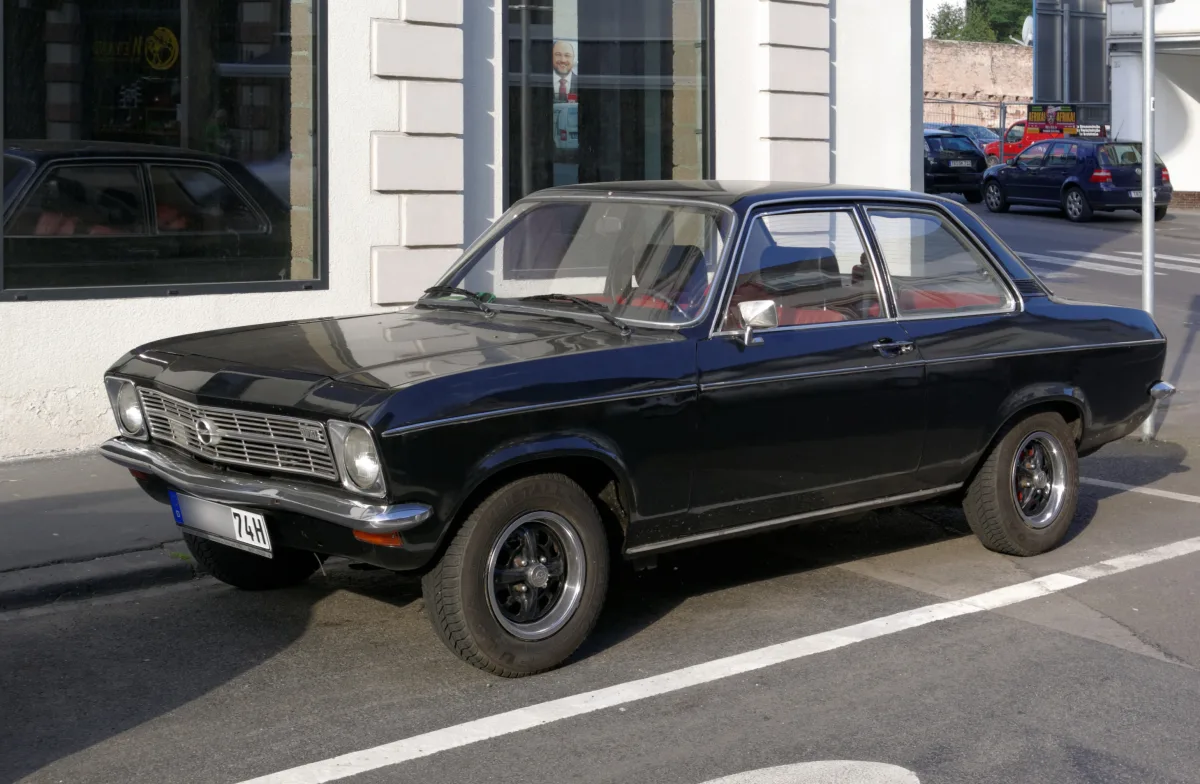
Opel Ascona: generations, engines, and what to know before buying
The Opel Ascona — a mid-size car produced from 1970 to 1988, available in both sedan and hatchback body styles across three generations. We'll look at the A, B, and C generations, their engines, and what to check before buying a used Ascona.






Ascona at a glance
The Ascona was Opel's response to the Ford Taunus and Volkswagen Passat class of cars. Over eighteen years, three generations emerged — A, B, and C — including the rally car Ascona 400, which Walter Röhrl drove to the 1982 World Rally Championship title.
Today, the Ascona is a rare, collector's item. It's becoming increasingly scarce in Lithuania, so the decision to buy hinges on the condition and originality of the specific example.
Generations — what sets them apart
The Ascona A (1970–1975) and B (1975–1981) feature rear-wheel drive and a classic layout. These generations are favoured by enthusiasts, particularly the sporty SR versions.
The Ascona C (1981–1988) switched to front-wheel drive, adopted a more modern look, and offered a wide range of engines. In some markets, such as the UK, it was sold as the Vauxhall Cavalier.
Engines and transmissions
The Ascona A and B came with petrol engines ranging from 1.2 to 2.0 litres. Sportier versions packed more power, while the Ascona 400 boasted a 2.4-litre 16-valve engine producing around 140hp.
The Ascona C was offered with petrol engines from 1.3 to 2.0 litres and a 1.6-litre diesel. Transmission options included a 4 or 5-speed manual or a 3-speed automatic.
What to check when buying a used Ascona
First things first — rust. Check the floors, sills, wheel arches, front and rear ends, and roof edges. These cars are old, so a lot depends on the quality of previous repairs.
Check the engine, gearbox, brakes, suspension, and electricals. Some parts, especially bodywork and interior bits, might be hard to find, so check availability beforehand.


Trim levels
Names and equipment vary by market and year; we list the most common trims found in Europe.
Ascona A
1970–1975The first generation with rear-wheel drive and a classic look.
- Petrol engines
- Rear-wheel drive
- Saloon or hatchback
Ascona B SR
1975–1981The more sporty second-generation version.
- More powerful engine
- Sporty trim
- Often — a sportier suspension
Ascona 400
1980–1981A limited-series model designed for rally homologation.
- 2.4-litre 16-valve engine
- Around 140 HP
- Very limited production run
Ascona C
1981–1988Third generation with front-wheel drive.
- Front-wheel drive
- Wide range of engines
- More modern interior
Ascona C CD
1981–1988A higher-class version of the third generation.
- Better interior trim
- Often — more equipment
- More comfortable to drive
Comparing generations of the Ascona
| Ascona A | Ascona B | Ascona C | Ascona 400 | |
|---|---|---|---|---|
| Who it's for | For classic car enthusiasts | A versatile classic choice | For practical classic use | For collectors |
| Gearbox | Rear-wheel drive | Rear-wheel drive | Front-wheel drive | Rear-wheel drive |
| Engine (approx.) | 1.2–1.9 l | 1.3–2.0 l | 1.3–2.0 l, 1.6 l diesel | 2.4 l, 16-valve |
| Years of production | 1970–1975 | 1975–1981 | 1981–1988 | 1980–1981 |
| Price in the used market (relatively) | €€ | €€ | € | €€€ |
Most buyers find the Ascona C the most practical, as it's the easiest to maintain. The A and B are more appreciated by classic car enthusiasts, while the 400 is a collector's item.
Pros
- Simple, uncomplicated construction
- A sturdy classic image
- Various generations to suit the buyer's taste
- Rally history with the Ascona 400
Cons
- Rust — the main problem
- Some parts might take a while to find
- Old safety equipment
Frequently asked questions
How does the Ascona B differ from the Ascona C?
The B has rear-wheel drive, while the C has front-wheel drive. The C is more modern and practical, while the B is appreciated by classic car enthusiasts.
What is the Ascona 400?
It's a limited-edition rally homologation model with a 2.4-litre 16-valve engine, whose rally version won the World Rally Championship in 1982.
Is the Ascona suitable for daily use?
Note: This is an older car lacking modern safety systems. It is often used as a classic car.
Updated 2026-10-19 · Trim levels and equipment vary by market and model year — check the equipment of the specific car. · Translated automatically


