 English
 Lietuvių
 Latviešu
 Eesti
 Polski
 Русский
 Українська
 Deutsch
 Nederlands
 Čeština
 Slovenčina
 Svenska
 Norsk
 Dansk
 Suomi


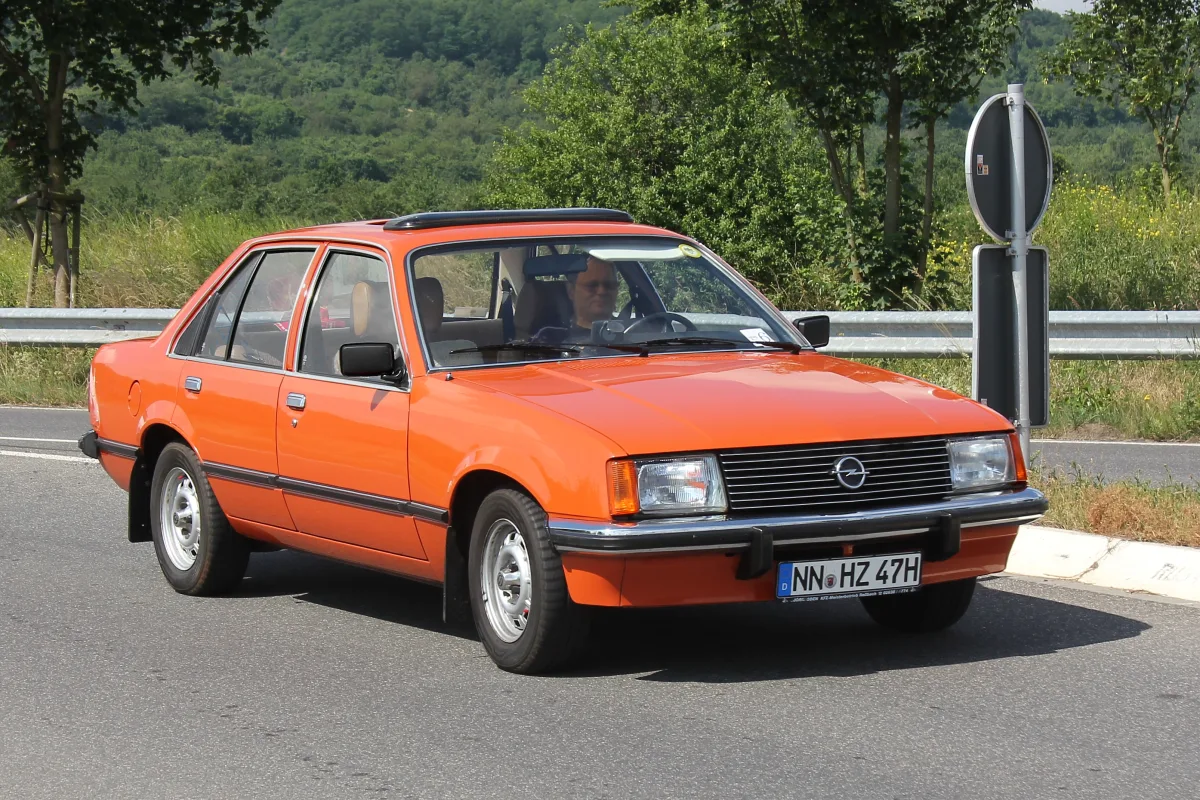
Opel Rekord: generations, engines, and what to check
The Opel Rekord is a mid-size Opel car produced from 1953 to 1986. Over more than three decades, many generations were released, so in Lithuania, the later Rekord C, D, and E models are most commonly encountered. We'll look at the generations, engines, and what to check when buying a classic.






Rekord in brief
The Rekord was one of Opel's most popular models: a sturdy, practical family car with rear-wheel drive. It was produced as a sedan, coupe, estate (Caravan), and other body styles.
Today, many Rekords are valued as classic or retro cars. Later generations (D and E) are still fairly accessible, while earlier ones — Olympia Rekord and P series — are already collectibles.
Generations — what's the difference
The earliest Rekords (Olympia Rekord, P1, P2; 1953–1963) feature American-style bodies and simple technology. Rekord A, B, and C (1963–1971) are more modern, with sharper designs.
The Rekord D (1972–1977) is more widespread, with a robust body and more variants. The Rekord E (1977–1986) is the final generation, more modern, more economical, and with better equipment. It was later replaced by the Opel Omega.
Engines and transmissions
Rekord engines range from around 1.7 to 2.2-litre petrol units, with diesel versions available in later generations. Power output depends on the engine and year, so check specific details in the car's documents.
The transmission is manual (4 or 5-speed) or automatic. All Rekords have rear-wheel drive.
What to check when buying a used Rekord
Age is crucial — look for rust: sills, floors, arches, door bottoms, and the boot. Restoration can cost more than the car itself, so opt for the best-condition examples.
Check the engine (oil leaks, distribution mechanism, fuel system), gearbox, and electrical equipment. Ensure original documents and chassis and engine numbers match.


Trim levels
Names and equipment vary by market and year; we list the most commonly found trims in Europe.
Rekord C
1966–1971The boxy design era, popular among classic car enthusiasts.
- Petrol engine
- Rear-wheel drive
- Often — 4-speed manual gearbox
Rekord D
1972–1977The more widespread era with sedan, coupe, and estate body styles.
- Petrol or diesel engine
- Rear-wheel drive
- Often — Caravan estate
Rekord E
1977–1986The final and more modern era.
- Petrol or diesel engine
- Manual or automatic gearbox
- Often — a sedan or estate body
Record-breaking comparisons
| Rekord C | Rekord D | Rekord E | |
|---|---|---|---|
| Who it's for | For retro and collector enthusiasts | For those after a classic Opel | For those after a more modern car |
| Body style | Sedan, coupe, estate | Sedan, coupe, estate | Sedan, estate |
| Engine | Petrol | Petrol, diesel | Petrol, diesel |
| Price in the used market (relatively) | €€ | €€ | € |
Most buyers find the Rekord E the easiest to find and maintain. Earlier generations are more suited to collectors.
Pros
- Robust and simple construction
- Rear-wheel drive and classic driving dynamics
- Spacious interior and practical body
- Choice of various generations and body styles
Cons
- Body corrosion in older cars
- Finding spare parts for earlier generations
- Limited availability in Lithuania
Frequently asked questions
Which Rekord generation is the most popular?
The Rekord D and E are the most commonly encountered – they are the most widespread and easiest to find.
Does the Rekord have a diesel engine?
Yes, diesel versions were offered in later generations.
What replaced the Opel Rekord?
The Rekord E was replaced by the Opel Omega.
Updated 2026-10-19 · Trim levels and equipment vary by market and model year — check the equipment of the specific car. · Translated automatically


