 English
 Lietuvių
 Latviešu
 Eesti
 Polski
 Русский
 Українська
 Deutsch
 Nederlands
 Čeština
 Slovenčina
 Svenska
 Norsk
 Dansk
 Suomi


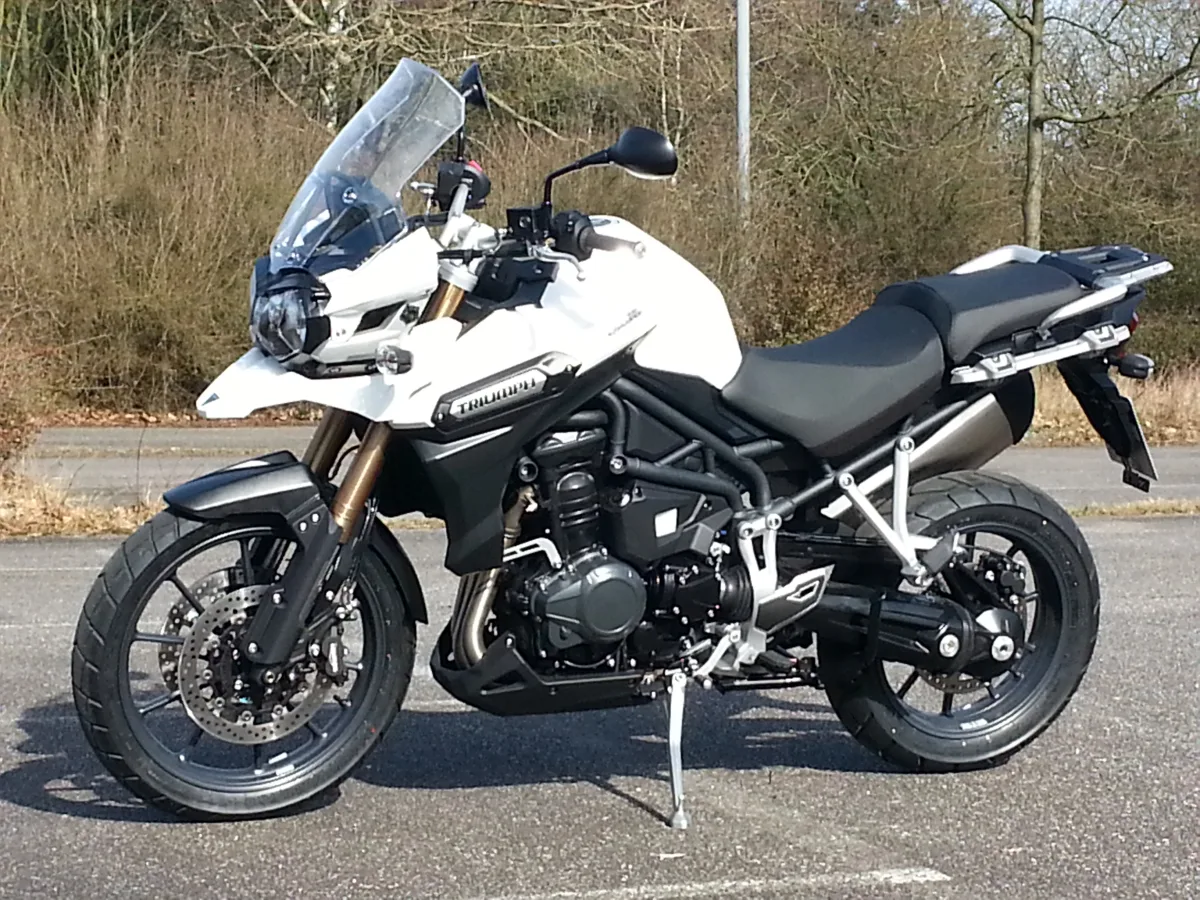
Triumph Tiger Explorer: three-cylinder adventure tourer and what to check on a used one
Triumph Tiger Explorer (2012–2016) — large-capacity adventure tourer with a three-cylinder engine and shaft drive. We look at the versions and what to check when buying used.






Tiger Explorer in brief
The Tiger Explorer debuted in 2012 as Triumph's answer to large adventure tourers. It features a roughly 1.2-litre three-cylinder engine, shaft drive, and a large fuel tank, making it ideal for long journeys.
It's a heavy motorcycle (around 260 kg with fluids), but its low centre of gravity and balanced handling make it manageable. The engine is smooth and powerful, with a comfortable riding position for both rider and passenger.
Versions — what's the difference
The base version is called the Tiger Explorer, while the XC version came with more robust features and additional equipment. In 2016, refreshed XR and XC versions arrived with more electronics, and some featured semi-active suspension.
When choosing, it's important to check which specific version and what equipment it has. Many motorcycles come with panniers, crash bars, and other touring gear.
Engine and gearbox
The engine is a liquid-cooled three-cylinder, around 1215 cm³, with approximately 135 hp. It delivers a high torque from low revs, making it easy to ride without frequent gear changes.
The gearbox is a six-speed, with power transmitted via the shaft. This reduces maintenance needs, but you should keep an eye on the final drive oil.
What to check when buying a used Tiger Explorer
Check the cardan shaft and rear differential: there should be no oil leaks or unusual noises. Ask when the rear differential oil was last changed.
Inspect the electronics: ABS, traction control, and all gauges. Check the suspension for oil leaks and ensure the leveling system works if equipped.
Since this is a touring motorcycle, inspect the luggage mounts, guards, brakes, and tires. Look for signs of a drop and check the service history.


Versions
Names and equipment vary by market and year; we list the versions most commonly found in Europe.
Tiger Explorer
2012–2015Base version.
- Around 135 HP three-cylinder engine
- Shaft drive
- ABS and traction control
Tiger Explorer XC
Various yearsVersion with spoked wheels.
- Spoked wheels
- More standard equipment
- Often — guards
Tiger Explorer XR
2016Updated touring version.
- More electronics
- Often — semi-active suspension
- More comfortable for long journeys
Su kelionine įranga
Various yearsAdapted for touring.
- Often — luggage racks
- Often — mud flaps
- Check that accessories are properly fitted
Comparing versions
| Explorer | XC | XR | |
|---|---|---|---|
| Who it's for | For touring on the open road | For touring with a trailer | For comfort and electronics |
| Wheels | Light | Sporty | Depends on the version |
| Engine | ~1215 cm³, around 135 hp | ~1215 cm³, around 135 hp | ~1215 cm³ |
| Price in the used market (relatively) | Mid-range | Mid-range | High-end |
For most, the base Explorer or XC will do if your journeys include rough terrain. Opt for the XR for more electronics and comfort.
Pros
- Smooth and powerful three-cylinder engine
- Four-wheel drive — less maintenance
- Comfortable seating position while driving
- Large fuel tank
Cons
- Heavy weight
- Servicing is no less important for smaller motorcycles
- Lots of electronics that can be pricey to fix
Frequently asked questions
Is the Tiger Explorer suitable off-road?
Light off-roading — yes, especially the XC version, but due to its weight, it's not suitable for heavy off-roading.
Is the XC worth buying?
If you often drive off-road and want power — yes.
How is the all-wheel drive maintained?
You need to change the oil in the rear differential at regular intervals as specified by the manufacturer.
Updated 2026-10-21 · Trim levels and equipment vary by market and model year — check the equipment of the specific car. · Translated automatically


